
There is a morning, somewhere in the middle of September, when Tunis wakes up and the air has changed. Nobody announces it. The heat that sat on the country like a hand through July and August — the heat of the summer of shortages, of rationed water and evenings counted out in power cuts — simply isn’t there anymore.
The light comes in lower and more golden. The café terraces refill at noon instead of emptying. And across the country, from the vineyards of Mornag to the palm groves of the Jerid, an entire season of work begins: the picking, drying, pressing, and preserving that has organized the Tunisian autumn for three thousand years.
Autumn is the season the summer crowds never see and the winter travelers arrive too late for. The sea is still warm. The sites are already empty. And unlike the beach months, when Tunisia performs for its visitors, autumn is when the country simply gets on with being itself — which is, for a certain kind of traveler, exactly the point. This is the honest guide to what the season gives you, what it takes away, and how to plan around both.
Quick answer: From mid-September to late November — autumn, or fall if you’re reading from across the Atlantic — Tunisia offers its best all-around travel conditions of the year. September holds summer’s warmth without its punishment — around 30°C by day on the coast, a 26°C sea, cooling evenings. October is the golden mean: mid-20s everywhere, a sea swimmable to mid-month, and the Sahara open for business again. November cools the north into light-jacket weather and turns the whole country toward the olive harvest. Prices fall steadily from late September; rain returns to the north in occasional bursts rather than settled spells. Our month-by-month weather guide has the numbers; our guide to the best time to visit Tunisia has the comparisons. The short version: if you can only come once, come now.
The Weather, Honestly
Autumn in Tunisia is less a season than a slow, elegant descent. September is summer with the volume turned down: Tunis and the coast hold around 30°C by day, but the nights drop to a sleepable 20–22°C, and the sea — heated all summer long — sits at a bath-like 26°C, warmer than it was in June.
October steps down again, to 24–27°C days on the coast and a sea that stays swimmable until roughly mid-month. By November the north is a different country: 18–21°C afternoons, real rain on eight or ten days of the month, green returning to hills that spent the summer the color of straw.
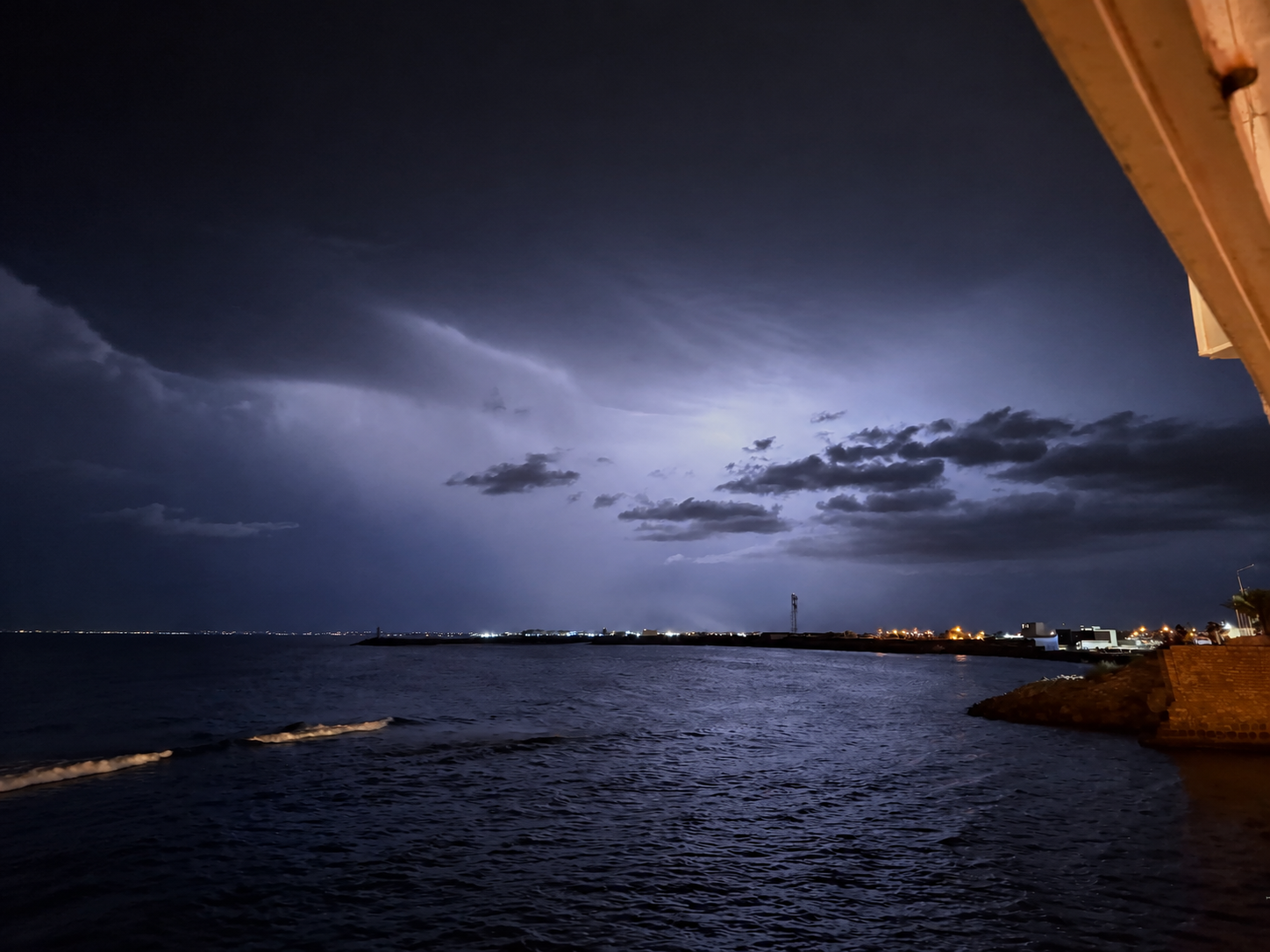
Two honest caveats. First, the rain, when it comes, can come all at once — autumn is flash-flood season in the north, and a September downpour can turn Tunis streets into shallow rivers for an afternoon. Nobody plans around it; you shouldn’t either, beyond not scheduling anything unmissable for the hours after a black sky.
Second, the first half of September can still throw a late heatwave — the locals call it summer’s parting shot — so if your tolerance for 35°C is low, aim for the back half of the month onward. Either way, pack for two seasons: swimwear and a real long-sleeve layer, because you will use both, sometimes on the same day.
The Harvest Season
Here is the thing no beach brochure tells you: autumn is when Tunisia’s food happens. The country’s entire agricultural year funnels into these three months, and a traveler who times it right can eat their way through the whole sequence.
It begins on the rooftops of Nabeul, where September and October are harissa season — tons of baklouti chilies laid out to dry in the sun until whole streets smell faintly of them, before being pounded into the fiery paste that UNESCO inscribed as Tunisia’s culinary signature.
The Cap Bon peninsula around it is simultaneously bringing in the grape harvest; the country’s wine — a 2,500-year-old tradition that predates Rome — is picked from late August through early October, and Tunisia’s wineries are at their most alive right now.
In the mountain village of Djebba, on the slopes of Djebel Gorra, autumn belongs to the bouhouli fig, the late-ripening variety that earned the village its protected designation and its harvest festival. In the southern oases, October opens the date harvest — pickers in the palm crowns of Tozeur and Kebili, clusters of Deglet Nour coming down on ropes, the sorting sheds running at full tilt into December.
And in November the main event begins: the olive harvest, when families across the country decamp to their trees and the mills start their around-the-clock season. Tunisia is one of the world’s great olive-oil producers — some years the largest exporter on earth — and fresh-pressed November oil, green and peppery enough to catch your throat, is a taste that never survives the journey into an export bottle. Meanwhile, in home kitchens everywhere, the last of summer’s produce is being dried, salted, and jarred in the ritual of el oula, the pantry-filling that no Tunisian grandmother has ever agreed to scale down.
The Sea Without the Circus
If you want a beach holiday, September is quietly the best month of the year for one. The water is at its warmest, the European school holidays have ended, the Tunisian ones too — and the coast exhales. Hotel rates begin their long slide toward winter prices; the beaches that were wall-to-wall umbrellas in August return to something like their natural state.
By October you’ll have morning swims to yourself on all but the busiest resort sands, and the sea, though cooling, stays warmer than the air well into the month — the year’s last, best secret.
The Sahara Reopens
Summer closes the Tunisian desert to all but the reckless; autumn opens it again. From October, daytime temperatures in the Jerid fall back into walking, riding, and ruin-wandering range, and the whole southern circuit — Tozeur and its mountain oases, the salt-mirror horizons of Chott el-Jerid, the hot spring and dunes of Ksar Ghilane — moves from endurance test to pure pleasure.
October and November are arguably the finest desert months of all: warm days, nights that are cool rather than the bone-cold of January, and the date harvest animating every oasis you pass through. If the Sahara is the reason you’re coming, this is your window.
Ruins, Culture, and the Autumn Calendar
The great sites, mobbed in high summer, empty out beautifully. At Dougga, Tunisia’s most complete Roman city, the autumn light does things to golden limestone that August’s glare never allowed; the amphitheatre of El Jem and the forum temples of Sbeitla reward the kind of slow wandering that summer heat forbids.
This is also prime season for hiking in the greening north, and the cultural calendar stirs: the Journées Musicales de Carthage bring a week of concerts to Tunis in early October, the theatre festival follows in late November, and the storied Carthage Film Festival — celebrating its 60th anniversary this year — caps the run in mid-December, reason enough to let an autumn trip stretch.
Making It Work
Autumn asks almost nothing of you logistically, which is part of its charm. Flights and hotels cost less with every week after mid-September; sites keep long hours; the louages and trains run as ever.
Build your trip around the descent: coast-first in September while the sea is at its peak, coast-plus-interior in October, interior and desert from November. A week is enough for the classic loop — our seven-day itinerary adapts naturally to the season — and shoulder-season quiet makes it the most forgiving time of year for first-timers.
One last honest note. Autumn’s rains are not an inconvenience here; they are awaited. After a summer that tested the country’s water and patience alike, the first real downpour of the season is greeted, in a very Tunisian way, with something close to celebration — people standing in doorways watching it come down, reservoirs inching back to life.
Come in autumn and you catch Tunisia in that mood: relieved, industrious, generous, and golden. It does not last long. It does not need to.
From the Carthage Magazine Bookshelf
If autumn’s harvests and empty ruins have you reaching for the calendar, these three will get you from the planning stage to the dinner table:
- All About Tunisia — the definitive English-language traveler’s guide. 572 pages, 27 chapters, all nine regions, every UNESCO inscription, five thematic trails — and the practical answers (visa, currency, transport, etiquette) most travelers wish they’d had on the plane. $24.99 · PDF & EPUB.
- Speak Like a Local — 200+ Tunisian Arabic phrases with native audio recorded in Tunis. The phrases for the taxi, the souk, the café, and the dinner table. $14.99 · PDF, EPUB, MP3.
- The Authentic Tunisian Cookbook — sixty traditional recipes from the heart of North Africa. For when you get home and find yourself missing the food. $9.99 · PDF & EPUB.
All three available as a bundle for $39.99 — guide, language, and food, delivered together.
