
This article contains affiliate links. If you book through them, Carthage Magazine earns a small commission at no extra cost to you — it’s part of how we keep our guides free and independent.
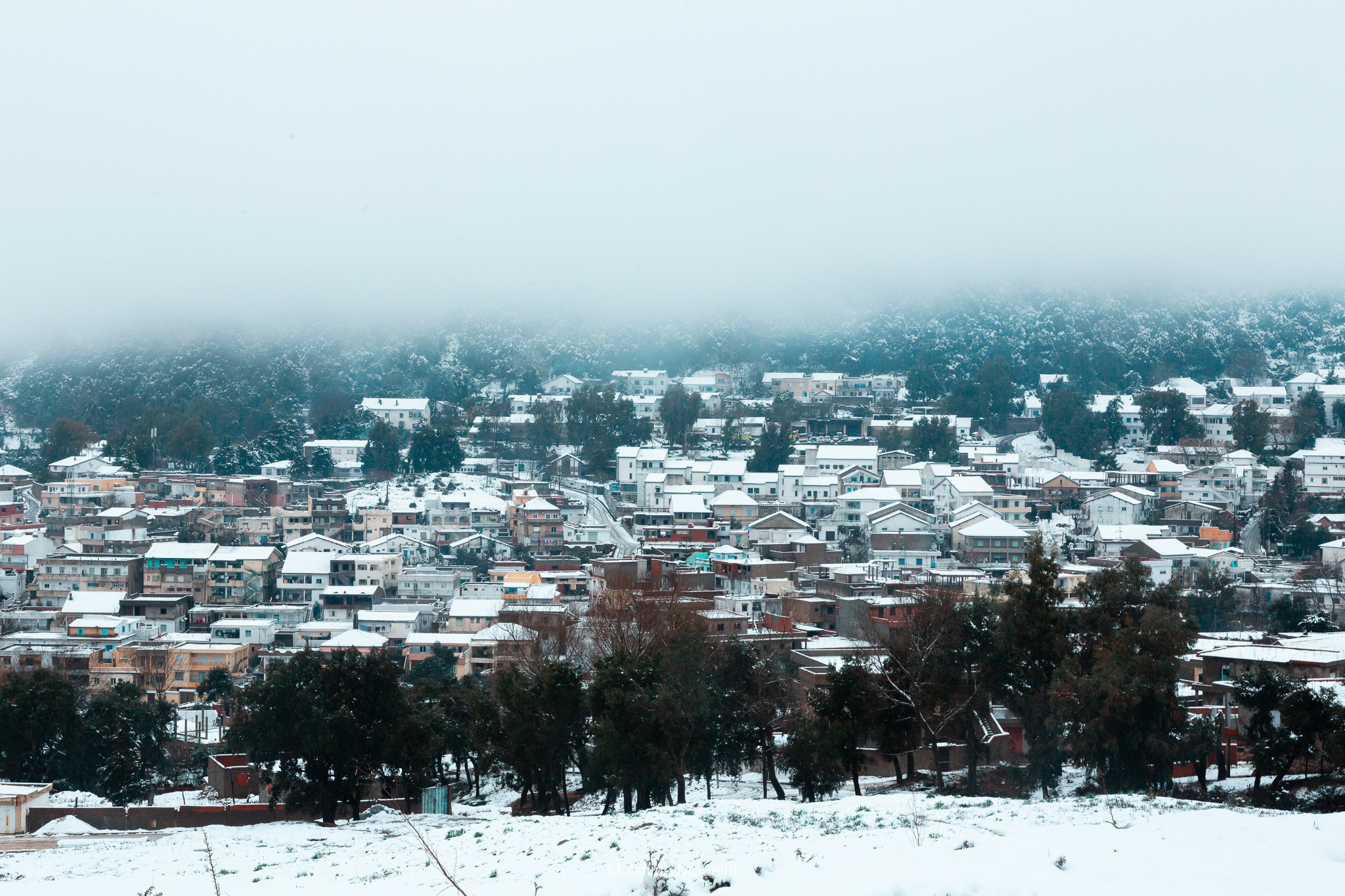
Quick Answer Aïn Draham is a mountain town of around 8,000 people in the Kroumirie range of northwest Tunisia, sitting roughly 800 to 1,000 metres above the sea among dense cork oak forest. It is the coolest, greenest, and wettest place in the country — it actually snows here in winter — and it has been a hill retreat since French colonial times, when officials came up from the heat to hunt wild boar and walk in the woods. It is about 25 kilometres inland from the coast at Tabarka and roughly three and a half hours from Tunis. Come for the forest, the air, the quiet, and a side of Tunisia that looks nothing like the postcards.
The first time it snows on you in Tunisia, you stop believing in the country you thought you were visiting.
There is no desert here, no palm, no whitewashed cube against a blue sea. There is forest — dense, old cork oak forest, the trunks stripped orange where the bark has been peeled, the canopy closing overhead, the light coming through green and cool. There is mist in the valleys in the morning. There is, on the higher ground in January, real snow. This is Aïn Draham, the hill town in the Kroumirie mountains of the northwest, and it is the part of Tunisia that most surprises the people who find it.
Most visitors never do. The northwest is the emptiest quarter of the country, the least touched by tourism, and Aïn Draham sits at the green heart of it — a former colonial hill station turned quiet mountain town, built on a slope, wrapped in forest, looking out over ridges that roll west into Algeria. For a certain kind of traveller, it is the best few days in Tunisia. Here is what to know.
The Greenest Place in Tunisia
Aïn Draham owes everything to its altitude and its rain.
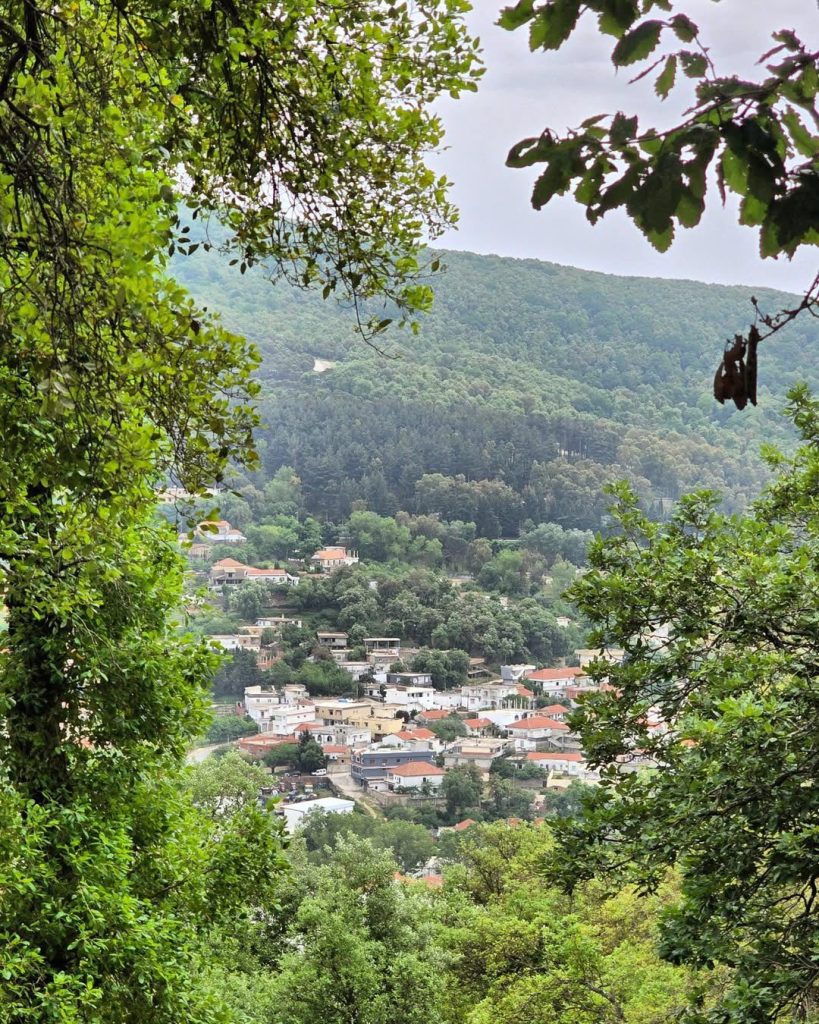
At 800 metres and more above sea level, in a range that catches the wet Mediterranean weather coming off the sea, the town sits in the wettest microclimate in Tunisia. The result is the Kroumirie forest — a vast cover of cork oak, zeen oak, and pine that has no parallel anywhere else in the country. This is genuinely a forest, not a scattering of trees: shaded, deep, and cool even when the rest of Tunisia is baking. The cork oaks are a working landscape as well as a beautiful one; their bark is harvested on a long cycle, leaving the lower trunks stripped to a raw orange that is one of the signatures of the region.
The town itself is built up the side of a hill, its older buildings carrying the steep roofs and the slightly Alpine look that the French gave it — roofs pitched, against all Tunisian logic, to shed snow.
The Snow
Yes, snow.
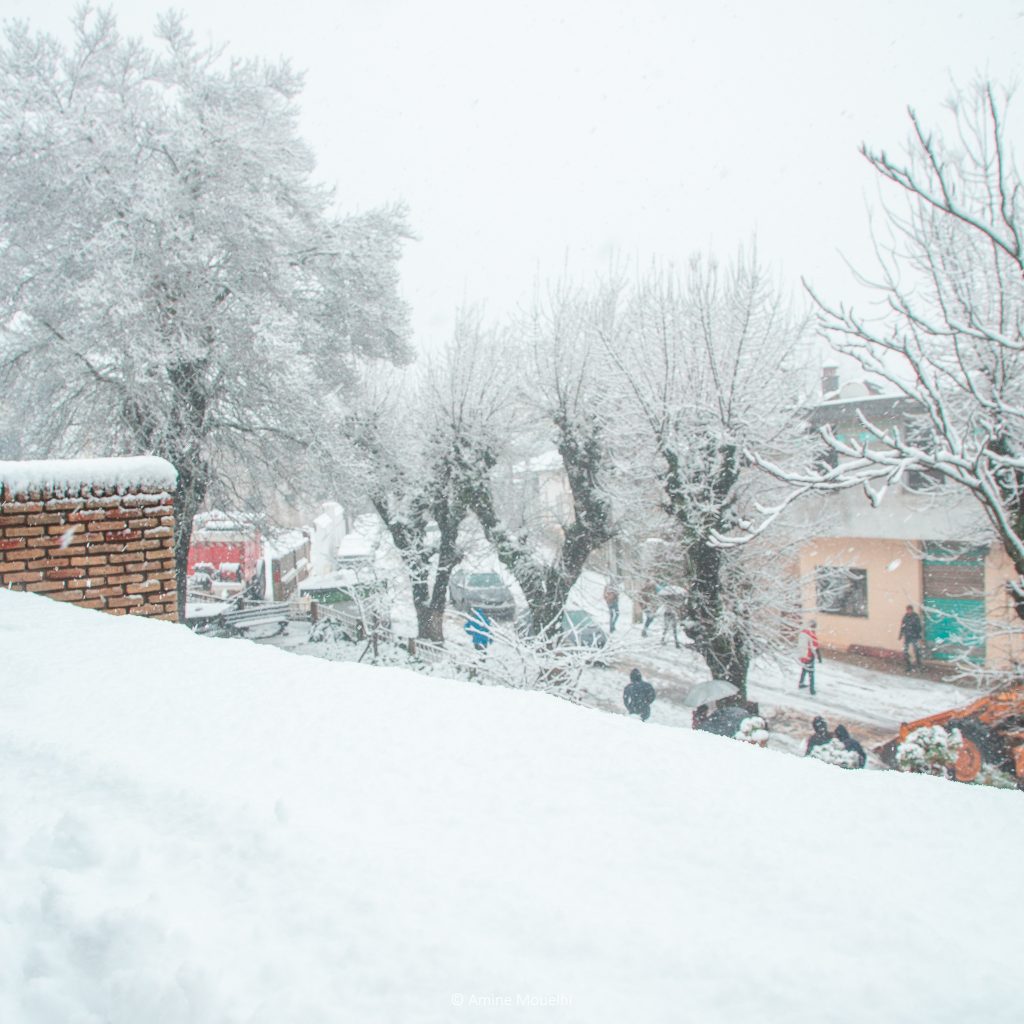
Aïn Draham is one of the few places in Tunisia where it falls reliably most winters, and the sight of it — minarets and cork oaks under white, in a country most people file mentally under “Sahara” — is genuinely startling. Snow days draw Tunisians up from Tunis and the coast specifically to see it, and the town leans into the role of unlikely winter retreat. It does not last long or lie deep most years, and this is not a ski destination, but for atmosphere there is nothing else like it in North Africa. If you want to read more on the wider idea, our piece on spending winter in Tunisia makes the case in full.
A Hunting Lodge and a Walking Country

The French built Aïn Draham as a hill station, and the activity they built it around was hunting — specifically wild boar, which thrive in the Kroumirie forest and remain abundant. The grand old hunting hotel above the town, with its fireplaces and its trophies and its colonial-era bones, is still the architectural emblem of the place, and boar hunting in season remains part of the local economy.
For most modern visitors, though, the draw is gentler: walking. The forest is laced with tracks and trails, the air is cool and clean, and the gradients give you views out over the wooded ridges toward the coast and the border. This is some of the best hiking country in Tunisia, and almost none of it is on the standard tourist circuit. Horseback riding, off-roading, and mountain biking are all on offer through local operators. For the broader context of Tunisia’s protected landscapes, see our guide to the country’s national parks and nature reserves.
Bni Mtir and the Ecotourism Villages

The quiet star of the area is Bni Mtir (Beni M’tir), a small forest village near the dam of the same name that has reinvented itself as an ecotourism destination.
Here the offer is simple and genuine: families opening their homes as guesthouses, produce grown in the backyard, beehives and fruit trees and vegetables, solar panels on the roofs that have made some households energy self-sufficient. You can stay in a village home or opt for eco-camping pitched for the view, gather around a fire at night under a sky thick with stars, and spend the days walking, riding, or hiking out to the Bni Mtir dam. It is the kind of slow, local, low-impact travel that the region does better than anywhere else in Tunisia, and it is the reason to come here rather than simply pass through. Our piece on camping in Tunisia has more on this style of trip.
A Haven for Wildlife
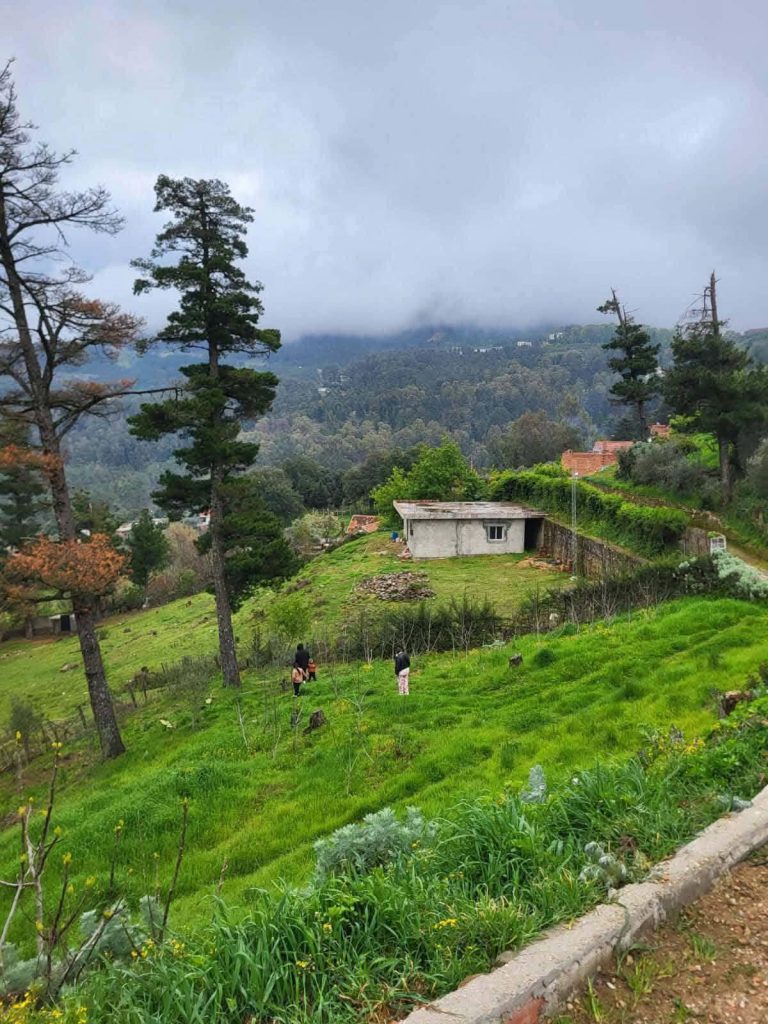
The Kroumirie is one of the richest wildlife regions in the country. The forest shelters wild boar in abundance, along with golden jackals, mongoose, genets, raptors, and a remnant population of Barbary deer — the only deer native to Africa — clinging on in the border forests. Birdlife is exceptional, particularly in spring and autumn. It is a landscape that rewards patience and an early start: the animals are there, but they belong to the forest, and the forest gives them up slowly.
When to Go
Aïn Draham is a four-season destination, and the season you choose changes the trip completely. Spring is the best all-rounder — the forest is at its greenest, the wildflowers are out, the walking is perfect, and the temperatures are ideal. Summer is the region’s secret: while the coast and the south swelter, Aïn Draham stays cool and shaded, which makes it a genuine escape from the Tunisian heat. Autumn brings mushrooms, migrating birds, and the start of the hunting season. Winter is cold, wet, often snowy, and atmospheric — the season people come specifically for, provided you pack for actual cold, which few visitors to Tunisia think to do.
Getting There
The cork-oak mountains are Tunisia’s best argument for a steering wheel: the joy of Aïn Draham is the road itself — the switchbacks up from Tabarka, the forest lanes toward Beni M’tir, the border ridges where the mist sits in the trees. Buses get you to town; a car gets you the region. Compare rentals on DiscoverCars — and pack our rental guide and its rule about finishing mountain drives before dark.
Why Bother
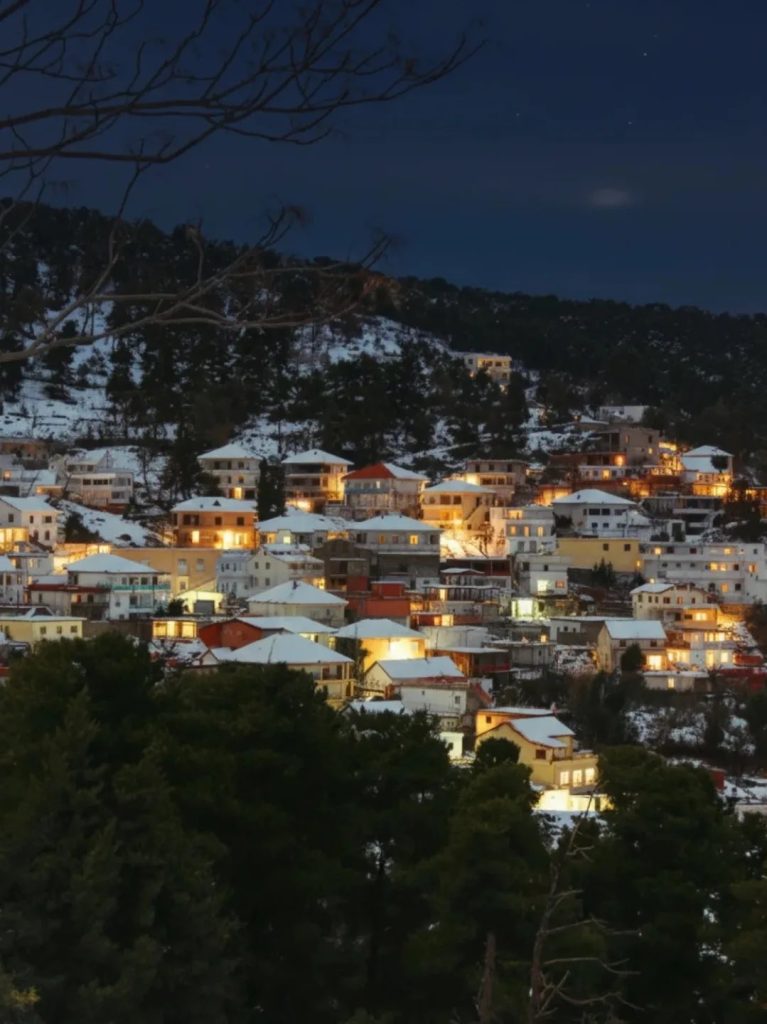
Aïn Draham is not on the way to anywhere. You do not pass through it; you go to it, deliberately, and that deliberateness is the whole point. What you get in return is the one part of Tunisia that breaks every expectation the country sets up — a cork oak forest instead of a desert, cool air instead of heat, snow instead of sun, a hunting lodge instead of a beach resort, and a silence that the rest of the Mediterranean has mostly lost.
Pair it with the coast at Tabarka, give it two or three days, and let the northwest remind you that Tunisia is a much stranger and greener country than its postcards admit.
From the Carthage Magazine Bookshelf
The Kroumirie is where the guidebooks run thin and the practical detail runs out — which is exactly where it helps to have the whole country in your pocket:
- All About Tunisia — the definitive English-language traveler’s guide. 572 pages, 27 chapters, all nine regions including the green northwest, every UNESCO inscription, and the practical answers most travelers wish they’d had before they set out. $24.99 · PDF & EPUB
- Speak Like a Local — 200+ Tunisian Arabic phrases with native audio recorded in Tunis. The phrases for the louage, the guesthouse, and the village table. $14.99 · PDF, EPUB, MP3
- The Authentic Tunisian Cookbook — sixty traditional recipes from the heart of North Africa, including the mountain dishes the Kroumirie does best. $9.99 · PDF & EPUB
All three available as a bundle for $39.99 — guide, language, and food, delivered together.
