
The hill is the colour of the stone it is made of, a dull yellow that turns to honey when the sun is low, and it is missing its top. Two thousand years of quarrying took it off. What is left of Jebel Chemtou is a scalloped mass of cut faces, galleries and spoil, with the ruins of a Numidian king’s shrine still clinging to the summit, and below it, along the Medjerda, the town that lived off the stone: a theatre, baths, a forum, a bridge the emperor Trajan paid for, and a walled camp where the men who cut the marble were kept. This is Simitthus, now Chemtou, twenty minutes west of Bulla Regia, and almost nobody goes.
Three readers told us, in the replies to our northern road trip map, that it deserved better than a footnote. They were right. This is the guide.
The Short Answer
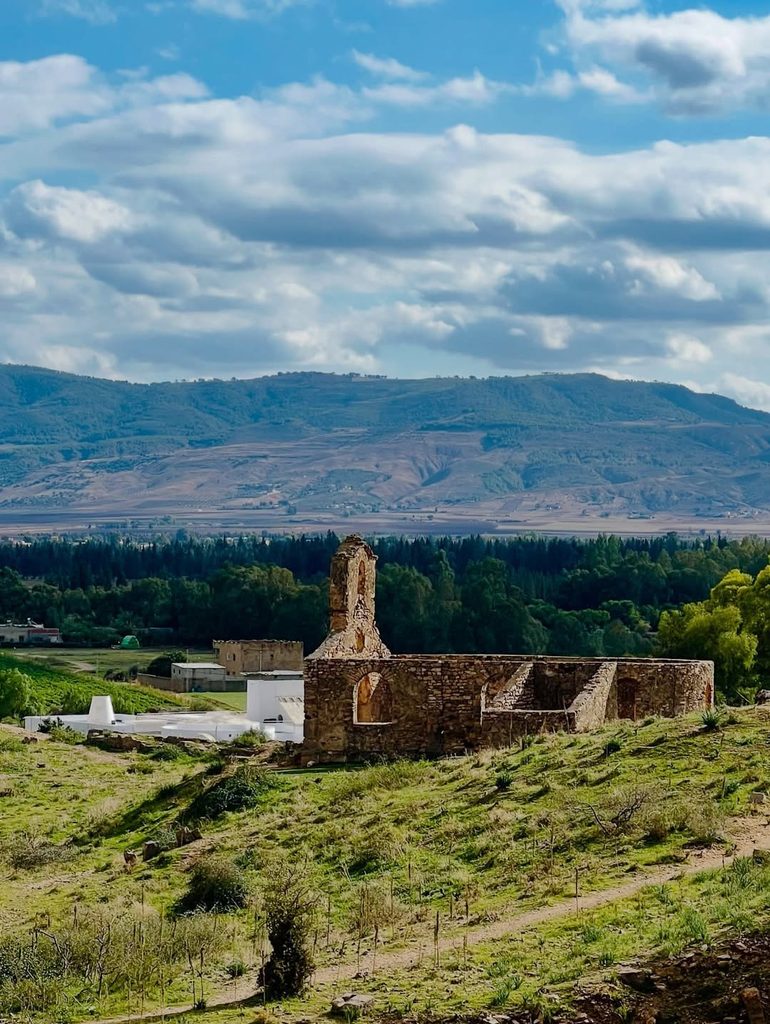
Chemtou is a Roman quarry town on the Medjerda river, 20 kilometres west of Jendouba on the road to Ghardimaou, and the source of giallo antico, the yellow Numidian marble that Rome used for its most expensive floors and columns. There are three things to see: the quarried hill with the Numidian sanctuary on top, the Roman town below it with its theatre, baths and the stumps of Trajan’s bridge, and a museum built with the German Archaeological Institute that is among the best in the country.
Allow two to three hours, combine it with Bulla Regia in the same morning, and bring water and shoes with grip; the site is open, unfenced and largely unshaded. The museum opens 9:30 to 15:00 daily, 8 dinars for foreign visitors.
Why Chemtou Matters
Every empire has a stone it reserves for itself. Rome’s was this one. Marmor numidicum, yellow shading to pink and veined with red, came from exactly one hill in Africa, and the quarries that produced it were imperial property from Augustus onward, run by procurators, worked by convicts and slaves, with the blocks stamped, numbered, hauled to the coast at Tabarka and shipped to the marble yards on the Tiber.
You can still see it in the Pantheon’s floor, in Hadrian’s villa at Tivoli, and in the Baroque chapels that plundered Roman ruins for it a millennium later; the Italians, who have never produced a yellow marble of their own, called it giallo antico and prized it above almost everything but porphyry.
But the Numidians were here first. The Berber kingdom that fought beside and then against Carthage built its shrine on the summit of the hill in the late second century BC, in the reign of Micipsa, son of Massinissa, and it was the Numidians who began cutting the stone. The Romans took over the quarries after the kingdom fell; they turned the shrine into a temple of Saturn, and the hill into a hole. For anyone interested in the Amazigh history that sits under Tunisia’s Roman layer, Chemtou is one of the few places where the Numidian kingdom is visible as architecture rather than a name in Sallust.
What to See
The hill and the Numidian sanctuary
Walk up from the museum; the path is obvious and takes twenty minutes. The quarry faces on the way show the whole method: the channels cut around a block, the wedge holes, the half-extracted columns abandoned when a flaw appeared. On the summit, the sanctuary’s podium survives, with the Roman temple built over it and a small Byzantine church over that. The view is the reason to climb: the Medjerda valley east toward Bulla Regia, the Kroumirie mountains north, Algeria a few kilometres west. The museum has a full-scale reconstruction of the sanctuary’s eastern façade, with its Hellenistic decoration, built from the original fragments; see it before or after the climb, and the ruin on top makes sense.
The Roman town
Simitthus lies between the hill and the river, cut in two today by the Jendouba–Ghardimaou road. On the quarry side are the large baths and the theatre, whose stage is gone but whose vaulted substructure stands; on the river side, the forum with its basilica and fountain, the market hall, a nymphaeum and more baths. Nothing is fenced, labelled or restored for visitors, which is both the problem and the charm. Our guide to the Roman ruins of Tunisia puts Simitthus beside Dougga and Bulla Regia for scale; it is smaller than either and emptier than both.
The bridge and the mills
At the river, the piers of the bridge Trajan built in AD 112 stand in and beside the water; an inscription records the gift, and a fourth-century flood records its end. On the left bank, a century after the bridge, the Romans built a grain mill driven by horizontal water turbines in three channels, one of only two such mills known in North Africa; the other is at Testour, downstream, which makes a neat pairing for anyone following the river east.
The labour camp
West of the quarries, a walled compound of more than four hectares held the people who cut the stone: quarters for the convicts (damnati ad metalla, condemned to the mines, which included Christians during the persecutions), separate quarters for the guards, the engineers and the clerks who kept the accounts, a workshop that mass-produced small marble objects for export, and a cemetery of plain graves. It is the least picturesque part of the site and the most important. Rome’s floors were paid for here.
The museum
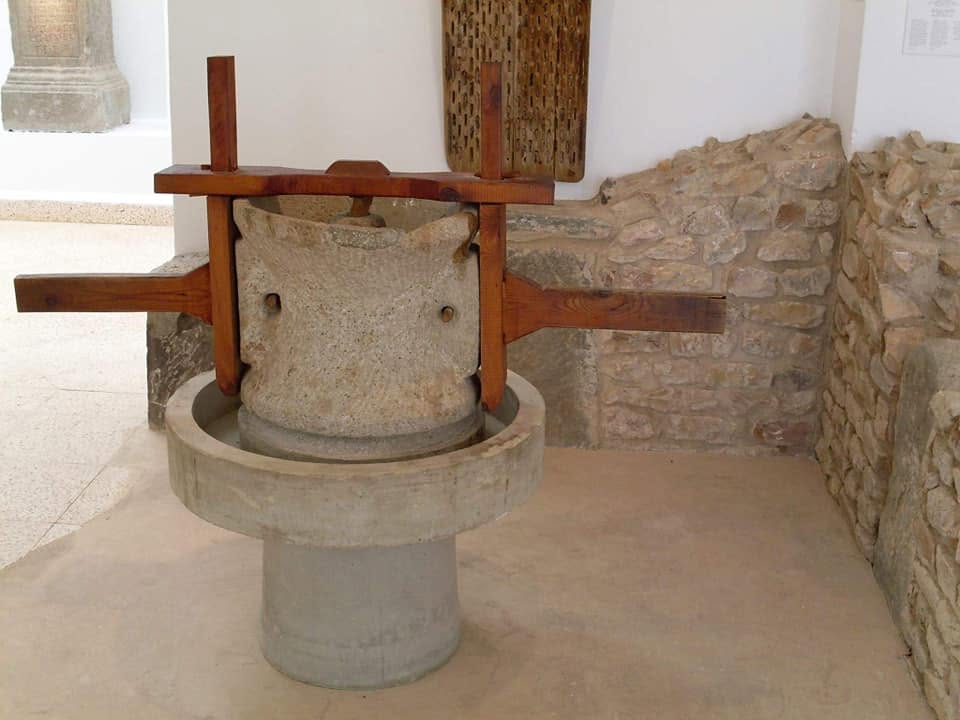
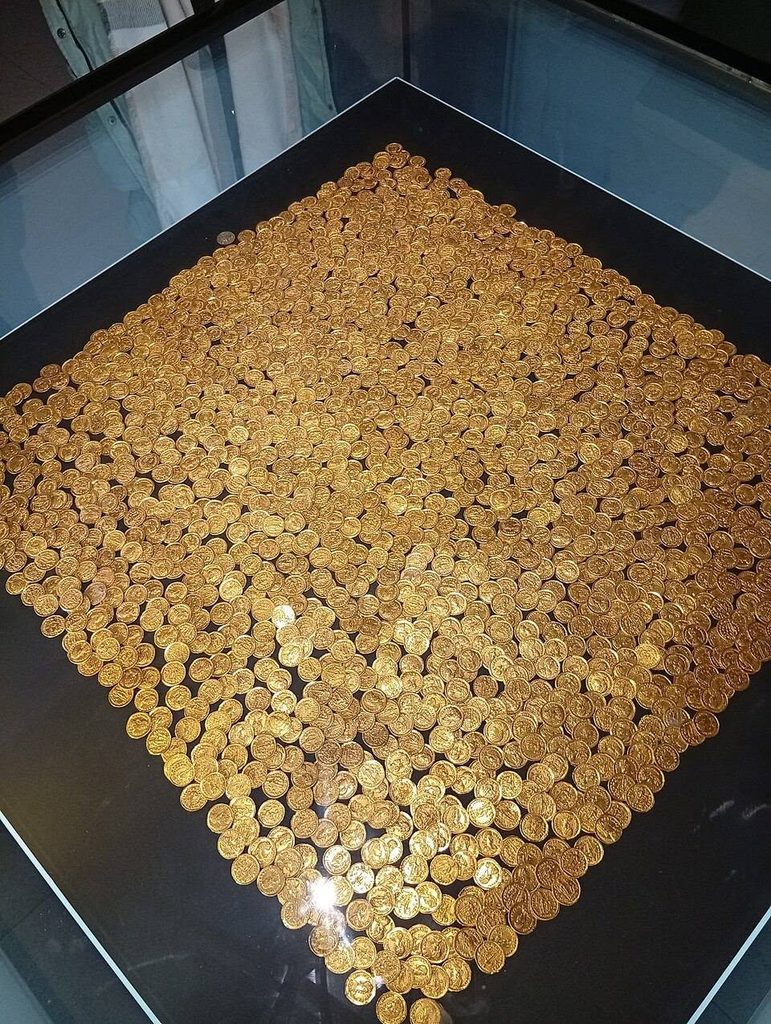
Built in Tunisian-German cooperation after thirty years of joint excavation, the museum is the model of what a site museum should be: the geology of the hill, the Numidian town, the sanctuary façade reconstructed at full height, the quarrying tools and the stamped blocks, the mill turbines, and a sober room on the camp. One thing you will not see: the 1,648 gold coins of the late empire found in a pot while the museum’s foundations were being dug. The Chemtou treasure is in the Bardo in Tunis, where it has its own room.
How to Visit
Chemtou is 20 km west of Jendouba and 10 km east of Oued Meliz, on the road to Ghardimaou, with the turning signed on the right. From Tunis it is 190 km and two and a half hours by the A3 motorway and the Jendouba road; from Tabarka or Aïn Draham about an hour; from Bulla Regia twenty minutes. A rental car is the practical way. Without one, take a louage from Jendouba toward Ghardimaou and ask for Chemtou; a taxi from Jendouba for the morning, waiting included, costs around 60 dinars and is what most independent visitors do.
The museum is open every day from 9:30 to 15:00, in winter and summer alike; 8 dinars for non-residents, 5 for residents. The site has no closing time, no fence and no shade; the hill in July is not advisable after ten in the morning. Spring, when the valley is green and the stone is at its yellowest against it, is the time.
Combine it: Bulla Regia first (its underground villas need an hour and a half), Chemtou after, lunch in Jendouba, and El Kef or Dougga in the afternoon. That is Day 4 and 5 of our northern loop, and the best single day of Roman Africa outside Carthage. With a car and an extra hour, the El Feija national park and its Barbary deer are forty minutes further west at Ghardimaou, where the road ends at the Algerian border.
Frequently Asked Questions
Yes, if you have any interest in how Rome worked rather than just what it built. Dougga shows you the result; Chemtou shows you the cost. The museum alone justifies the detour from Bulla Regia.
Two hours for the museum and the hill, three with the town and the river.
Not yet. It is on Tunisia’s tentative list, with the quarries and the Numidian sanctuary cited; our UNESCO guide covers the eight that are inscribed.
No. The imperial quarries closed with the empire, and the modern quarries nearby work a different stone. The yellow marble is in Rome, in the Bardo, and underfoot in the ruins.
In the Bardo National Museum in Tunis, not at Chemtou.
From the Carthage Magazine Bookshelf
For the Numidian kings, the Roman quarries and the roads between them, three ebooks for the journey.
- All About Tunisia — the definitive English-language traveler’s guide. 572 pages, 27 chapters, all nine regions, every UNESCO inscription, five thematic trails — and the practical answers (visa, currency, transport, etiquette) most travelers wish they’d had on the plane. $24.99 · PDF & EPUB.
- Speak Like a Local — 200+ Tunisian Arabic phrases with native audio recorded in Tunis. The phrases for the taxi, the souk, the café, and the dinner table. $14.99 · PDF, EPUB, MP3.
- The Authentic Tunisian Cookbook — sixty traditional recipes from the heart of North Africa. For when you get home and find yourself missing the food. $9.99 · PDF & EPUB.
All three available as a bundle for $39.99 — guide, language, and food, delivered together.
