
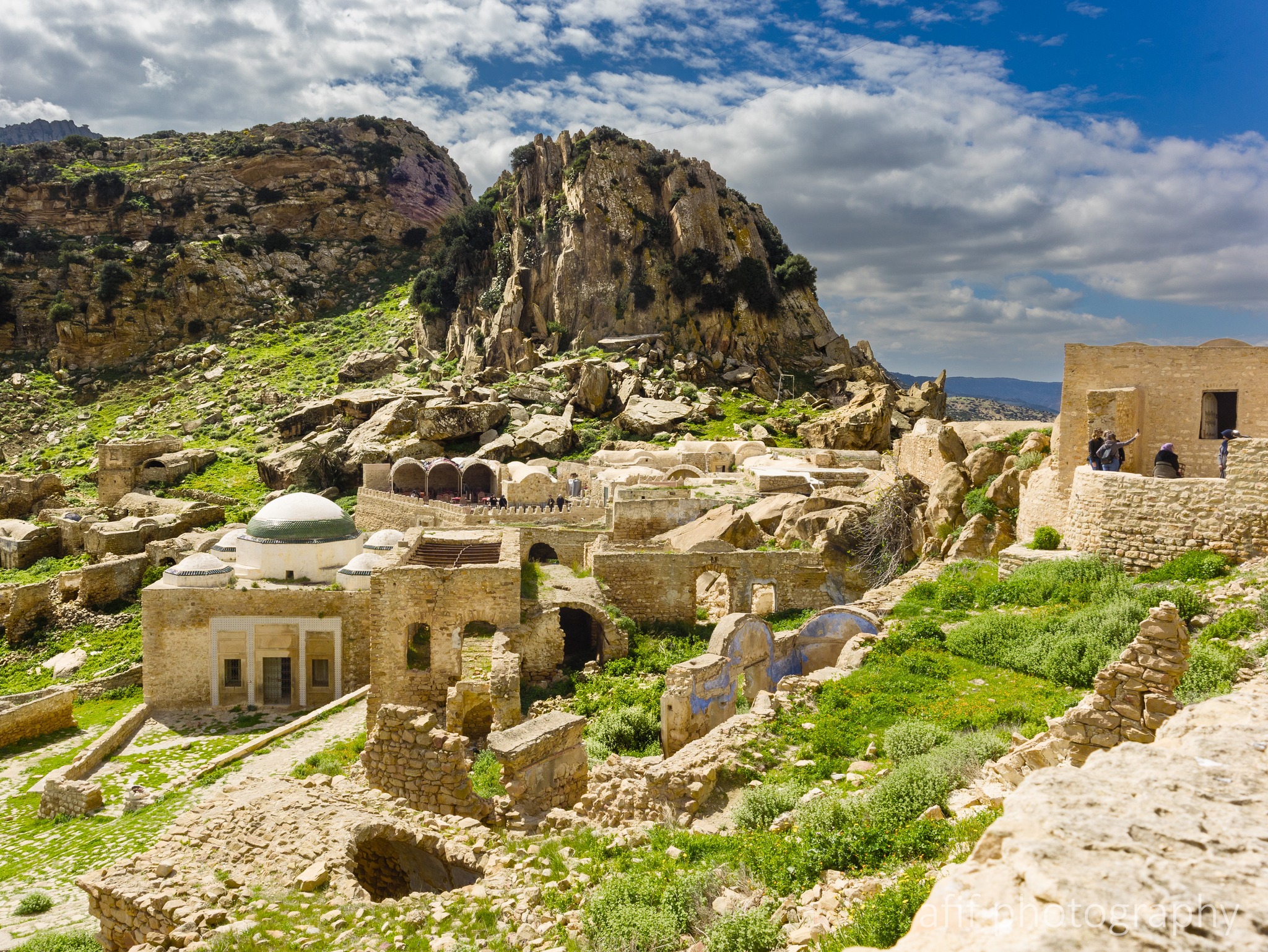
Quick Answer The Amazigh — historically called Berbers, a name many now reject — are the indigenous people of North Africa and the ancestors of most of Tunisia’s population. They were here before the Phoenicians founded Carthage in 814 BCE, before the Romans, before the Arab conquest of 670 CE, before everything you have ever read about in a Tunisian history book. A small Tamazight-speaking population remains, concentrated in southern villages around Tataouine, Matmata, and on the island of Djerba. The wider inheritance — in food, in jewellery, in pottery, in place names, in faces — is everywhere. This is a guide to recognising it.
The first thing to understand is that almost everything you have read about Tunisia begins on the wrong page. The history starts, in most accounts, with the Phoenicians arriving on the coast in the 9th century BCE — Dido and the founding of Carthage, the rise of a trading empire, the wars with Rome. This is the story Tunisia tells about itself in its museums, on its banknotes, and in the name of this magazine.
It is not wrong. It is just incomplete. By the time Queen Dido stepped ashore at the headland that became Carthage, the land behind her had already been inhabited, farmed, traded across, and culturally articulated for at least four thousand years. The people she met were not nameless natives waiting to be made historical by contact with the Phoenicians. They were the Imazighen — the free people, in their own language — and they had been here, by the most conservative archaeological reckoning, since the beginning of the Holocene.
The Amazigh are still here. Most Tunisians are, in the genetic and cultural sense that matters most, their descendants. A smaller number still speak the language and live the older way. This piece is about all of them.
The Word
Begin with the word. Amazigh (plural Imazighen; feminine Tamazight) is the name the people give themselves. It means, depending on which etymology you trust, the free or the noble. It is the name they have used for themselves since antiquity.
Berber, the word used by almost every English-language history book of the last two centuries, was given to them by outsiders. The Greeks called them barbaroi — the same word from which we get barbarian, originally just meaning people who don’t speak Greek. The Romans Latinised it to barbari. The Arabs adopted it as barbar. Three thousand years of foreign labels later, the people the word describes are increasingly inclined to use their own.
This guide uses Amazigh throughout, with Berber mentioned where it is the more familiar term to English-language readers. The shift is happening across the Maghreb. Morocco recognised Tamazight as an official language in 2011; Algeria followed in 2016; Tunisia, where the speaking population is smaller, has been slower, but the cultural reclamation is well underway. The flag — yellow over green over blue, with a red yaz (the Tifinagh letter for free) in the centre — flies more often each year.
Who They Are
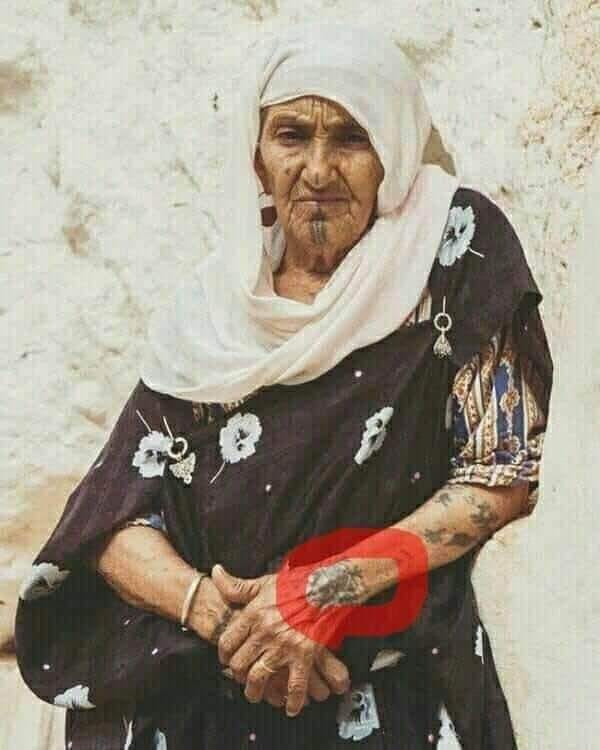
The Amazigh are the indigenous people of all of North Africa, from the Siwa oasis in western Egypt to the Atlantic coast of Morocco, and from the Mediterranean down through the Sahara. They are not a single ethnic group in the modern political sense; they are a family of related peoples speaking a family of related languages, often grouped under the umbrella term Tamazight though each region has its own variant.
Genetic studies suggest the Amazigh population descends from at least two ancient layers: the Iberomaurusian hunter-gatherers who occupied the region from roughly 20,000 BCE, and a Neolithic migration from the Near East that brought farming and herding around 7,000 BCE. By the time written history reaches them, in the records of Egypt and later Carthage, they are already a settled agricultural and pastoral civilisation, organised in tribes and confederations, trading across the Sahara and along the Mediterranean coast.
In Tunisia specifically, the Amazigh population includes — historically — the Numidians, the great rivals and sometime allies of Carthage who produced the cavalry that fought for Hannibal at Cannae; the Massyli and Masaesyli, the two major Numidian kingdoms; the Gaetuli of the steppes south of the Roman frontier; and the Garamantes, the desert kingdom whose ruins still surface from time to time in the southern sands.
Most modern Tunisians, in the genetic sense, descend principally from this Amazigh substrate, with Phoenician, Arab, sub-Saharan African, and Andalusian admixture layered on top across the centuries. The country is, in the truest sense, an Amazigh country with an Arab-Muslim cultural identity. The two facts have coexisted, sometimes uneasily, for thirteen and a half centuries.
The Language
Tamazight in Tunisia is endangered. Most estimates put the number of native speakers at between 50,000 and 200,000 — perhaps 1–2% of the population — concentrated in the south. The language is unrelated to Arabic; it belongs to the Afro-Asiatic family alongside Semitic and ancient Egyptian, but Tamazight is its own branch with its own grammar, its own script (Tifinagh), and its own deep continuity.
The villages where you will still hear Tamazight spoken in daily life are:
- Chenini, Douiret, and Ghomrassen in the Tataouine governorate — the ksour villages of the deep south, perched on ridges, with their distinctive granaries (ghorfas) stacked like honeycombs.
- Matmata, Toujane, and Tamezret in the Gabès governorate — the famous troglodyte villages of the south-central interior. Matmata in particular, still partly Tamazight-speaking, is where George Lucas filmed the Lars homestead.
- Sened and a handful of villages in the Gafsa governorate.
- Djerba, where the island’s Berber dialect — Jerbi — has been in retreat for a century but still survives in pockets, particularly among the older generation in Guellala and Sedouikech.
These are not folkloric remnants. They are working languages in working villages. But the trajectory has been clear: a generation ago, Tamazight was spoken by perhaps three or four times as many Tunisians as today. UNESCO classifies it as endangered. A small but growing cultural movement, often led by younger people, is now trying to reverse the decline.
If you visit any of these villages and want to acknowledge what you’re seeing, the words to know are Azul — hello, in Tamazight — and Tanemmirt — thank you. Both will be appreciated.
What the Amazigh Built
The visible Amazigh heritage of Tunisia is extensive once you know what to look for.
The ksour and the ghorfas. The fortified granary-villages of the south — most spectacularly at Ksar Ouled Soltane, Chenini, and Douiret — are Amazigh architecture in its purest form: vaulted clay-and-stone storage rooms stacked four and five storeys high around a courtyard, where families stored grain, oil, and seed for the year. Many ksour are eight hundred years old or more. The wider story of these structures runs across the Tataouine governorate, where Star Wars later borrowed the name of the regional town for the home planet of Luke Skywalker; see the field guide to Star Wars in Tunisia for the cinematic overlay.
The troglodyte houses. The cave dwellings of Matmata and the surrounding villages — homes carved into pits dug straight down into the soft sandstone, with rooms tunnelled out of the pit walls — are an Amazigh response to the climate of the south: cool in summer, warm in winter, invisible from a distance. Some are still inhabited. Others are now hotels, including the famous Hotel Sidi Driss where the Lars family scenes were filmed.
The mountain-top mosques of Djerba. The Ibadi villages of Djerba — Guellala, Sedouikech, Cedghyene — are dotted with squat, whitewashed mosques built like small forts, with thick walls and almost no decoration. This is Amazigh Islamic architecture: minimalist, defensive, profoundly local. The unique architecture of Djerba is its own subject; what matters here is that it is Amazigh.
The pottery of Sejnane. In the Mogod hills of the northwest, the women of Sejnane have been making hand-coiled, open-fired pottery for at least three thousand years using a technique that predates the potter’s wheel and is unambiguously pre-Phoenician. UNESCO inscribed the craft on its Intangible Cultural Heritage list in 2018. The story of the Sejnane potters is the single best entry point in English to one strand of living Amazigh craft.
The carpets. The geometric, knotted-pile carpets of the interior — the alloucha, the mergoum, the kilim — are Amazigh weaving traditions that predate Islamic Tunisia by a millennium. The patterns are not abstract decoration. They are a vocabulary: protective signs against the evil eye, fertility motifs, tribal identifiers. Kairouan eventually became the commercial centre of the trade, but the design language is older than the city and comes from the hills.
The food. Couscous — Tunisia’s national dish — is Amazigh in origin. Berber women across North Africa have been rolling semolina into grain by hand for at least two thousand years, possibly longer; the dish was already old when the Arabs arrived in the 7th century. The slow-stewed broths, the use of tabil, the preservation of meat and vegetables in clay, the centrality of bread and olive oil — much of what we now call Tunisian cuisine is Amazigh cuisine with Arab, Andalusian, and Italian top-notes. See the wider story in top foods to eat in Tunisia.
Tanit, Saints, and the Older Religion
Long before the Phoenicians arrived with Baal Hammon and his consort, the people of North Africa had their own pantheon and ritual practice. Pieces of it survive.
The most visible inheritance is the cult of the marabouts — the white-domed shrines of holy men (and, much less commonly, holy women) scattered across the Tunisian countryside. These are formally Islamic, but the practice — visiting the shrine, leaving small offerings, asking the intercession of the dead saint — has older Amazigh roots in ancestor veneration and place-spirituality. Orthodox theologians have argued with the practice for centuries; the rural villages have, in most cases, continued.
The Khomsa — the five-fingered hand still painted on doors, hung from rear-view mirrors, and inked onto skin — is even older. The protective hand against the ayn, the evil eye, predates Islam, predates Tanit, and runs through Berber, Phoenician, Jewish, and finally Muslim Tunisia as one continuous symbol that each successive culture absorbed without quite replacing.
The fibula — the heavy silver triangular brooch with which Berber women have, for centuries, pinned their garments — is another piece of the same vocabulary. The triangle is fertility; the central boss is the eye; the dangling chains are wealth and ritual sound. The piece is functional jewellery and religious object at once.
Yennayer and the Amazigh Calendar
The Amazigh have their own calendar. It is solar, agricultural, and runs from a starting point — the accession of the Libyan-Berber pharaoh Sheshonq I to the throne of Egypt in 950 BCE — that makes the current Amazigh year 2976. The Gregorian year 2026 corresponds to Yennayer 2976.
The new year — Yennayer itself — falls on 12 January in the Gregorian calendar and is the most important date in the Amazigh ritual year. It is marked across the Maghreb with a special meal (often a couscous with seven vegetables and a single hidden almond or date — the finder is promised a year of luck), the slaughter of a chicken, and, in the southern Tunisian villages, with collective celebrations that have grown each year as the cultural revival gathers pace.
It was not a national holiday in Tunisia until very recently. The Tunisian state did not officially recognise the date until the late 2010s. It is now informally observed in the south and increasingly in Tunis itself, particularly among younger Tunisians for whom the Amazigh layer of national identity has become a point of interest, sometimes of pride.
The Politics
A note on what’s at stake.
For most of the modern Tunisian state’s history — from independence in 1956 onward — the official national story was Arab and Muslim. The Bourguiba government, like most newly independent states of its era, sought to forge a single national identity, and that identity was articulated through the Arabic language, Sunni Islam, and a Mediterranean civic modernity that drew on French Republican models. Tamazight had no official status. Amazigh names were sometimes refused at the civil registry. Schools taught Arabic and French; Tamazight, if spoken, was spoken at home.
This produced what is, in retrospect, a strange situation: a country whose population was overwhelmingly of Amazigh descent and whose pre-Arab history was Amazigh, conducting its public life as though that history belonged to someone else.
The 2011 revolution did not change this overnight, but it opened space. Tunisian Amazigh associations, which had existed quietly for years, became more visible. The 2014 constitution did not name Tamazight as an official language (Article 1 still designates Arabic), but it did commit the state to protect cultural diversity. Cultural festivals in Tataouine and Djerba have grown. Tifinagh script appears on more shop signs in the southern villages. A small but real movement is underway.
This is not, by Maghrebi standards, a contentious situation. There has never been an Amazigh separatist movement in Tunisia of the kind that has occasionally surfaced in Algeria. The cultural reclamation is mostly cooperative, mostly proud, mostly young. What it has done is to remind Tunisia of something Tunisia already knew — that the country did not begin with the Phoenicians, and that the first chapter of any honest national history is still being written into the textbooks.
Where to See It
If you have a week in Tunisia and want to encounter the living Amazigh inheritance, this is the itinerary that works:
- The Bardo Museum in Tunis for the pre-Roman archaeology — the Numidian rooms, the early stelae, the Punic-Libyan bilingual inscriptions that record the encounter between the indigenous people and the Phoenician colonists.
- Sejnane, two hours northwest of Tunis, for the pottery and the potters. A day trip from Tunis is feasible; an overnight in Bizerte is more comfortable.
- Djerba, the southern island, for the Ibadi mosques, the Jerbi dialect (still in pockets), and the older Berber Tunisia of the deep coast.
- Matmata for the troglodyte villages and the road south.
- Tataouine and the ksour — Ksar Ouled Soltane, Chenini, Douiret — for the granary architecture and the working southern villages where Tamazight is still the first language at home.
Add Kairouan’s carpet souks and any small rural market in the interior for the textile and craft traditions in continuous trade.
What This Means
Tunisia is one of the small handful of countries in the world that has been continuously inhabited, settled, and culturally articulated for the entire span of recorded history. The headline names of that history — Phoenician, Roman, Vandal, Byzantine, Arab, Ottoman, French — describe successive layers of rule, not successive populations. The people on the ground, in most cases, stayed where they were and absorbed each new arrival.
The Amazigh are the people who did the staying.
To recognise this is not to diminish anything else Tunisia is. The country’s Arab-Muslim civilisation, with its mosques and its medinas and its language and its food and its centuries of Mediterranean exchange, is the cultural form that Amazigh Tunisia took after the 7th century. That form is fully owned, fully Tunisian, and not in conflict with the substrate beneath it.
But the substrate is there. It is in the faces in the souk and the patterns in the carpets and the words that older women still use when no one is listening for the official language. It is in the pots that the women of Sejnane fire over dung and straw, in the granaries the families of Tataouine still climb to fetch grain, and in the small protective hand someone painted, last week, on a door in the old town of Tunis.
Three thousand years before Carthage. Still here. The first chapter, finally getting written.
From the Carthage Magazine Bookshelf
The Amazigh layer of Tunisia rewards slow travel and a little reading. Three Carthage Magazine ebooks were built for the days you take that trip:
- All About Tunisia — the definitive English-language traveller’s guide. 572 pages, 27 chapters, all nine regions — with a full chapter on the south, the ksour, and the villages where Tamazight is still the language of the kitchen. $24.99 · PDF & EPUB
- Speak Like a Local — 200+ Tunisian Arabic phrases with native audio recorded in Tunis. The Derja you hear in the souk carries more Amazigh substrate than most travellers realise. $14.99 · PDF, EPUB, MP3
- The Authentic Tunisian Cookbook — sixty traditional recipes from the heart of North Africa, including the couscous Berber women have been rolling by hand for two thousand years. $9.99 · PDF & EPUB
All three available as a bundle for $39.99 — guide, language, and food, delivered together.
