
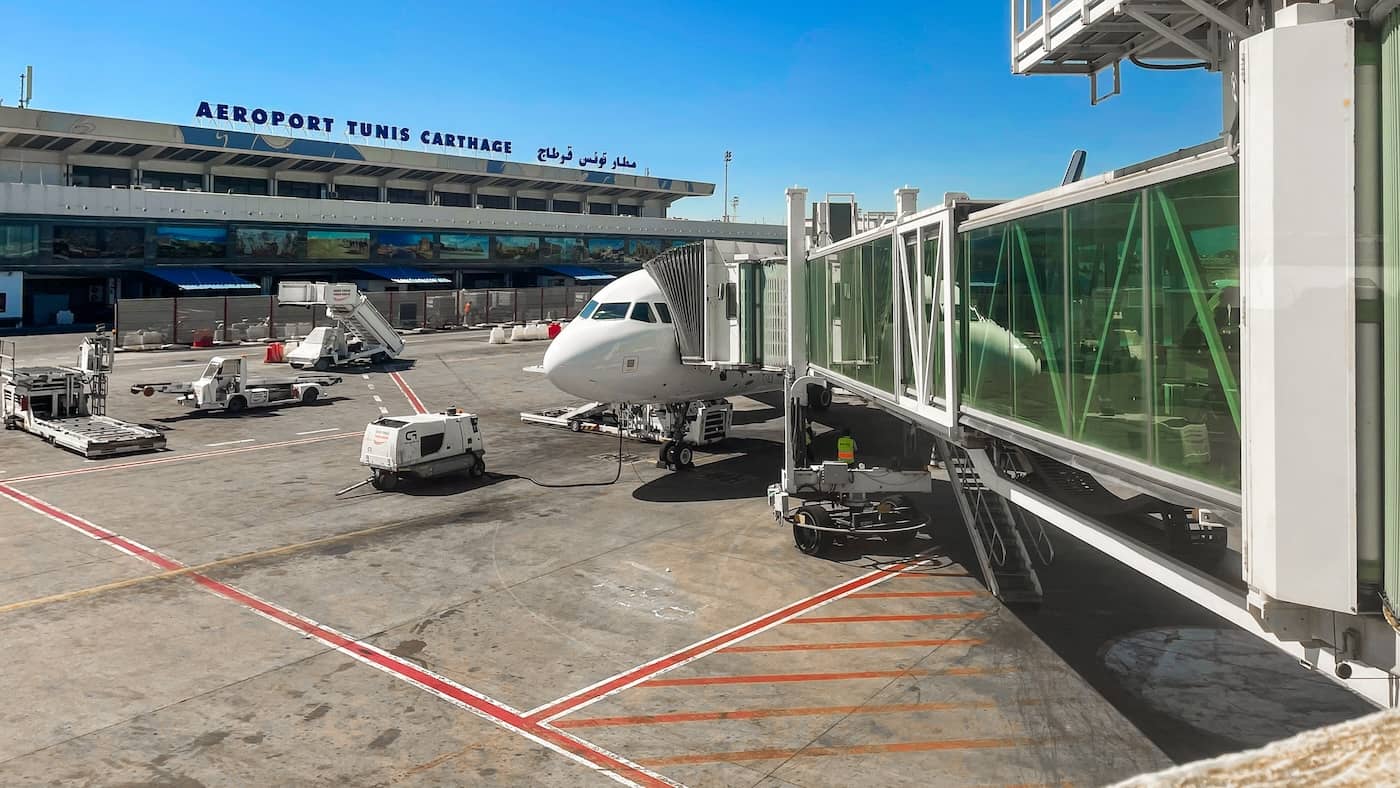
On a July evening in Tunis, when the heat finally loosens its grip and the cafés along Avenue Habib Bourguiba fill again, the conversations at the small round tables tend to circle back to the same word: el-ghorba — the elsewhere, the away. Someone’s cousin just got his visa for Lyon. Someone’s classmate passed the German language exam. Someone else is still waiting, refreshing an embassy portal on a cracked phone screen, coffee going cold.
To listen in is to hear a country’s quietest referendum. Nearly two-thirds of young Tunisians say they have considered emigrating, and the share who think about it a lot has climbed from 38 percent to 51 percent since 2018. And yet — here is the twist that statistics rarely make room for — the same surveys find this generation stubbornly optimistic about the future. They are not giving up on Tunisia. They are negotiating with it.
The Arithmetic of Departure
The numbers behind the café conversations are blunt. Youth unemployment stood at 37.5 percent in the first quarter of 2026 — and it has barely moved from that range since 2022. This is the paradox this generation carries: young Tunisians are the most educated in the country’s history, with more than three-quarters holding at least a secondary education, yet they remain the most likely to be locked out of work.
The most qualified are leaving fastest. Of the roughly 90,000 engineers registered with the national order, some 39,000 now live abroad — an average of twenty engineers departing every single day, from a country that trains about 8,000 a year. Medicine tells the same story more starkly: of a recent graduating class of 1,900 doctors, 1,600 left to practice elsewhere. Tunisia has become one of the leading suppliers of foreign doctors to France.
These are not new anxieties. When we reported on young Tunisians turning north in search of more, the streets of Tunis, La Marsa, and Gammarth already told the story of promises deferred since 2011. What has changed is the sheer normalcy of it. Leaving is no longer an act of desperation or rebellion. It is a line item in a family budget, a plan discussed over Sunday couscous, sometimes financed by selling the very house the family hoped a graduate would one day fill.
The Ledger Has Two Columns
But departure is not the whole transaction. Tunisians abroad now send home more money than the entire tourism sector earns — remittances quietly overtook hotel revenues in 2023, propping up households, paying tuition, seeding small businesses in towns far from any investment map. The Tunisian community abroad keeps growing and evolving, and it behaves less like an amputated limb than like an extended nervous system: wiring money, ideas, and expectations back across the Mediterranean.
And some of them come back. The most famous proof stands in the story of InstaDeep, the AI company founded in Tunis with two laptops and two thousand dollars, acquired by BioNTech in a deal worth over half a billion pounds — the moment Tunisia announced itself as Africa’s leading DeepTech contender. Its founders did not succeed despite being Tunisian. They built global ambition on a Tunisian foundation, and in doing so handed an entire ecosystem its favorite counterargument to despair.
What Staying Looks Like
Hope, in Tunisia, rarely announces itself in speeches. It looks like an eighteen-year-old from a public high school securing a government startup label before finishing his baccalaureate — as Ayhem Ghanmi did with HackUp, becoming the youngest founder recognized under the Startup Act. It looks like the volunteers of Vélorution Tunisie teaching bike classes in a Montplaisir garden, insisting that a greener, saner Tunis is worth building lane by missing lane. It looks like founders squeezing through accelerator cohorts, in an ecosystem that international observers have ranked among the top emerging startup environments in the MENA region — noted, pointedly, for its ability to generate talent, if not always to keep it.
None of this cancels the arithmetic of departure. A bike lane does not employ a radiologist; a startup label does not pay a first-year engineer what Munich pays. But these are the places where the optimism in the surveys becomes visible — where “I believe things can improve” stops being a poll response and becomes a Saturday morning.
A Generation That Refuses the Either/Or
Perhaps the most honest way to understand Tunisia’s youth in 2026 is to stop asking whether they will stay or go, and start noticing that they have dismantled the question. The doctor in Strasbourg funding her brother’s master’s degree in Sfax. The developer in Berlin who mentors a Tunis cohort over video calls after work. The graduate who left, learned, and returned to hire five people in Sousse. Even the national football team that will carry the flag through a World Cup summer is itself a map of this generation — a squad drawn from both banks of the Mediterranean, built on experienced players and energetic youth, each name a small essay on belonging at a distance.
This weekend, Tunisia marks Republic Day — sixty-nine years since the country decided it could govern itself. The young people filling its cafés and its departure lounges are, in their own way, still holding the republic to that founding wager. They leave, and they hope. They send money, and they send expectations. They are betting, from Tunis and from Toulouse alike, that the distance between the Tunisia that exists and the Tunisia they can imagine is a distance that can still be closed.
The question was never whether they love their country. It is whether their country will make room for that love to have an address.
