
If you ask a Tunisian where the country’s best figs come from, the answer is almost reflexive: Djebba. Press a little, ask why, and the answer narrows further: the Bouhouli. Press once more, ask where Djebba is, and the answer often gets vaguer. Somewhere in the northwest. Up in the mountains. A small village. Near Béja, maybe?
It is, in fact, all of those things. Djebba is a village of around six thousand people perched at roughly seven hundred meters of altitude on the flank of Mount Gorraa, in the governorate of Béja. It is unlike almost any other place in Tunisia. And the fruit grown there — the Bouhouli fig, in particular — is unlike any other fig in the world.
In 2012, the Tunisian government formally recognized that uniqueness. Bouhouli figs became the first agricultural product in the country’s history to be granted a protected Geographical Indication — Tunisia’s equivalent of the French AOC label that protects Champagne or Roquefort. Eight years later, in 2020, the FAO went further. It designated the hanging gardens of Djebba El Olia — the terraced agroforestry system that produces the figs — as a Globally Important Agricultural Heritage System (GIAHS), putting Djebba on a list of just sixty-odd sites worldwide deemed essential to the planet’s agricultural heritage.
None of which has quite caught up, yet, in Tunisian consciousness. Djebba is still a place most Tunisians have heard of but never been to. That is changing — and the village’s story is one of the more hopeful in Tunisian agriculture today.
The hanging gardens of Djebba El Olia
The road up to Djebba climbs sharply out of the Medjerda Valley. The plain disappears behind you. The slopes get steeper and greener — there is more rain on this side of the mountain than in most of Tunisia, and you can see it in the vegetation: oak, carob, wild olive, pomegranate. Eventually the road levels out into a series of terraces cut into the mountainside, each one supported by a low wall of dry stone, each one planted with a tangled, intentional mess of trees and vegetables.
These are the ejennas — the hanging gardens of Djebba. Most of them are less than a hectare each. They are not orchards in the European sense; they are something older and more ingenious. A single ejenna will contain figs growing alongside olives, pomegranates, quinces, apples, walnuts, grapes overhead on a pergola, and a ground layer of fava beans, mint, parsley, and whatever else the season demands. The trees shade the vegetables. The vegetables suppress the weeds. The figs feed the family — and, increasingly, the supermarkets of Tunis and the Gulf.
It is a Berber farming system, refined over centuries. The terraces themselves are believed to date to at least the Roman period, when the water-sharing protocols that still govern Djebba’s irrigation system began to take shape. A network of small canals carries spring water down the mountain to a series of communal basins — seventy-three of them, by one count — from which each farming family draws its allotted share on its allotted day. Disputes are rare. The customary law of Djebba El Olia has held for generations.
Suggested Read: Tunisia Emerges as Global Leader in Organic Olive Cultivation
What makes a Bouhouli a Bouhouli
There are dozens of fig varieties in Djebba — the village is, in fact, one of the great living fig libraries of the Mediterranean — but the one that has made Djebba famous is the Bouhouli.
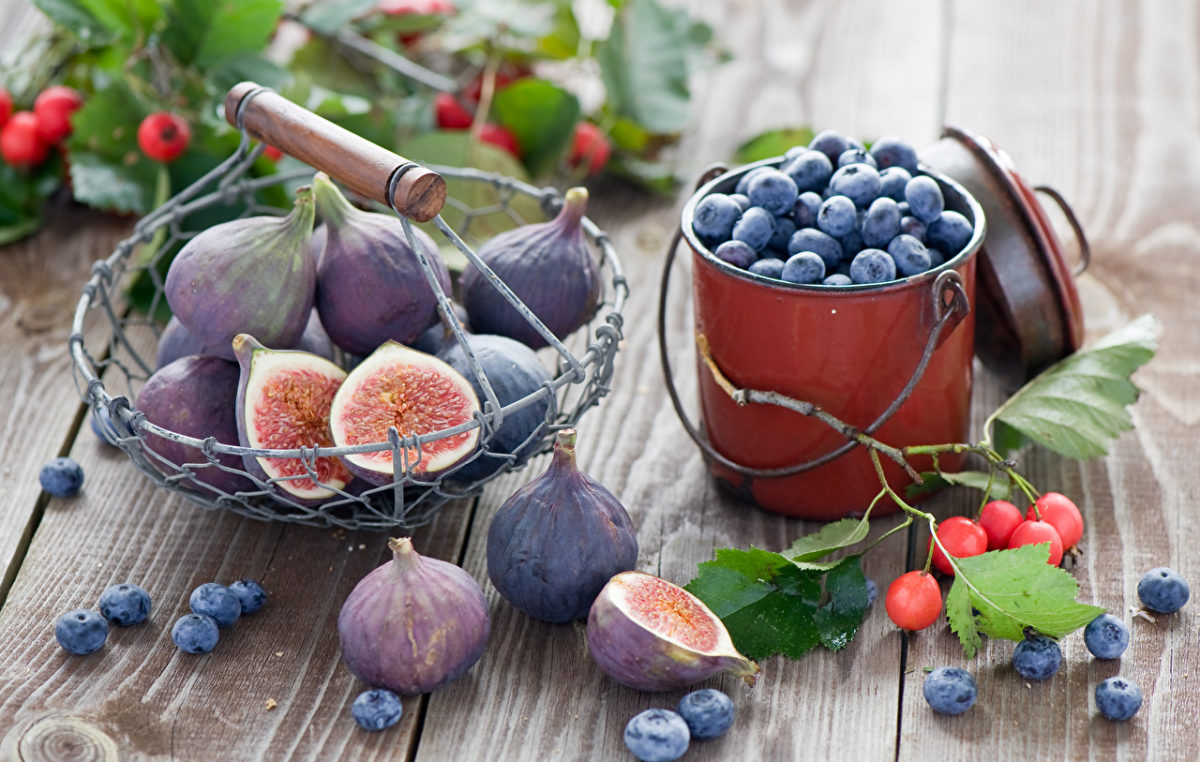
It is a small fig, no bigger than a golf ball, with a deep purple-black skin and crimson flesh. Cut one open and the inside looks almost candied. The flavor is honeyed and dense, with a faint note of red wine and a sweetness that is somehow not cloying. The seeds are small enough to disappear. Eat one fresh off the tree, still warm from the sun, and you will understand why Djebba’s farmers have spent the better part of a century insisting that this fig is not like other figs.
The Bouhouli grows only in Djebba. Cuttings have been transplanted elsewhere in Tunisia, in Morocco, even — by curious agronomists — to Italy and Spain. The fruit produced outside the terroir of Mount Gorraa is recognizably the same variety. It is, by every honest account, not the same fig. The microclimate of the mountain, the iron-rich red soil of the terraces, the spring water filtered through limestone, the high altitude that drops the nighttime temperatures even at the peak of the harvest — all of it conspires to produce something that the Tunisians, with characteristic understatement, simply call the fig of Djebba.
The season is brief. Bouhouli figs ripen from mid-August to late September, with the harvest peaking around the first week of September. A single tree produces only forty or fifty kilograms in a good year. The fruit is hand-picked, packed into small wooden crates, and rushed down the mountain to market within twenty-four hours. Anything left over is dried, made into jam, or distilled into the home-brewed fig liqueur — boukha, in its rougher form — that older Djebba households still keep in a glass demijohn behind the kitchen door.
A women-led economy at altitude
What has changed in Djebba over the last decade is not the figs. It is who profits from them.
For most of the twentieth century, Djebba’s farmers sold their crop at the foot of the mountain to middlemen who resold it at four or five times the price in Tunis. The geographical isolation that made the figs so good also made the village economically dependent on whoever showed up in a truck.
In 2012, with the awarding of the Geographical Indication, that began to shift. A village association was formed to manage the GI. Producers learned to label, certify, and brand their fruit. Supermarket chains in Tunis began buying direct. Export contracts opened up to the Gulf and, more recently, Canada. The Swiss-funded PAMPAT project (and its UN-backed extension) trained the village in marketing, food safety, and packaging. By 2019, the Tunisian Tourist Office had quietly begun promoting Djebba as a destination in its own right; visitor numbers rose by roughly 150 percent between 2015 and 2019.
The more interesting development, though, has been on the kitchen table. Outside the brief picking season, Djebba’s figs have to be transformed if they are going to generate income year-round. That work — making dried figs, fig jam, fig molasses, fig syrup, fig-stuffed pastries, fig-based cosmetics — has been taken on by a series of small women’s cooperatives in the village. The names are local and unfussy: Bouhouli, Djebba Délices, Saveurs de Gorraa. The income they generate goes directly into the households of women who, a decade ago, had effectively no cash economy of their own.
This is, quietly, one of the more successful rural development stories in modern Tunisia.
When to go
The honest answer is late August or the first week of September, when the harvest is in full swing and the village’s annual Festival des Figues de Djebba — the Djebba Fig Festival — takes over the central square. The festival is small, local, unpolished, and entirely the better for it. There are tastings, recipe competitions, agricultural exhibits, music in the evening, and an enormous trestle table where the season’s varieties are set out for anyone curious enough to compare them side by side.
The drive from Tunis is a little over two hours. The last fifteen kilometers, up the mountain, are slow and switchback-heavy; take them in the morning, when the light is best and the air is still cool. Buy your figs from a farmer, not a market stall. Ask which ejenna they came from. The answer — a specific terrace, halfway up a specific slope, owned by a family with a specific name — is part of what makes a Bouhouli fig worth its price.
Tunisia has many famous foods. Harissa, brik, mloukhiya, makroudh. The Bouhouli fig is the only one with a legal address.
- Suggested Read: Fruits From Tunisia: 15 Tunisian Fruits to Eat When Traveling
- Suggested Read: Harissa, Olive Oil, Dates & Family: The Tunisian Way to Live Longer
