
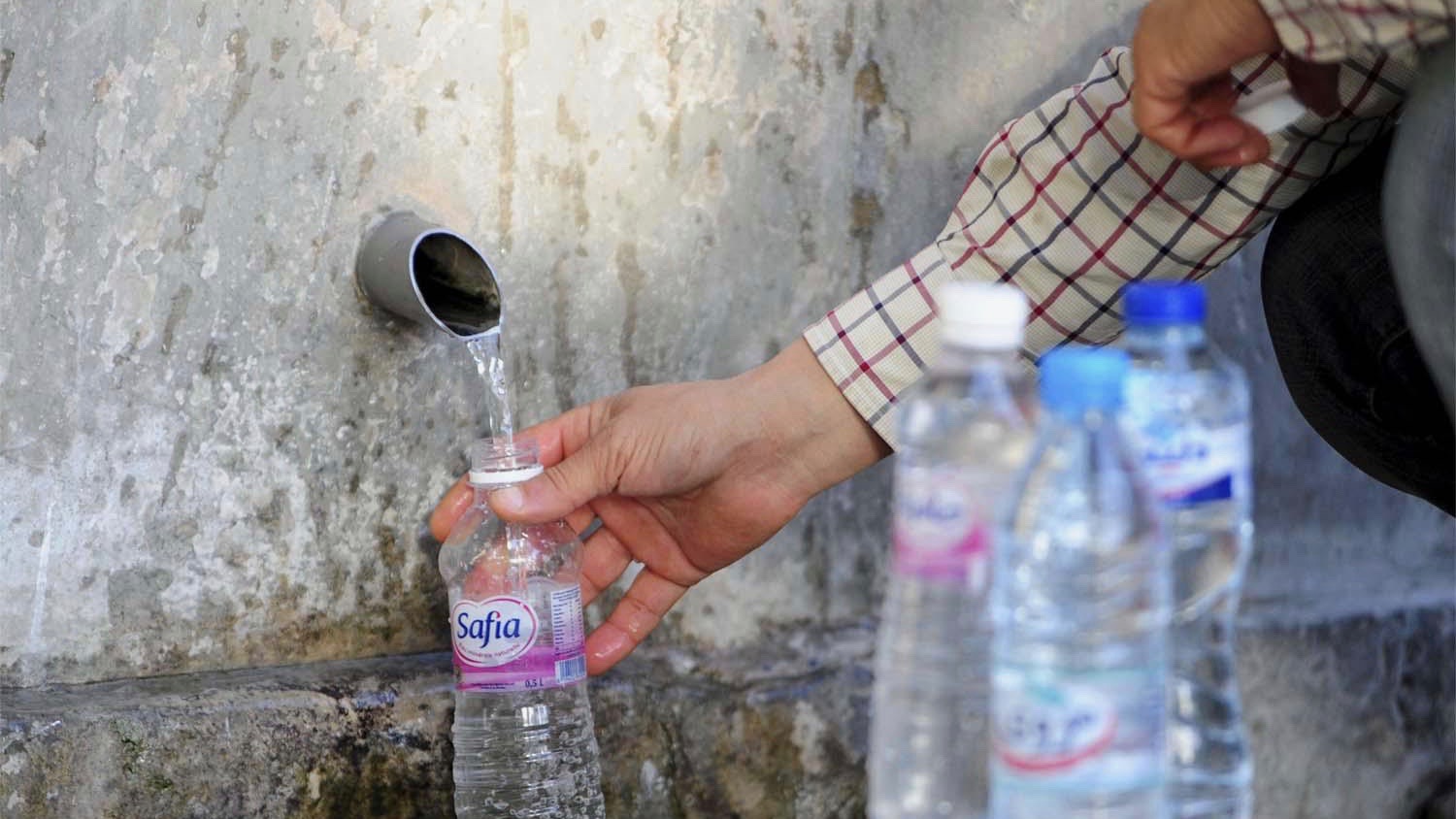
There is a particular posture Tunisians have perfected this August. Arms crossed, one shoulder against the car door or the supermarket trolley, eyes on a line that isn’t moving. You can see it outside the petrol stations of Tunis, where drivers waited through the third week of August for tankers that hadn’t come.
You can see it in the water aisle of any Monoprix or Carrefour on the Cap Bon, where the shelves that should hold six-packs of Safia and Sabrine hold apologetic gaps instead. And you can see it, in a way, in every living room between two and five in the afternoon, where families wait for the electricity to come back so the fans can restart.
Three shortages. Three queues. One month.
We wrote in July about the rolling blackouts that returned with the heatwave, and in early August about why this squeeze is built into the national calendar — heat, tourists, and the returning diaspora all peaking in the same six weeks.
What the last fortnight has added is something new: the shortages have started producing each other. The power cuts helped empty the water shelves. The empty shelves fed the anger. And in the middle of it all, the fuel stopped moving.
The bottle that disappeared
The bottled water shortage began quietly, in the second half of July, as a rumor traded between neighbors: have you found any water? By mid-August it was national news, visible in supermarkets and corner shops across the country, and stubbornly resistant to the repeated official assurances that things would return to normal “within days.”
The mechanics are almost elegant in their cruelty. Tunisians are among the world’s heaviest consumers of bottled water roughly 241 litres per person per year at last count, a habit built over a decade of declining trust in what comes out of the tap. When the heatwave arrived, demand surged past anything the country’s thirty-odd bottling plants had planned for, draining reserve stocks. Then the power cuts hit the bottling lines themselves: machines stopped mid-cycle, restarted, stopped again, with every interruption costing output and risking equipment. Freshly bottled water can’t go straight to the shelf either — sanitary rules require roughly 48 hours before sale, meaning even a factory running flat out is always two days behind a panic.
And there was a panic, of the mild, rational, Tunisian kind. A household that has lived through night-time tap cuts learns to stockpile. Stockpiling empties the shelves faster. Empty shelves teach the next household to stockpile. The shortage, in other words, began feeding itself — a spiral that seizures and inspections could dent but not break. Since late July, Commerce Ministry controllers have confiscated more than 147,000 litres of bottled water in operations targeting hoarding and irregular pricing, and on August 19 the ministry took the further step of imposing maximum retail prices and capping commercial margins. In Nabeul, authorities ordered tens of thousands of extra bottles onto the market to supply Hammamet and the surrounding delegations at the height of the tourist season.
None of it has fully worked. As of August 26, the consumer defense organisation was still describing the shortage as ongoing, urging citizens to buy only what they need — and warning them, in a detail that says everything about where things stand, to beware of water of unknown origin appearing on the informal market.
The pump that ran dry
Then, on Wednesday, August 19, the fuel tankers stopped.
The strike began without notice in Skhira, the petroleum hub south of Sfax, and spread within a day to most of the country’s fuel transport companies. It was a wildcat action — the UGTT confirmed it had issued no official strike notice — driven by drivers’ anger over working conditions and a stack of agreements with the government, some dating back to 2018, that they say were signed and never honored. By Thursday, the effects had reached the capital: long lines of cars snaking out of station forecourts and into traffic, with no one organizing the queues and no official word on when deliveries would resume.
The union leadership stepped in to suspend the stoppage and bring the drivers back to the table, and a joint negotiation session was scheduled. It was cancelled. Talks between the ministry and the transport companies limped into the following week. And on August 27, the UGTT’s private-sector department made the next move official: a formal strike notice for a nationwide, sector-wide fuel transport strike on September 23 and 24.
Which means the fuel queues of late August were not an ending. They were a rehearsal. Every driver in the country now knows the date, and the rational response to a scheduled shortage is the same as the response to an unscheduled one — fill the tank early, top it up often. The queue creates itself before the strike even begins.
Thirst and darkness
On the evening of August 20 — one day into the fuel strike, one month into the water shortage, six weeks into the blackouts — hundreds of people gathered in downtown Tunis. The signs they carried needed no translation: thirst and darkness.
It was among the largest demonstrations of the summer, and it drew faces that Tunisian protests have not usually drawn — young people, social media figures, first-timers with no history of political activism. The Tunisian Forum for Economic and Social Rights says it has recorded hundreds of protests across the country in recent weeks, the overwhelming majority of them about exactly the two things on those signs: drinking water and electricity. Whatever one’s reading of the country’s politics, the trigger is not abstract. It is the tap, the socket, and the shelf.
The queue as infrastructure
Here is what this August has revealed: the queue has become Tunisia’s real interface with its infrastructure. Not the grid, not the network, not the distribution chain — the line you stand in when each of them falls short.
And the queues are connected in ways the people standing in them can feel. The blackout stops the bottling line. The dry tap sends the household to the water aisle. The empty aisle sends the family to the car, to drive to the next town’s supermarket — past a petrol station with its own queue, burning fuel that may not be replaced next month. As we argued three weeks ago, Tunisia’s crises are not neighbors that happen to share a season. This August they stopped even pretending to be separate.
The heat will break soon; it always does. The diaspora will fly home, the shelves will slowly refill, and the grid will exhale. But two dates are already circled on the calendar. September 23 and 24, when the fuel drivers have promised to stop the tankers again — this time with notice. And next July, when the whole cycle is scheduled to return, as reliably as the cicadas.
A shortage that arrives without warning is bad luck. A shortage with an appointment is a choice — and the country now has one of each on the books.
