
This article contains affiliate links. If you book through them, Carthage Magazine earns a small commission at no extra cost to you — it’s part of how we keep our guides free and independent.
Quick Answer — Greater Tunis offers four genuinely different stays. The Medina is the soul option: restored courtyard guesthouses (dars) inside the UNESCO old city — atmospheric, intimate, and car-free in every sense. Downtown (the Ville Nouvelle) puts you on the café boulevards between the medina and the train stations — practical, faded-grand, best value. The Berges du Lac is the modern business district: international hotels, easy parking, zero romance. And the northern coast — Sidi Bou Said, Carthage, La Marsa, Gammarth — is where the capital keeps its sea: boutique cliff-top houses, the city beach, and the five-star resorts, all connected to town by the TGM train. The honest rule: medina or Sidi Bou Said if the trip is about Tunisia; the Lac if it’s about meetings; Gammarth if you want the capital and a pool.
Tunis confuses first-time bookers because it isn’t one city — it’s a chain of them, strung between a medieval medina and a string of seaside villages, with a French-built downtown and a glass business district in between. A hotel that’s perfect for one version of your trip is wrong for another, and the taxi between them at rush hour will make sure you notice. Here’s the map, honestly drawn.
1. The Medina — For the Soul of the City
Best for: culture travelers, couples, anyone whose Tunis is the old city itself.
Trade-off: rooms are few and characterful rather than standardized; luggage travels the last stretch on foot through the lanes; nightlife is the call to prayer.
Sleeping inside the UNESCO medina is the single biggest upgrade you can make to a Tunis stay — the alleys empty of day visitors by evening, and dawn over the rooftops belongs to you and the swifts. A handful of restored courtyard mansions take guests:
Dar Ben Gacem — a lovingly restored 17th-century house whose owners are pillars of the medina revival movement; staying here funds the neighbourhood’s craft economy as directly as tourism gets.
Dar El Jeld Hotel & Spa — the luxury statement of the genre, attached to the famous restaurant; painted ceilings, a hammam, and the medina’s most polished address.
La Chambre Bleue — an intimate tiled jewel-box for travelers who want the house more than the hotel.
Book early: these are houses of four to ten rooms, not four hundred — and the roster of restored dars grows yearly, so scan current listings too.
2. Downtown / Ville Nouvelle — For Practicality and Faded Grandeur
Best for: budget and mid-range travelers, rail users, first-night-last-night stays, people-watchers.
Trade-off: the boulevards are lively by day and plain by night; hotel quality swings widely between renovated and merely old.
The French-built grid around Avenue Habib Bourguiba is Tunis’s everyday heart — café terraces, the cathedral, the theatre, Art Deco upper floors above the shopfronts — with the medina at one end through Bab Bhar. Staying here means everything walkable: the old city, the TGM to the coast, the mainline station south. The stock runs from grand-old-names in varying states of renovation to dependable business three-stars.
Hôtel Royal Victoria — the boutique conversion of the old British embassy, directly on Bab Bhar: sleep at the exact hinge between the two cities.
Laico Tunis — the downtown tower option: full facilities, a pool above the rooftops, and the avenue at the door.
3. Berges du Lac — For Business and Convenience
Best for: work trips, drivers, airport proximity, families who prioritize modern rooms.
Trade-off: it could be a nice district in any warm country; you will not feel Tunisia here.
The Lac is where corporate Tunis lives — embassies, headquarters, malls, and the international hotel brands, ten minutes from the airport. If your Tunis is meetings by day and one medina afternoon, this is honest, comfortable logic.
Mövenpick Hotel du Lac Tunis — the district’s reliable flagship: modern rooms, lake views, and the business-hotel machinery running as intended.
4. The Northern Coast: Sidi Bou Said, Carthage, La Marsa, Gammarth — For the Sea
Best for: honeymooners, photographers, families wanting a pool, anyone combining capital and coast.
Trade-off: 20–40 minutes from the medina (TGM train or taxi); the resort strip at Gammarth is its own bubble.
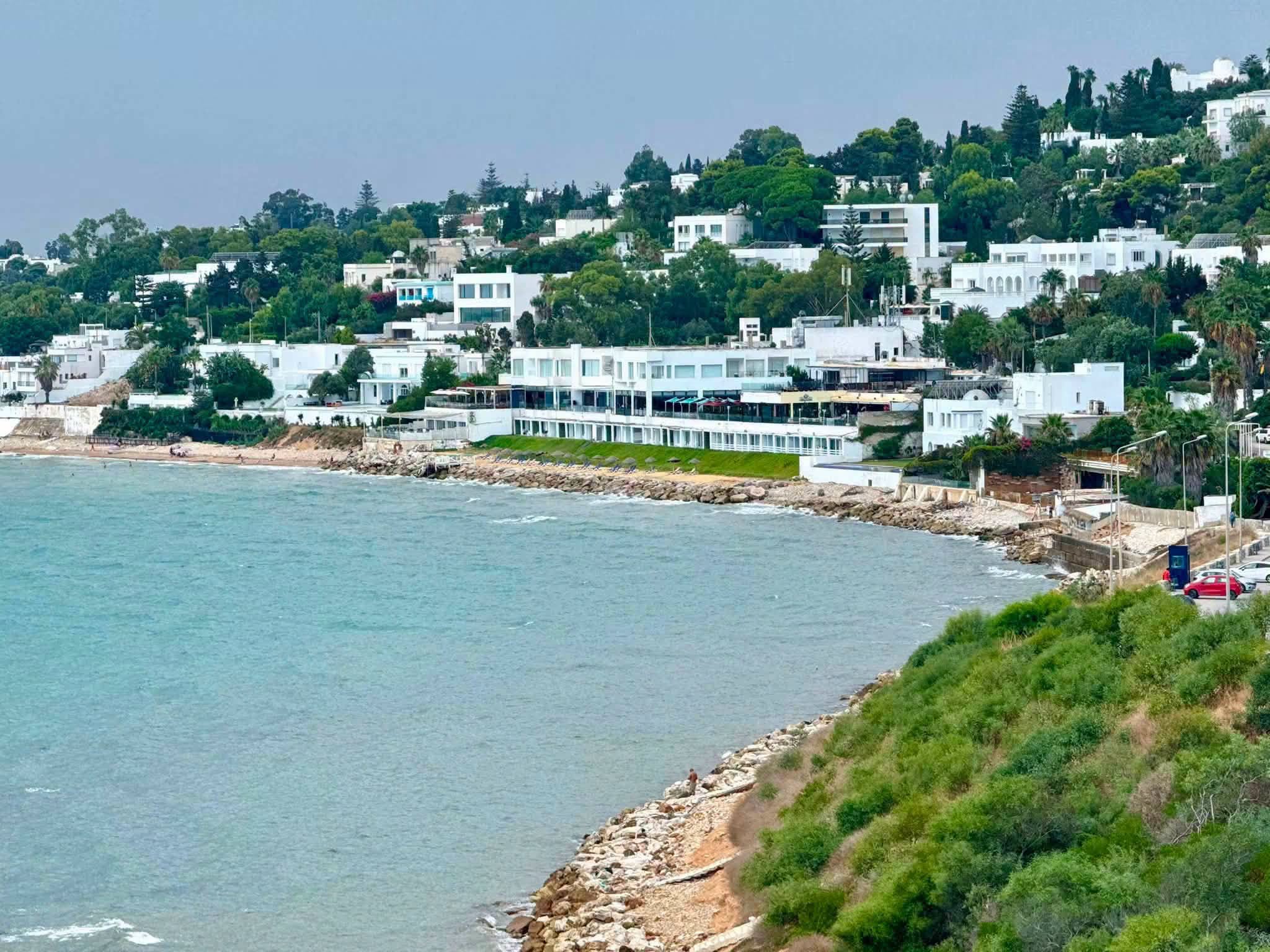
The TGM line strings the capital’s seaside villages together, and each has its register. Sidi Bou Said is the blue-and-white cliff village — staying overnight, after the day-trippers descend, is one of Tunisia’s quiet luxuries. Carthage scatters guesthouses among the ruins and gardens. La Marsa is the capital’s beach-and-brunch suburb, and Gammarth beyond it holds the full-scale five-star resorts.
Dar Saïd — Sidi Bou Said’s storied boutique house: courtyards, orange trees, and the village to yourself at dawn.
La Villa Bleue — the clifftop small-luxury option in the same village, sea views included.
The Residence Tunis — Gammarth’s grande dame: beach, celebrated spa and hammam, golf next door; the capital’s classic five-star resort.
Four Seasons Hotel Tunis — the modern statement on the same shore, for when the trip calls for the full international-luxury register.
How to Choose, Honestly
First visit, 2–4 days, here for Tunisia: the medina, or Sidi Bou Said. Nothing else comes close for memory-per-night.
Practical city break on a budget: downtown — and spend the savings at the café terraces.
Work trip: the Lac, no apologies needed.
Capital plus pool-and-beach: Gammarth, with the TGM/taxi run into history whenever you choose.
The connoisseur’s split: two nights in a medina dar, two on the coast — twenty minutes apart, two different countries.
Practical Notes Before You Book
Getting around: the TGM suburban train links downtown to Carthage, Sidi Bou Said, and La Marsa cheaply and scenically; taxis fill the gaps (insist on the meter — our Tunis guide covers the ropes). A car is unnecessary in the capital itself and useful only if you’re adding day trips — in which case DiscoverCars compares the rentals and our guide covers the paperwork; collect the car on your way out of the city, not into it.
Heating and cooling: medina houses are gorgeous and old — confirm air-conditioning for summer and heating for winter stays; the seasons are real in both directions.
Land connected: maps, taxi apps, and the guesthouse’s WhatsApp from the arrivals hall — an eSIM installed before you fly handles it (full comparison in our SIM & eSIM guide).
And wherever you sleep, the capital’s rule is the medina’s rule: mornings are for the old city, evenings for the coast, and the TGM between them is the best two-dinar ride in North Africa. The wider picture — where to eat, what to see — is in our full Tunis guide; the mainland-wide view is in hotels in Tunisia.
More where-to-stay guides: Djerba · Hammamet · Sousse · Monastir · Tozeur — or the country-wide view in Hotels in Tunisia.
From the Carthage Magazine Bookshelf
Booked the capital? These three unlock it.
- All About Tunisia — the definitive English-language traveler’s guide. 572 pages, 27 chapters, all nine regions, every UNESCO inscription, five thematic trails — and the practical answers most travelers wish they’d had on the plane. $24.99 · PDF & EPUB
- Speak Like a Local — 200+ Tunisian Arabic phrases with native audio recorded in Tunis. The souk chapter alone pays for it. $14.99 · PDF, EPUB, MP3
- The Authentic Tunisian Cookbook — sixty traditional recipes from the heart of North Africa. $9.99 · PDF & EPUB
All three available as a bundle for $39.99 — guide, language, and food, delivered together.
