
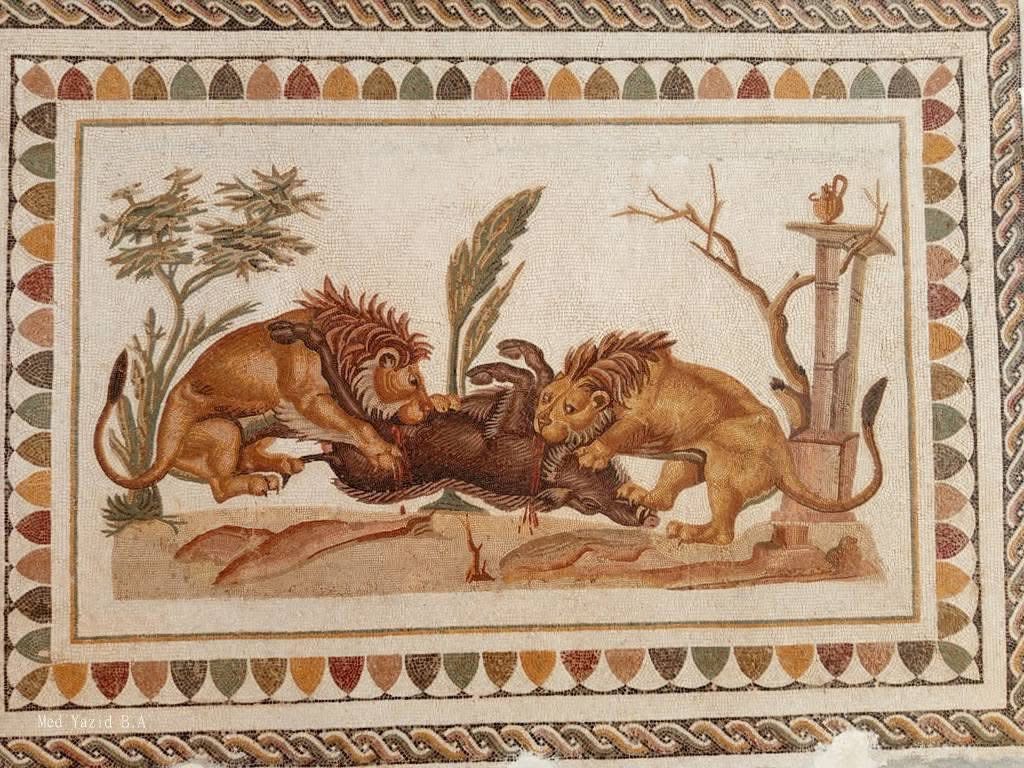
You feel it before you understand it. You walk into the Bardo National Museum in Tunis expecting a museum — vitrines, labels, a polite hush — and instead the building seems to be wearing the floors of a vanished world on its walls. Room after room, ceiling to skirting, the surfaces are alive with sea gods and grape harvests, lions and lyres, fishermen and philosophers, all of it assembled, stone by tiny stone, by hands that have been dust for eighteen centuries. In one hall a Roman poet sits between two muses, an unfinished scroll across his knees. He has been sitting there, looking faintly distracted, since before the fall of Rome.
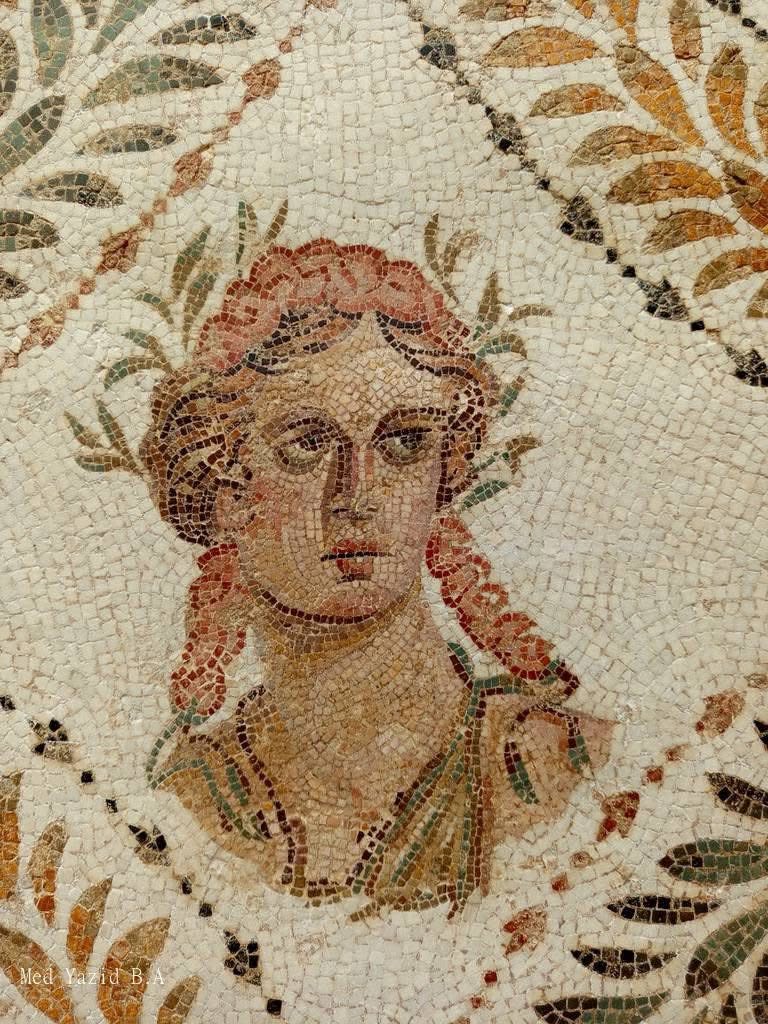
This is not a sideline of Tunisian heritage. It is arguably its single greatest treasure. Tunisia holds the largest and finest collection of Roman mosaics anywhere on earth — more than any museum in Italy, more than anything in Rome itself — and most visitors arrive without knowing it. Here is why a small Mediterranean country ended up as the mosaic capital of the ancient world, and exactly where to go to stand on top of the proof.
Why Tunisia Has the World’s Greatest Mosaics
The short answer is that Roman North Africa was rich, and the rich liked floors that announced it.
When Rome finally destroyed Carthage in 146 BCE and rebuilt it as a colony, the province of Africa Proconsularis — most of modern Tunisia — became one of the wealthiest corners of the empire. Its olive oil and grain fed Rome. Its landowners grew enormously prosperous, and they built sprawling villas and townhouses across cities like Carthage, Sousse, El Jem, Dougga, and Bulla Regia. To carpet those homes, a distinctly African school of mosaic emerged: bold, polychrome, crowded with figures, less interested in copying Greek models than in showing off local life — the hunt, the harvest, the games, the sea. By the second and third centuries, the workshops of Roman Africa were the best in the empire, and their style was exported back across the Mediterranean rather than imported from it.
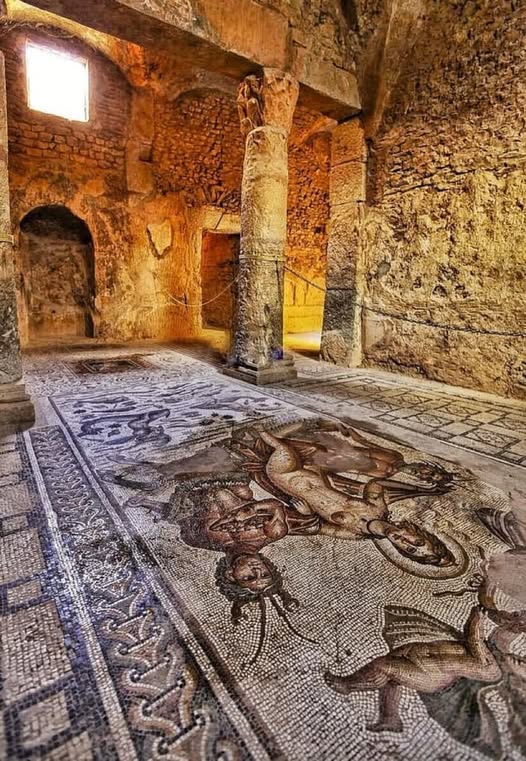
Then the cities emptied, and the floors were buried. Where mosaics elsewhere were looted, paved over, or ground to gravel, Tunisia’s were sealed under collapsing roofs and drifting sand, face-down and forgotten, until French and Tunisian archaeologists began lifting them in the late nineteenth century. What they uncovered was a near-complete picture gallery of provincial Roman life, preserved in stone because nobody had been around to destroy it. The country’s bad luck — abandonment, depopulation, centuries of obscurity — turned out to be the mosaics’ salvation.
The Bardo: The Greatest Collection on Earth
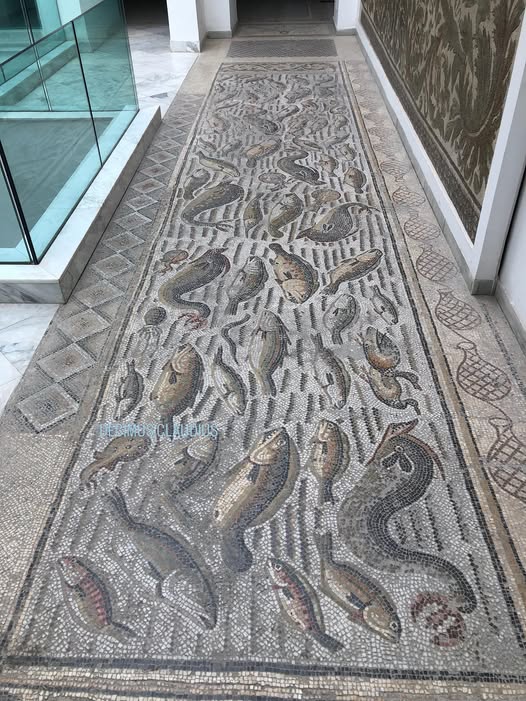
If you see one thing, see the Bardo. Housed in a sumptuous nineteenth-century Beylical palace on the edge of Tunis, it gives more than half its display space to mosaics, and the density and quality of them genuinely has no equal in the world.
The undisputed star is the Virgil Mosaic. Discovered in a private house in ancient Hadrumetum — modern Sousse — it shows the poet Virgil seated, holding a scroll of the Aeneid, flanked by Clio, the muse of history, and Melpomene, the muse of tragedy. It is the only known portrait of Virgil from the ancient world, the single image by which we picture the man who wrote Rome’s national epic, and it was found in a Tunisian dining room. Stand close and you realize the poet’s solemn face is built from chips of stone no larger than a fingernail.
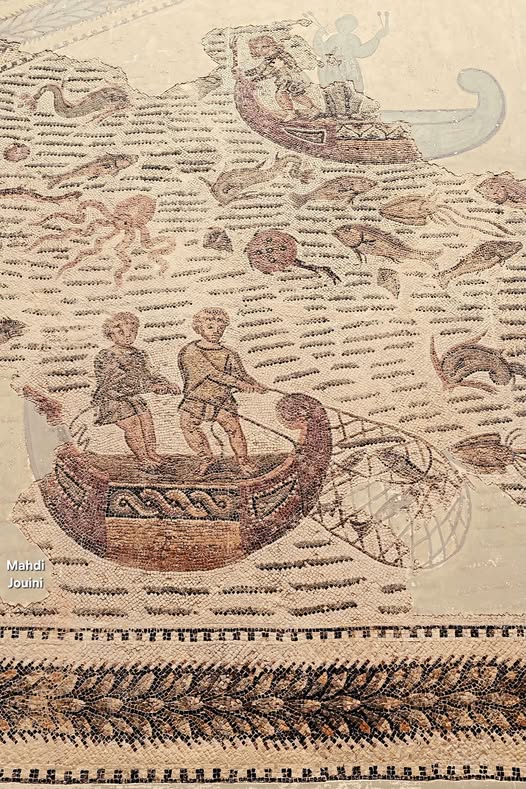
A few rooms away, filling an entire wall, is the Triumph of Neptune, also from Sousse — the sea god riding his chariot across the waves, ringed by the four seasons, agricultural scenes spilling around the edges. At roughly 140 square meters it is one of the largest mosaics to survive from antiquity, and it is impossible to take in at a single glance. Nearby, Ulysses and the Sirens captures the hero lashed to his mast while his oarsmen, ears plugged with wax, row grimly past the singing women on the rocks — a scene from Homer rendered with such liveliness you can feel the strain in the rope. There is Diana the huntress, frozen mid-draw over a grazing gazelle. There are banquets and racehorses and amphitheater scenes and a hundred ordinary Tunisian afternoons from eighteen hundred years ago.
The Bardo is more than mosaics — it holds Punic stelae carved with the sign of Tanit, a Hellenistic shipwreck’s worth of bronze and marble, and the indigo-and-gold pages of the Blue Quran from Kairouan. But the mosaics are why it belongs on any list of the world’s great museums.
How a Mosaic Was Actually Made
It helps to know what you are looking at. A Roman mosaic was built from tesserae — small cubes cut from limestone, marble, terracotta, and colored glass, sometimes only a few millimeters across. The mosaicist set them into a bed of wet lime mortar, working from a painted sketch, packing thousands of cubes into every square foot. Backgrounds were laid in larger, plainer tiles; faces, hands, and the play of light on water were done in the tiniest, most painstaking pieces, a technique that let a skilled craftsman shade a cheek or a wave almost like a painter.
The result was a floor that was durable, washable, gloriously expensive, and — not incidentally — a permanent advertisement of the owner’s wealth and taste. A merchant who put Virgil on his dining-room floor was telling every guest exactly how cultured he was. Eighteen centuries later, the boast still lands.
Beyond the Bardo: Where Else to See Them
The Bardo gets the headlines, but Tunisia’s mosaics are everywhere, and some are best seen exactly where they were laid.
The Sousse Archaeological Museum, in the heart of the Pearl of the Sahel, holds the second-largest mosaic collection in the world after the Bardo — a staggering claim for a regional museum, and a reminder of just how saturated this coast was with Roman wealth. Its Medusa and its marine scenes are worth the trip on their own.
At El Jem, most visitors come for the colossal amphitheater, the best-preserved Roman colosseum in North Africa. Fewer make time for the nearby El Jem Archaeological Museum, where mosaics are displayed in reconstructed villa rooms — floors shown as floors, in the rough footprint of the houses they once warmed. It is the closest thing in Tunisia to walking into a Roman home.
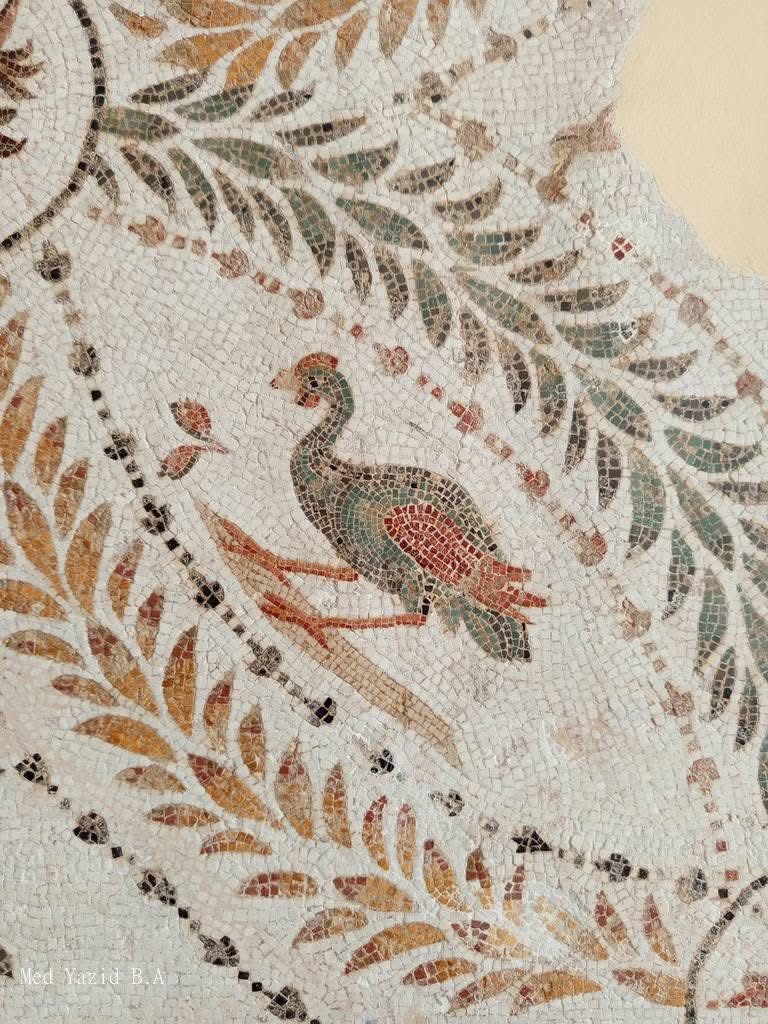
Bulla Regia, in the green north, is stranger and more wonderful still. To escape the summer heat, its wealthy residents built entire rooms underground, and many of their mosaic floors survive exactly where they were laid — the only place in the world where you can stand in a subterranean Roman dining room and look down at the original floor beneath your feet. One of those Bulla Regia floors had an unexpected second life: a small labyrinthine motif from the site is widely credited as the visual ancestor of the ChatGPT logo, a 2,200-year-old Tunisian pattern quietly circling the screens of the entire planet.
And at Dougga, and at the Antonine Baths of Carthage, and across the Roman ruins scattered the length of the country, fragments of mosaic still lie in the open air, paving floors that have had no roof for fifteen hundred years.
What the Mosaics Actually Tell Us
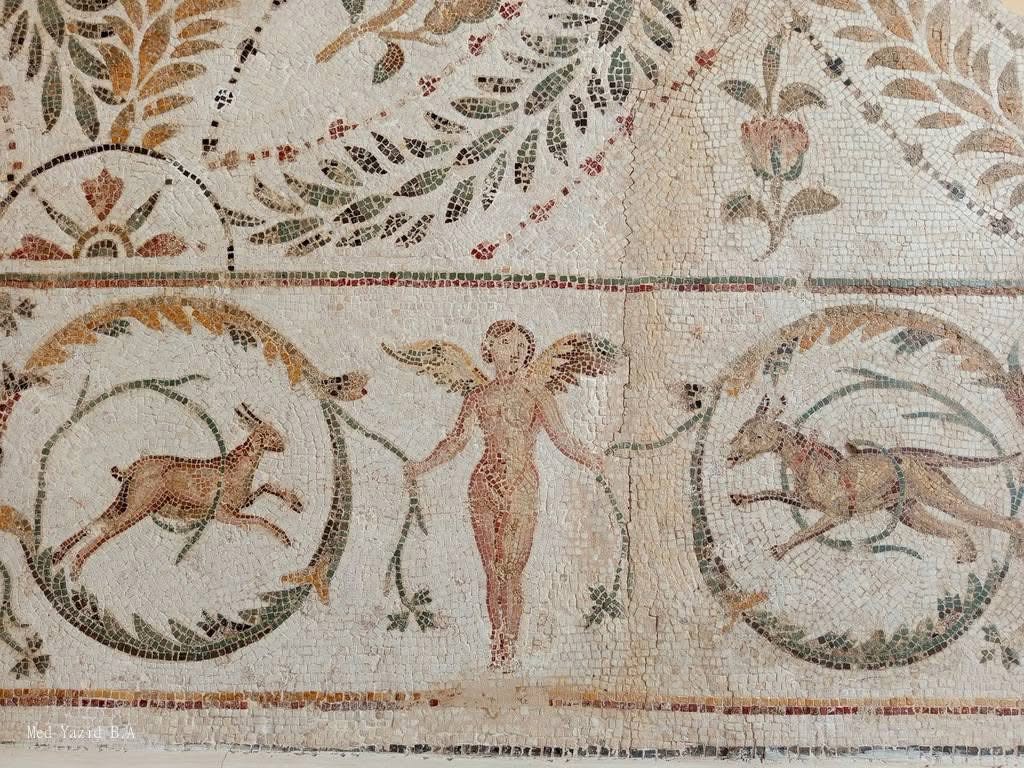
Step back from the famous names — Neptune, Virgil, Ulysses — and the mosaics become something more valuable than art. They become a documentary.
Because African workshops loved everyday scenes, the floors of Roman Tunisia are crowded with real life: estate owners inspecting their fields, fishermen hauling nets, slaves serving at banquets, hunters chasing boar and lion, chariots rounding the turn at the games. We know what a wealthy North African’s villa looked like, what they ate, how they dressed, what entertained them, and what they wanted the world to think of them — and we know it largely because they told us, in stone, on the floor. No written source from the province comes close to this density of detail. The mosaics are the closest thing we have to photographs of a world that otherwise survives only in ruins.
That is the quiet power of the collection. The marble statues of Rome show its gods and emperors. The mosaics of Tunisia show its people.
A Practical Note on Visiting
The Bardo sits about five kilometers from central Tunis and is easily reached by taxi from Avenue Bourguiba in fifteen to twenty minutes; it is closed Mondays and tends to shorten its hours during Ramadan, so check before you go. It pairs naturally with a day in Carthage and Sidi Bou Said, and with the broader sweep of Tunisia’s Roman heritage and UNESCO sites. Sousse and El Jem make an easy combined stop on the way down the coast.
The Bardo was the site of a tragic attack in 2015, and the museum has carried that memory while reopening and continuing its work; Carthage Magazine reflected on it in a letter from that time. Today the galleries are open, the floors are luminous, and the poet still sits between his muses, waiting for the next visitor to look closely enough to see the stone.
From the Carthage Magazine Bookshelf
The mosaics are reason enough to come — but they are one extraordinary room in a very large country. Three Carthage Magazine ebooks were built for the rest of the trip:
- All About Tunisia — the definitive English-language traveler’s guide. 572 pages, 27 chapters, all nine regions, every UNESCO inscription, five thematic trails — and the practical answers (visa, currency, transport, etiquette) most travelers wish they’d had on the plane. $24.99 · PDF & EPUB
- Speak Like a Local — 200+ Tunisian Arabic phrases with native audio recorded in Tunis. The phrases for the taxi, the souk, the café, and the dinner table. $14.99 · PDF, EPUB, MP3
- The Authentic Tunisian Cookbook — sixty traditional recipes from the heart of North Africa. For when you get home and find yourself missing the food. $9.99 · PDF & EPUB
All three available as a bundle for $39.99 — guide, language, and food, delivered together.
