
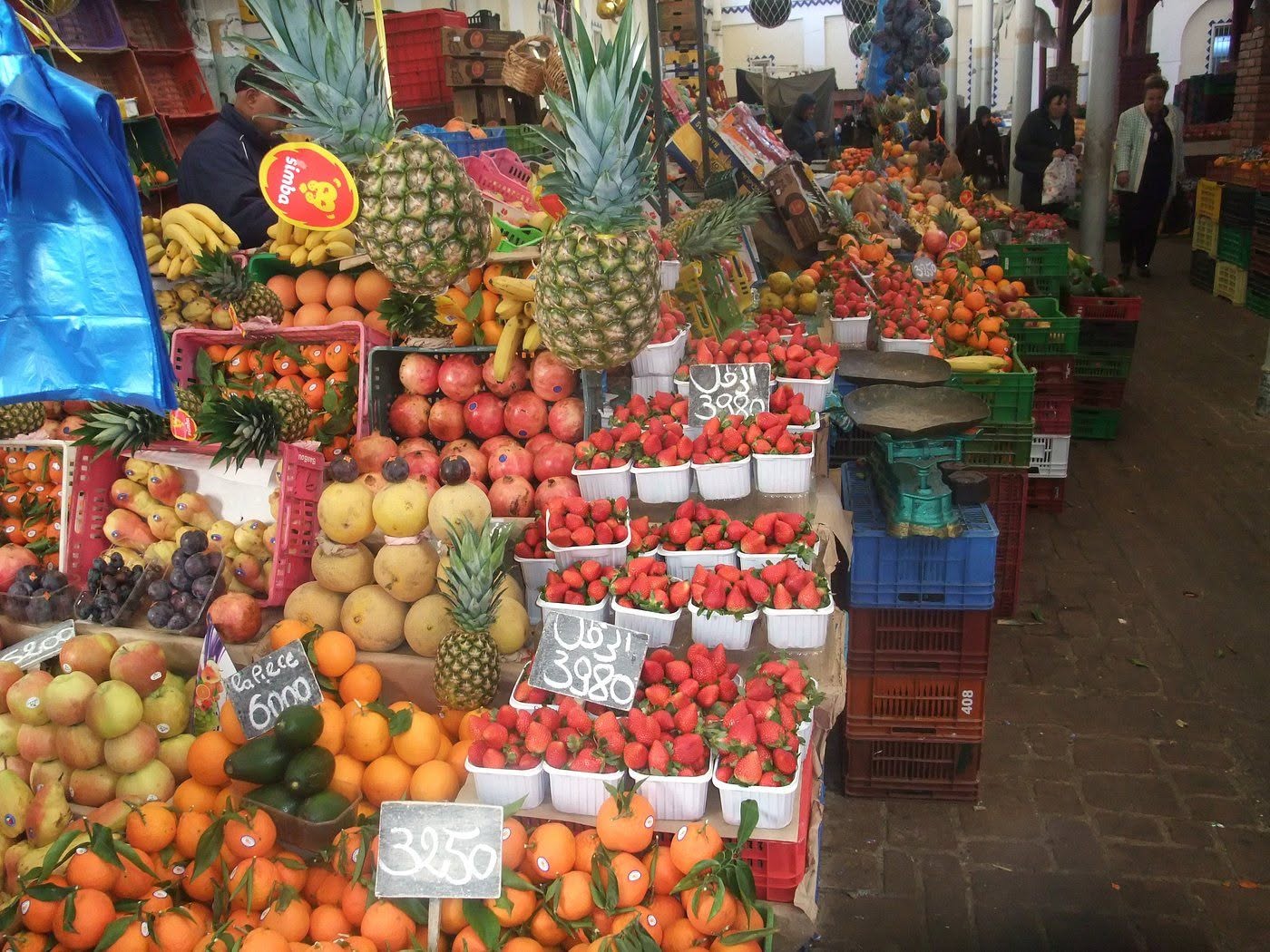
There is a particular hour in a Tunisian market when the whole country seems to be speaking at once.
A vegetable seller calls out the price of tomatoes. Someone weighs a bag of olives. A man balances a tray of bread through a crowd that has no intention of moving. Somewhere beyond the spice stalls, a radio plays an old Tunisian song, almost drowned out by bargaining, laughter, and the clatter of metal shutters.
By nine in the morning, the market is fully awake. And if you have come looking for the Tunisia that exists beyond hotel terraces and carefully restored medinas, you are in exactly the right place.
Every week, towns across Tunisia transform their streets and squares into sprawling outdoor markets. They are called souks, but they are not necessarily the covered bazaars visitors imagine. These are working markets where families buy their vegetables, farmers bring their produce, and traders arrive from neighboring towns with everything from secondhand clothes to handmade pottery.
The important detail is knowing when to go.
Quick Answer — Tunisia’s weekly markets take place on different days depending on the town. The most rewarding for visitors include Nabeul on Friday, Sousse on Sunday, Douz on Thursday, and the market towns of Cap Bon throughout the week. Arrive early, carry Tunisian dinars in small denominations, and remember that a traditional medina souk and a weekly outdoor market are two different experiences.
The Weekly Market Tradition in Tunisia
To understand the Tunisian weekly market, you need to forget the idea that shopping is simply about buying things.
For generations, the souk has been a meeting point between town and countryside. Farmers arrive with the week’s harvest. Craftsmen display their work. Families stock up on household necessities. Neighbors exchange news, sometimes spending more time talking than shopping.
In smaller towns, market day changes the entire rhythm of the place.
Streets that were almost empty the previous afternoon fill with stalls. Temporary cafés appear. Delivery vehicles edge through the crowds. By midday, much of the activity begins to disappear, leaving behind an ordinary town again.
The atmosphere differs from one region to another. Coastal markets lean toward fish, vegetables, textiles, and household goods. Inland markets reflect agricultural life. In the south, dates, spices, woven goods, and regional crafts become more prominent.
Not every market is picturesque, and that is part of the appeal. The best ones were never designed for tourists.
Tunisia Market Days: Where to Go and When
There is no single market day across Tunisia. Each town follows its own weekly schedule, and neighboring communities often hold their markets on different days.
For travelers planning a route, these are some of the most useful established market days to know.
| Day | Markets worth knowing |
|---|---|
| Monday | Kélibia, Kairouan |
| Tuesday | Menzel Temime |
| Wednesday | Menzel Bou Zelfa |
| Thursday | Douz, Le Kef |
| Friday | Nabeul, Sfax, Mahdia |
| Saturday | Monastir |
| Sunday | Sousse, Korba, Tozeur |
These are traditional weekly market days rather than guaranteed opening schedules. Market locations, activity levels, and individual vendors can change, particularly around public holidays and religious celebrations.
The Cap Bon schedule is particularly useful for travelers: Kélibia on Monday, Menzel Temime on Tuesday, Menzel Bou Zelfa on Wednesday, Nabeul on Friday, and Korba on Sunday.
For most visitors, Friday in Nabeul or Sunday in Sousse offers the easiest introduction.
Nabeul Friday Market: The Best Place to Start
Nabeul’s Friday market is one of the great weekly gatherings of northeastern Tunisia.
The town is already famous for its ceramics, citrus groves, harissa, and orange-blossom water. On Fridays, these local traditions become part of a much larger scene as traders spread across the streets around the town center.
You will find vegetables stacked into improbable towers, heaps of herbs, clothing, kitchen equipment, baskets, and pottery in the colors that have made Nabeul famous: green, yellow, blue, and warm earthen brown.
What makes Nabeul especially rewarding is the relationship between the market and the town’s craft traditions.
Ceramics are not merely decorative souvenirs here. Pottery has been a part of local economic life for centuries, and workshops continue to produce plates, bowls, tiles, and large earthenware vessels.
Look carefully at what you buy. Some pieces are handmade and hand-painted; others are mass-produced. Neither is necessarily a bad purchase, but they are different things, and the price should reflect that difference.
The best plan is to arrive in the morning, wander the market while it is busy, then spend the rest of the day exploring the pottery workshops.
Nabeul also makes an excellent excursion from Hammamet, and the wider peninsula deserves more than a rushed visit. Our guide to Cap Bon and Nabeul explains why this fertile corner of Tunisia is worth exploring beyond the beach resorts.
If you have only one market morning to spare on the northeastern coast, make it Friday in Nabeul.
Sousse Sunday Market: A Different Side of the Resort Coast
Sousse is famous for its beaches, its ancient medina, and its long relationship with Mediterranean tourism.
Its Sunday market tells another story.
Known locally as Souk El Ahad — literally the Sunday market — it brings together traders selling everyday goods, clothes, textiles, shoes, produce, household equipment, and an assortment of objects that resist easy classification.
It is busy, practical, and occasionally chaotic.
Do not expect every stall to sell traditional handicrafts. You are just as likely to find inexpensive clothing, kitchen utensils, and secondhand goods as decorative souvenirs.
That is precisely what distinguishes it from the more tourist-oriented shopping streets of the medina.
Arrive early and allow yourself time to browse without needing to purchase anything. Prices vary with the merchandise, and some traders expect bargaining while others operate more like ordinary retailers.
For travelers staying in Port El Kantaoui, Hammam Sousse, or central Sousse, it is an accessible way to experience local commerce beyond the hotel strip.
Afterward, return to the old town for lunch, a walk through the historic streets, or a visit to the Ribat. Our Sousse travel guide covers the city’s wider attractions, transport, and food scene.
The market is a reminder that Sousse is not simply a holiday destination. It is a working Tunisian city with its own routines, neighborhoods, and Sunday mornings.
Douz Thursday Market: At the Edge of the Sahara
In southern Tunisia, market day takes on a different character.
Douz sits near the northern edge of the Sahara, where the landscape shifts from settlements and palm groves toward the great expanses of sand farther south.
Its traditional Thursday market reflects the region’s agricultural, pastoral, and trading heritage.
Dates are central to life in this part of the country. So are the animals, materials, and goods associated with desert communities. Depending on the traders present, market stalls may carry clothing, produce, livestock-related goods, woven items, and household necessities.
Some visitors arrive expecting a romanticized desert bazaar. The reality is more interesting.
You are watching a regional economy at work.
Thursday is the established day to plan around, although livestock trading and individual sections can operate on different schedules. Arriving early is sensible, particularly during the warmer months.
Treat the market as part of a wider exploration of the south rather than an attraction to tick off between photographs of dunes.
The surrounding region has much more to offer, but the market provides something the desert landscape cannot: a glimpse of the people and everyday exchanges that sustain life here.
Cap Bon: A Different Market Almost Every Day
The Cap Bon peninsula is one of the easiest places in Tunisia to organize a trip around market days.
Its fertile land produces citrus fruit, peppers, tomatoes, olives, and herbs. Fishing towns line the coastline, while pottery workshops and agricultural communities occupy the interior.
Instead of relying on a single famous souk, travelers can follow the weekly rhythm of several towns.
Kélibia holds its traditional market on Monday. Menzel Temime follows on Tuesday, and Menzel Bou Zelfa on Wednesday. Nabeul’s major market takes place on Friday, while Korba’s weekly market is held on Sunday.
Each has its own scale and character.
Kélibia combines a market town with a fishing port and an impressive hilltop fortress. Korba offers a quieter coastal atmosphere. Nabeul supplies the craft tradition and the widest variety for many visitors.
You do not need to visit all five.
Choose the town that fits your itinerary, go in the morning, and leave time for something unplanned afterward. That could mean a stop at a roadside fruit seller, a ceramics workshop, or a café overlooking the Mediterranean.
Cap Bon rewards exactly this kind of travel.
What Should You Buy at a Tunisian Market?
Start with what the region does well.
In Nabeul, ceramics are the obvious choice, along with harissa, orange-blossom products, baskets, and textiles. In agricultural towns, fresh seasonal produce tells you more about local food culture than any supermarket could.
Dates are worth seeking out in southern Tunisia. Olive oil, spices, and regional sweets are found across much of the country, although quality and provenance vary.
Be cautious about assuming that everything sold in a traditional market is handmade or locally produced. Imported household goods and factory-made souvenirs sit alongside genuinely local crafts.
Ask where something was made. Look for signs of workmanship. Compare similar items before committing.
If you are interested in the foods behind the stalls, our guide to twenty Tunisian dishes worth trying is a useful companion. Markets are where many of those dishes begin, long before they arrive at a restaurant table.
Sometimes the best thing to buy is something you can eat immediately.
A piece of fresh bread, a small bag of dates, or seasonal fruit can become the most memorable purchase of the morning.
How to Bargain Without Making It Awkward
Bargaining is part of Tunisian market culture, but it is not universal.
In souvenir stalls, craft shops, and some clothing markets, negotiating is normal. At produce stands selling everyday food by weight, prices are often relatively fixed or only modestly negotiable.
The first rule is to read the situation.
Ask the price politely. If it feels high, suggest a lower amount or ask whether the seller can offer a better price. Keep the exchange friendly. If you cannot agree, thank the trader and move on.
Do not bargain aggressively over a tiny amount simply because you can.
A few words of Tunisian Arabic make the interaction warmer. Kaddech? means “How much?” Ghali barcha means “Very expensive.” Aychek is a familiar way of saying thank you.
You can learn more useful expressions in our Tunisian Arabic travel phrase guide.
Most important of all, remember that bargaining is a social exchange, not a contest with a winner and loser.
Practical Tips for Visiting Tunisia’s Weekly Markets
The best market mornings begin early.
Aim to arrive around eight or nine, when the stalls are active and the heat is still manageable. Some traders start considerably earlier, while others remain until midday or early afternoon. Exact times vary.
Carry cash in Tunisian dinars, ideally in smaller notes and coins. Cards are not dependable at outdoor market stalls. Our Tunisian dinar guide explains how the currency works and why travelers should arrange local cash after arriving.
Wear comfortable shoes, carry water, and keep valuables secure in crowded areas. Ask permission before photographing a vendor or taking close-up pictures of people.
Getting to a market outside your hotel town is often easier than it looks. Tunisia’s intercity shared taxis, known as louages, connect many destinations at affordable fares. Our guide to Tunisia’s louage system explains how to use them without needing a rental car.
If you are visiting during Ramadan or a major holiday, check arrangements locally beforehand. Trading hours and participation can differ from the ordinary weekly rhythm.
And do not confuse a weekly market with a medina souk.
The historic Medina of Tunis, for example, contains permanent commercial streets organized around traditional trades. Many shops operate throughout the week, although Sundays can be quiet. A weekly outdoor market is a different experience, with temporary stalls and a particular day around which local activity gathers.
Both deserve your time.
The Best Souk Is the One You Didn’t Plan to Visit
It is easy to travel through Tunisia collecting famous places.
The blue doors of Sidi Bou Said. The great amphitheater of El Jem. The ruins of Carthage. The dunes at the edge of the Sahara.
All are worth seeing.
But some of the country’s most revealing moments happen in places that never make it onto postcards.
A Friday morning in Nabeul. A Sunday crowd in Sousse. A small inland town on the one day of the week when everyone seems to have come into the street.
You may leave with nothing more than a bag of olives, a piece of pottery, and a few new words of Tunisian Arabic.
You will have seen something worth traveling for.
Not Tunisia arranged for visitors, but Tunisia going about its day.
From the Carthage Magazine Bookshelf
If Tunisia’s weekly markets have made you curious about the towns, conversations, and dishes behind the stalls, these three guides take the experience further.
- All About Tunisia — the definitive English-language traveler’s guide. 572 pages, 27 chapters, all nine regions, every UNESCO inscription, five thematic trails — and the practical answers (visa, currency, transport, etiquette) most travelers wish they’d had on the plane. $24.99 · PDF & EPUB.
- Speak Like a Local — 200+ Tunisian Arabic phrases with native audio recorded in Tunis. The phrases for the taxi, the souk, the café, and the dinner table. $14.99 · PDF, EPUB, MP3.
- The Authentic Tunisian Cookbook — sixty traditional recipes from the heart of North Africa. For when you get home and find yourself missing the food. $9.99 · PDF & EPUB.
All three available as a bundle for $39.99 — guide, language, and food, delivered together.
