

Here it is… the recipe many have been waiting for. It’s one of Tunisia’s most popular dishes – COUSCOUS!
Couscous is small steamed balls of crushed durum wheat semolina that is traditionally served with a stew made with vegetables and a protein (either chicken, lamb, fish, octopus, or Gadid).
Couscous is known to be a staple in North Africa. Each country has its own way of making it. This recipe is the Tunisian way. It is eaten frequently in Tunisian households – at least once or twice a week. It symbolizes comfort, warmth, and tradition.
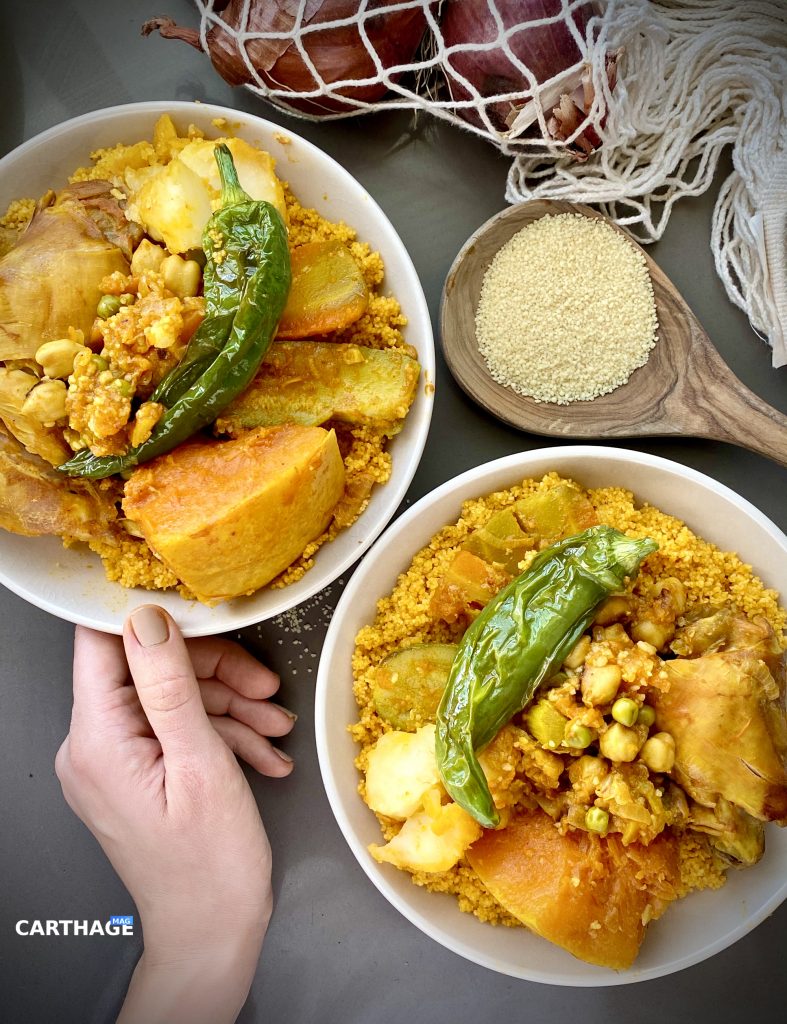
Tunisian Couscous
The steps to making Tunisian Couscous are pretty much the same for all types of protein. There are minor changes in the spices. For example, cumin, coriander & caraway are used with fish and octopus but not for chicken and lamb. Garlic is used for chicken, fish, and octopus, but not for lamb.
The dish seems elaborate and difficult, but trust me, it is not. Once you have the steps and make it a couple of times, you will be so comfortable cooking it.
Cooking Couscous
To make Tunisian Couscous, you will need a steamer pot… it is essential! The sauce is cooked in the bottom with all the delicious veggies, whereas the Couscous is steamed on top. Once the protein & sauce are ready, remove the Couscous and place it in a large bowl. Then, you pour the sauce on top of the couscous and cover with a lid. The Couscous will absorb all that liquid making it fluffy and full of flavor.

For this recipe, I made chicken Coucous. The time of cooking is less than when you make Couscous with lamb, so keep that in mind. Chicken Couscous takes 1-1.15 hours whereas lamb takes between 1.5-2 hrs. I also didn’t use paprika/chili powder. I didn’t want it to be very red and spicy, but you can add it if you are looking for a hint of spiciness. Well, I hope you enjoy the recipe. Happy cooking!
COUSCOUS INGREDIENTS: (serves 4)
- 4 chicken thighs
- 1 medium onion
- 1/3 cup olive oil + 2 tbsp for the Couscous
- Water (1 liter or more for the sauce + 1/4 cup for the Couscous)
- 1.5 tbsp tomato paste
- 2 heaping tsp turmeric
- 1.5 tsp chili flakes
- 5-7 cloves of garlic
- Salt & pepper
- 2/3 cup chickpeas
- 2 medium carrots
- 1 large potato
- 1 zucchini
- 4 pieces of pumpkin
- 1 pepper + 4 more fried for garnish (optional)
- 2 cups Couscous
Tunisian Couscous RECIPE:
How to Cook Couscous:
Prepare the Couscous Sauce
- Start by cutting the onions into slices. Add the onions to the bottom pot of the steamer with the olive oil, chickpeas, chicken thighs, the tomato paste, and the spices. Put on medium high heat and mix well until the chicken is well seasoned and the tomato paste is dissolved. You might need to add splashes of water for this step. Let it cook for 5-10 minutes then add the rest of the water. It should cover the chicken thighs.
- Meanwhile, cut the vegetables into large chunks. (See the video for how I do it. I like cutting the carrots into long slices lengthwise, but you can cut however you like. Once the water comes to a boil, add one whole potato with the skin on. (This ensures that the potato doesn’t fall apart and become mush.) Add the carrots as well.
Prepare the Couscous
- While the sauce is boiling, place your Couscous in a large bowl. Drizzle olive oil and season with salt and mix it with your hands/fingers. Make sure that each small ball is coated with the oil. This makes the Couscous not stick together while steaming. Add approximately 1/4 cup of water and mix again. The couscous should be damp to the touch – not soaked. Set aside.
- Once the sauce has boiled for about 10-15 min, add the zucchini and pumpkin. Place the Couscous in the steamer pot on top of the sauce and let it steam for 20-30 min.
- Once all the vegetables and chicken are cooked, remove the Couscous and put it in a large bowl. Then, using the steamer pot, pour the sauce in it. This should separate the sauce and the vegetables. The sauce goes with the Couscous and the vegetables remain in the pot.
- Mix lightly with a large spoon then cover the bowl and let it sit for 5 minutes. Uncover, and mix again and see if more liquid needs to be added. I recommend you taste the Couscous for this step. Once it is ready, serve in a shallow bowl with a piece of chicken, pumpkin, a potato slice, carrots, zucchini, and a spoonful of chickpeas. You can top it off with a fried pepper. Serve hot and enjoy!
- TIP: this dish is paired perfectly with pomegranate seeds if you like sweet & savory pairings.
#TasteTunisia initiative
This Tunisian Couscous recipe is part of the #TasteTunisia initiative. In search of Tunisian cuisine, through a series of articles/videos, Carthage Magazine offers a window to the Tunisian food and recipes.
The Taste Tunisia initiative is supported by Carthage Magazine and led by international registered dietitians-nutritionists from Tunisia, making it the ultimate initiative that celebrates and promotes Tunisian cuisine.
#TasteTunisia Recipes:
- The Best Authentic Tunisian Rice Dish — “Rouz Jerbi”
- Tunisia’s Seafood Pasta — A Tunisian Delicacy
- Omek Houria: Tunisian Mashed Carrot Salad
- Tunisian Stuffed Peppers: “Felfel Mehchi”
- The Coziest Vegetable Stew — Tunisia’s Go-To Dish for the Cold Months
- The Best Tunisian Grilled Salad — Salad Mechouia
- Date & Walnut Bread — The Perfect Healthy Dessert
- Kafteji: a Healthy Version of your Favorite Tunisian Dish
- Tunisian Masfouf — Tunisia’s Most Famous Sweet Version of Couscous
- Tunisia’s Traditional Mini Doughnuts: Kaa’k Yoyo
- A Unique Pizza with a Taste of Tunisia: Harissa Infused Veggie Pizza
- Tunisian Mloukhiya, Your Grandma’s Favorite Dish
- Assidat Zgougou — Tunisia’s Sweetness in a Bowl
- Tunisia’s Octopus Salad: The Best Tunisian Seafood Salad
- Tajine El Bey: Tunisia’s Finest Appetizer
- Slata Tounsia – Tunisia’s Summer Salad
- Delicious Tunisian-Style Lamb Borghol (Bulgur)
- Tunisian-Style Stuffed Dates — Tunisia’s Healthiest Sweet Appetizer
- Lablebi: One of Tunisia’s Most Popular Street Foods
- Octopus Barley Soup “Tchich” — Tunisia’s Favorite Ramadan Soup
- The Traditional, Most Authentic Tunisian Pumpkin Shakshuka
- The Famous “Khobz Ch3ir” — Tunisian Barley Bread
- Mom’s Orange Cake — Tunisia’s Winter Dessert
- Tunisian Breakfast for Champions: “Zamit” with Pomegranate
- Tunisia’s Lentil Soup – Your Favorite Winter Warmer Dish
- All Tunisian food recipes.
If you would like to comment on this article or anything else you have seen on Carthage Magazine, leave a comment below or head over to our Facebook page.
And if you liked this article, sign up for the monthly features newsletter. A handpicked selection of stories from Carthage Magazine, delivered to your inbox.

2 comments
Thanks for sharing, Rahma — great recipe! Tunisian Couscous is definitely the best and most delicious Couscous, and this isn’t up for discussion!
Thank you for sharing this recipe! Tunisian couscous is the BEST and ONLY couscous I will eat! My best friend is from Tunis and makes this for me. I love her food. The Brik, wheat soup (that is how she explained it to me, not the actual name of it) recipes are also my favorite.