
Béja announces itself with storks. Four of them, in bronze, stand at the entrance to the town; the real ones arrive in March and build on the chimneys, the minaret and the roof of the old French church, and the town counts them the way other towns count tourists. There are not many tourists.
Béja is the capital of the Medjerda wheat country, a market town of a hundred thousand people on a hill above the richest farmland in North Africa, and the sites that would make it a destination anywhere else, a Byzantine kasbah, a mosque built on a Roman basilica, a bridge the emperor Trajan started and Hadrian finished, are simply part of the furniture of a working town. Four readers told us to put it on our northern road trip. This is the guide to it.
The Short Answer
Béja is 105 kilometres west of Tunis, an hour and a half by the A3 motorway and two hours by train, and 35 kilometres north of Testour, which makes it a natural half-day detour between Dougga and the coast, or a stop on the way to Bulla Regia.
See the kasbah for the view, the medina for the Grande Mosquée and the Bab el-Aïn fountain, Trajan’s bridge outside town, and the market if you can time it. Eat well, cheaply, and leave; there is no reason to stay the night unless you want a base for Dougga and Bulla Regia that no other foreigner has thought of, in which case there is every reason.
A Short History, Because Béja Has One
The Romans knew it as Vaga, and it was already old and rich when Sallust wrote about it: a Numidian market town with walls and a citadel, which the consul Metellus seized in 109 BC during the war against Jugurtha, lost when the townspeople massacred his garrison during a festival, and retook with a thoroughness Sallust records without flinching. Septimius Severus made it a colony; the Vandals wrecked it; Justinian’s general Paulus rebuilt the fortress in 533, and the grateful townspeople renamed the place Theodorias after the empress, a name that didn’t last.
The Fatimids built the Grande Mosquée in 944 on the foundations of the Christian basilica; the beys added a tower to the kasbah in 1738; the French arrived in May 1881, nine days after the Treaty of the Bardo, and built the railway and the church. In the winter of 1942–43 the Germans demanded the town’s surrender and the Allies held it through a three-month siege. None of this is on a plaque. Our guide to Tunisia’s history puts it in sequence.
What to See
The kasbah
On the hill at the top of the town, on the site of the Carthaginian fort, the Roman garrison with its twenty-two towers, and Justinian’s reconstruction, the kasbah is mostly Ottoman and Husseinite in what you see today: walls, bastions, the 1738 tower, and a courtyard that served as a gendarmerie barracks from 1888 to independence.
It became a cultural centre afterwards; a restoration began in 2005 and ran out of money, so parts are closed and parts are crumbling. Go for the view, which is the point: the Medjerda plain in every direction, green in spring, gold in June, with Jebel Zaghouan a blue line to the southeast on a clear day.
The medina and the Grande Mosquée
Below the kasbah, Béja’s medina is small, lived-in and unrestored, which is to say it is what the medinas of Tunis and Sousse were before the souvenir shops. The Grande Mosquée stands where the Roman basilica stood, restored in 1922, closed to non-Muslims but worth walking round for the minaret and the storks.
The Bab el-Aïn fountain, built by the Husseinite minister Youssef Saheb Ettabaâ, still runs at the gate it is named for; the mausoleum of Sidi Bou Teffaha, the town’s saint, is nearby. The souks sell what a farming town needs, grain sacks, harnesses, knives, and the sort of bread the plain is famous for.
Trajan’s bridge
A few kilometres out of town on the Bou Salem road, where the Roman road from Carthage to Bulla Regia crossed the river, three arches of honey-coloured stone carry nothing in particular across the water. The bridge was begun under Trajan around AD 105 and took twenty-five years, finishing under Hadrian; it is seventy metres long and still standing, which is more than can be said for most of the emperor’s bridges. Local tradition calls it Trajan’s, and local tradition is, for once, right. Nobody charges, nobody guards it, and the storks like it too.
The church and the French town
The French quarter below the medina has the station (1879, on the Tunis–Ghardimaou line), the market hall, and the church, built in the 1930s to replace one from 1898, decommissioned after independence and, as one reader put it, “unfortunately disfigured” by the conversions since. The storks don’t mind. The wide avenue between them is where Béja takes its evening walk, and the cafés on it are where you’ll eat.
Thibar and the Liqueur
Thirty kilometres south, on the road toward Dougga, the village of Thibar grew up around an estate the White Fathers founded in 1895 to farm, teach and make wine.
The monks are gone and the estate is state-run, but the name survives on a bottle: Thibarine, the date-and-herb liqueur that is one of Tunisia’s two native spirits, with boukha. Our alcohol in Tunisia guide tells you where to find it; the wine guide covers the vineyards the Fathers planted and the Medjerda reds that came from them.
Eating in Béja
Béja is wheat country and eats like it. The bread is the best in Tunisia and the locals will tell you so unprompted; the mlewi from a street griddle at breakfast is the thing to try.
Lunch is a plate of grilled lamb or merguez with mechouia and harissa at any of the restaurants near the market, a bowl of lablabi in winter, and in Ramadan, the pastries the town is known for. Nothing on the menu costs what it would on the coast.
Getting There and Around
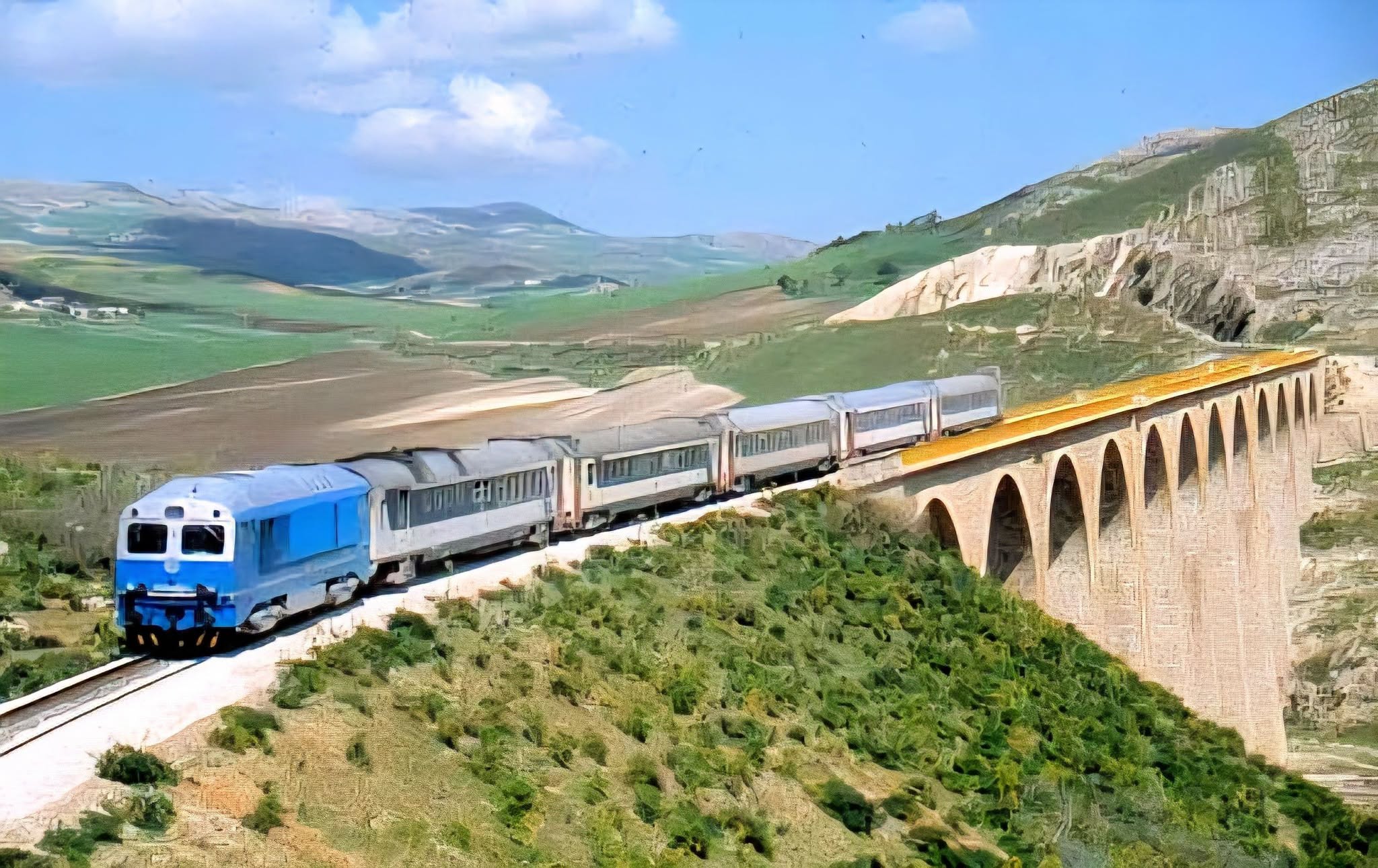
By car, Béja is 105 km from Tunis on the A3 (90 minutes), 35 km from Testour, 55 km from Dougga, 60 km from Bulla Regia, 70 km from Tabarka and 95 km from El Kef. The train from Tunis takes about two hours and runs several times a day on the Jendouba–Ghardimaou line; it is the slowest and pleasantest way, with the Medjerda valley out of the window all the way.
Louages run from Tunis’s Bab Saadoun station and from Jendouba, Tabarka and El Kef. In town, everything is walkable, and the climb to the kasbah is the only exercise. The weekly markets guide lists the souk day; time your visit for it if you can.
Fitting It In
On the northern loop, Béja is the detour from Testour on Day 6: half an hour up, the kasbah, the mosque, lunch, the bridge on the way out, and back to Testour or on to Zaghouan. It also works as the overnight stop between Dougga and Bulla Regia for anyone doing the Roman north in two days, or as a day trip from Tunis by train for anyone who wants a Tunisian town with no tourist economy at all, which is a rarer thing every year. Spring is best, for the green and the storks; harvest in June, for the gold; the agricultural fair in late August, for the farmers.
Frequently Asked Questions
As a half-day on the way to somewhere else, yes without hesitation. As a destination in itself, only for people who like real towns more than sights; the sights are good but few.
Wheat, bread, rain (it is the wettest big town in Tunisia), the kasbah, the storks, and the country’s largest sugar refinery.
105 km, about 90 minutes by car on the A3 and two hours by train.
Yes, during the day; parts are closed for safety. The view from the walls is open.
A handful of plain town hotels; Testour’s guesthouses, 35 km south, are the better bet for a night.
From the Carthage Magazine Bookshelf
For the Medjerda valley, its Roman towns and the roads between them, three ebooks for the journey.
- All About Tunisia — the definitive English-language traveler’s guide. 572 pages, 27 chapters, all nine regions, every UNESCO inscription, five thematic trails — and the practical answers (visa, currency, transport, etiquette) most travelers wish they’d had on the plane. $24.99 · PDF & EPUB.
- Speak Like a Local — 200+ Tunisian Arabic phrases with native audio recorded in Tunis. The phrases for the taxi, the souk, the café, and the dinner table. $14.99 · PDF, EPUB, MP3.
- The Authentic Tunisian Cookbook — sixty traditional recipes from the heart of North Africa. For when you get home and find yourself missing the food. $9.99 · PDF & EPUB.
All three available as a bundle for $39.99 — guide, language, and food, delivered together.
