
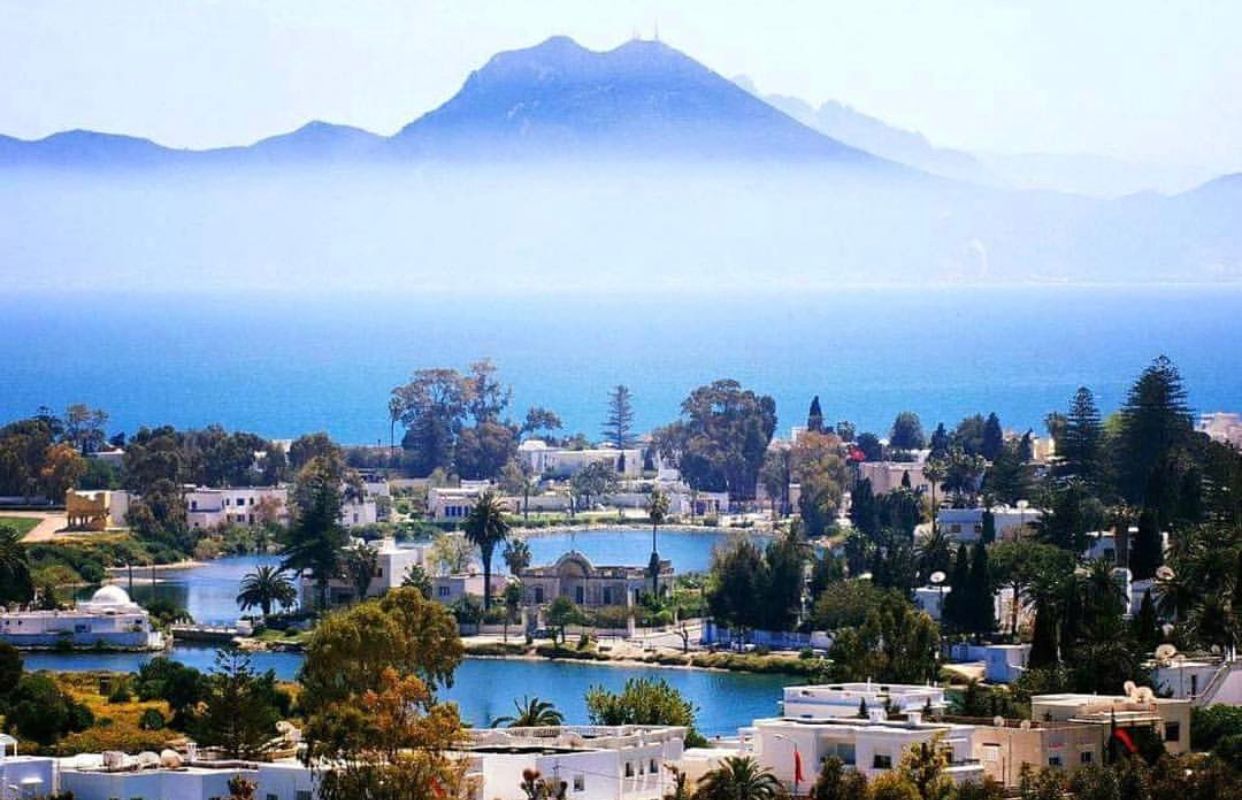
Quick Answer Tunis is the capital of Tunisia, the country’s main airport city, and — for most travelers — the first and last place they see. It is also the city most underrated by guidebooks. The old town is a UNESCO-listed medina more than a thousand years old, ringed by a French colonial-era new town with grand boulevards and Parisian cafés, with the ruins of ancient Carthage and the blue-and-white village of Sidi Bou Said sitting on the same suburban light-rail line. You can do the headline experiences in three days. You will probably want five.
The best place to begin understanding Tunis is on a rooftop in the medina, in the late afternoon, with a glass of mint tea cooling between your hands.
From the terrace of Café El Ali, on the roof of an old townhouse two streets from the great minaret of Ez-Zitouna, the whole city lays itself out in one frame. To the west, the medina’s white roofs run together in a continuous low landscape, broken by the bottle-green tiles of the older mosques. To the east, beyond the line of the Bab el Bhar — the medieval “Sea Gate,” now an arch standing alone in the middle of a busy square — the boulevards of the French colonial-era Ville Nouvelle open out, leading the eye down Avenue Habib Bourguiba to the spires of the Cathédrale de Saint-Vincent-de-Paul. To the northeast, the shallow Lake of Tunis is doing whatever the light does to it in the late afternoon — silver, blue, the colour of the inside of an oyster. Beyond the lake, on a clear day, you can pick out the white-and-blue terraces of Sidi Bou Said clinging to their cliff, and behind them the headland of Carthage, where Hannibal’s city once stood.
The whole country, in some sense, is folded into this single view. Three thousand years of it. The Punic, the Roman, the Arab, the Ottoman, the French, the modern Tunisian — all of them still architecturally present, still in use, still in negotiation with each other. Tunis is the city where Tunisia argues with itself about what it has been and what it intends to be. And the arguments are mostly good-tempered.
Here is how to read them.
Where Tunis Sits
What most travelers call “Tunis” is actually two things in continuous conversation.
The central city sits at the head of the Lake of Tunis, the shallow lagoon that opens onto the Gulf of Tunis to the east. The medina is at the centre of it. The Ville Nouvelle wraps around the medina to the east. Together they make a compact, walkable old core of perhaps three square kilometres, which is where you’ll spend most of a first visit.
Greater Tunis stretches well beyond this. To the northeast, along the southern shore of the lake and out to the headland of Cap Carthage, runs a string of suburbs that are effectively part of the city: Le Kram (port and convention centre), Carthage (the archaeological site and presidential palace), Sidi Bou Said (the famous blue-and-white village), La Marsa (the upscale beach suburb), and Gammarth (further north, the resort coast). All of them are connected to central Tunis by a single light-rail line — the TGM — that runs every fifteen minutes from morning until midnight and costs roughly a dinar end to end. Together, these neighbourhoods extend the city across about thirty kilometres of coastline. They are also where most of the country’s foreign embassies, half of its better restaurants, and almost all of its Mediterranean views live.
The practical implication is this: stay in central Tunis and visit the coast by light rail, or stay on the coast (most travelers prefer La Marsa or Sidi Bou Said) and visit the medina by light rail. Either works. Both are common.
For the city’s deeper history — how it became the capital, how it survived the Punic Wars and the Arab conquest and the French Protectorate — our overview of Tunis as the capital of Tunisia sets the long context. What follows assumes you’ve already booked the flight.
The Medina — Inside the UNESCO Old City
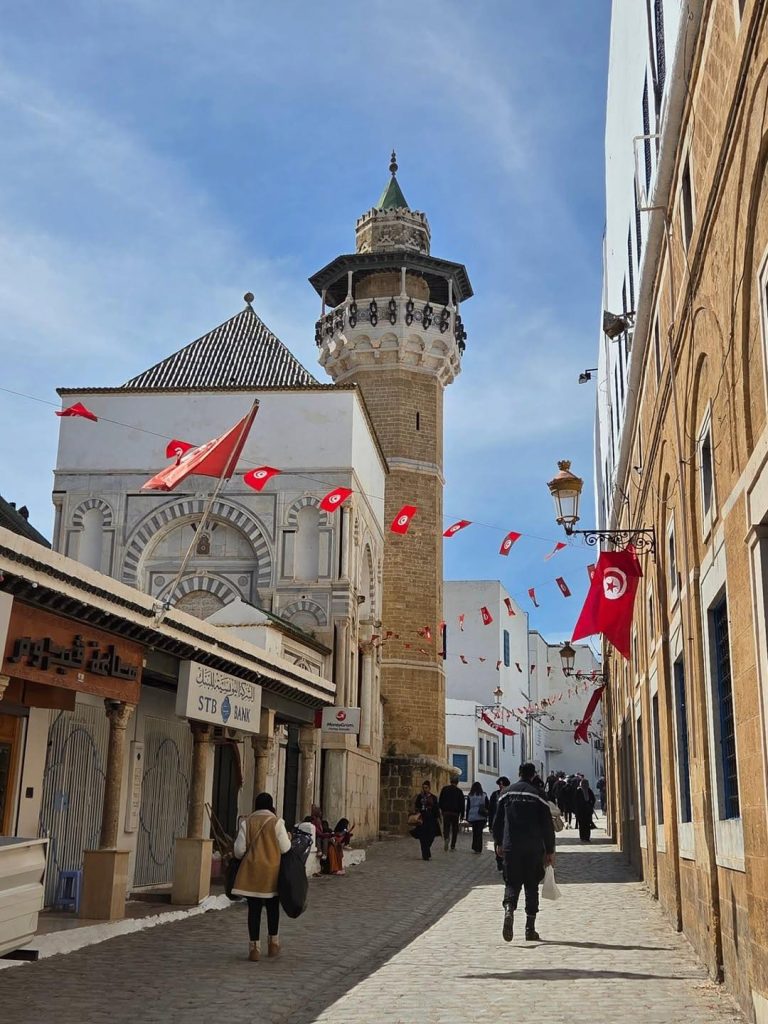
The medina of Tunis is one of the largest, oldest, and best-preserved medieval Arab cities in the Mediterranean. UNESCO inscribed it in 1979. It covers about 270 hectares — more than three hundred football pitches of densely packed alleys, courtyards, palaces, souks, and mosques, all of it still functioning as a working district of about a hundred thousand residents.
It is also, mercifully, not a museum.
Begin at the Bab el Bhar — the Sea Gate, the arched threshold between the medina and the Ville Nouvelle. The Place de la Victoire on its western side is the natural orientation point. From here, the main artery of the old city, the Souk el Attarine, runs straight ahead through the heart of the medina and ends at the gates of the Great Mosque of Ez-Zitouna — the country’s most important mosque, founded in the eighth century, the second-oldest in North Africa after the Great Mosque of Kairouan, and for centuries one of the great Islamic universities of the Maghreb. Non-Muslims can visit the courtyard (modest dress required); the prayer hall is closed to non-Muslims but worth viewing from the doorway.
Around the mosque, the souks fan out in concentric rings of specialisations. The medieval town planners arranged the trades by proximity to the sacred — the cleanest near the mosque, the dirtiest furthest away — and a thousand years later the geography still mostly holds.
- Souk el Attarine — the perfume souk. Rose water, jasmine oil, amber resin, traditional kohl. Smell-test before you commit.
- Souk des Chéchias — the hat-makers’ souk. Specialists in the chéchia, the soft red felted cap that has been Tunisia’s national headwear since the seventeenth century. Most of the workshops are run by families that have been making the same hat in the same room for six generations. Worth a slow look even if you don’t buy.
- Souk el Berka — once a slave market under the Ottomans, now the gold and jewellery souk. Most of the Khomsa pendants you will see across the country are sold here.
- Souk el Leffa — carpets and woven textiles. Some are factory-made; some are still woven by hand in the workshops above the shopfronts. Ask to be shown the difference.
What to seek out beyond the souks: the Tourbet el Bey (the eighteenth-century mausoleum of the Husseinid bey-kings, an extraordinary tiled and stuccoed interior, modest entry fee); Dar Othman and Dar Ben Abdallah, two restored medieval townhouses now operating as small museums of traditional Tunis domestic life; the Mosque of Sidi Mahrez with its distinctive cluster of white Ottoman-style domes, the most photographed mosque in the medina after Ez-Zitouna; and at least one hammam — the traditional bathhouses are still in active daily use here, and our primer on Tunisian hammams explains how to do this properly.
A word on the souks. Prices start high for visitors and come down with patience. The first quoted figure is usually three to five times the local price. A polite, smiling negotiation is expected; a flat refusal of the first price is not rude, it is part of the structure. A few words in Tunisian Arabic change the dynamic completely — bechehel (how much), ghali barcha (way too expensive), naqes shwaya (lower it a bit) — and the Carthage Magazine phrasebook was put together precisely for this kind of moment.
Allow a full day for the medina. Two if you can spare them.
The Ville Nouvelle — French Boulevards and Café Culture
Walk through the Bab el Bhar going east and you cross, in about thirty seconds, into a different city.
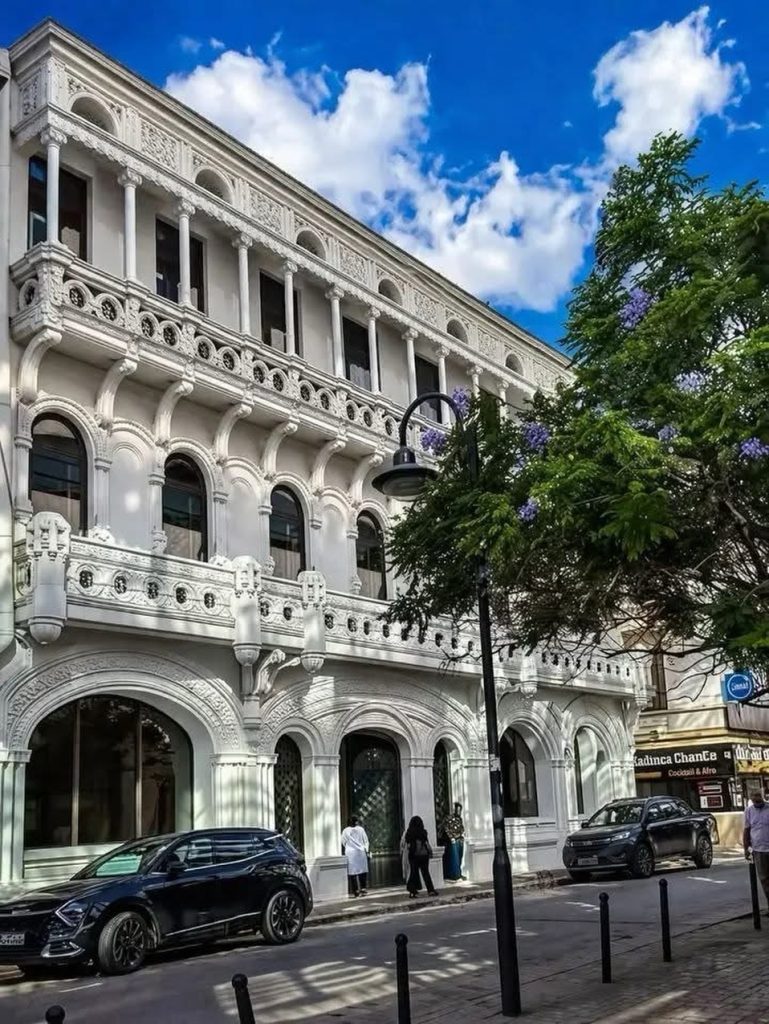
The Ville Nouvelle — the New Town — was laid out by French urbanists in the late nineteenth century under the Protectorate, on Haussmann-inspired lines. Wide boulevards. Cast-iron balconies. Plane trees down the middle of the avenues. Cafés with marble-topped tables and rattan chairs and the particular Tunisian habit of nursing a single espresso for two hours while reading the paper. It is the part of Tunis that looks most surprising to a first-time visitor, because it looks like a section of Marseille or central Algiers grafted onto a North African capital, which is more or less what it is.
The spine of the Ville Nouvelle is Avenue Habib Bourguiba, a kilometre-long boulevard running east from the Bab el Bhar to the Place du 14 Janvier (named for the date of the 2011 Tunisian Revolution). Locals call it “the Champs-Élysées of Tunis” — half in pride, half with a knowing eye-roll. It is broader and less commercial than the Paris original and considerably more pleasant to sit on. The Cathédrale de Saint-Vincent-de-Paul, a Catholic cathedral in a confident Romanesque-Byzantine pastiche built between 1893 and 1897, faces the boulevard from a small plaza at its western end. The municipal theatre — a wedding-cake Art Nouveau confection from 1902 — sits a little further down. Between them, the cafés and brasseries do their slow trade.
Three Ville Nouvelle moves worth making:
- A morning coffee on the terrace of Café Univers or Café de Paris on Bourguiba itself, watching the city go to work. The pastry is competent; the people-watching is the point.
- An afternoon at the Belvédère Park, the city’s largest green space, set on a hill at the northern end of the Ville Nouvelle. The park holds a modest zoo, a nineteenth-century pavilion, and what may be Tunis’s best public view of the lake.
- An evening on Avenue de Carthage or in the small streets behind it — La Fayette, Charles de Gaulle — where the late-twentieth-century brasseries serve grilled fish, salade méchouia, brik à l’œuf, and a glass of Tunisian wine. The bills are modest by European standards.
The Ville Nouvelle is also where most of the city’s contemporary art galleries and bookshops live — Espace Diwan, Mille Feuilles, B7L9 Art Station out in the working-class suburb of Bhar Lazreg. Tunis has been quietly producing a serious post-revolution generation of contemporary artists, and the galleries here are where you’ll see them first.
The Coast — Carthage, Sidi Bou Said, La Marsa
This is the line most travelers will remember longest.
The TGM — the Tunis–La Goulette–La Marsa light rail — has been running since 1872. It takes about thirty-five minutes end to end, costs less than a dollar, and gives you three of the country’s headline destinations on a single ticket.
La Goulette is the old port suburb, six kilometres from central Tunis. Once the most heavily Italian and Jewish neighbourhood in the country, it remains a fish-restaurant pilgrimage on Friday and Saturday evenings; the seafood restaurants along Avenue Franklin Roosevelt are some of the best in Greater Tunis, and they are how locals spend a long weekend lunch.
Carthage — the next eight stops on the TGM — is not a town in any conventional sense; it is an archaeological site interleaved with one of the most expensive residential neighbourhoods in the country. The Presidential Palace sits on the headland. The ruins sit everywhere else. Plan a full day. The essential sequence:
- The Antonine Baths — the largest Roman thermae outside Rome itself, with the single intact column rising from the rubble like an exclamation mark against the Mediterranean
- The Punic Ports — the small twin harbours from which Hannibal’s fleet once sailed, now silted but still legible
- The Tophet of Salambô — the disquieting Punic sanctuary where votive stelae to Tanit and Baal Hammon still stand in their original field
- The Roman Theatre of Carthage — partly reconstructed, still in use for the summer Carthage International Festival
- The Carthage National Museum on Byrsa Hill — Phoenician masks, Punic stelae, Roman sarcophagi, and from the terrace the best long view of the bay
A single Carthage pass — sold at any site — gets you into all of the above. Bring water and proper shoes; the distances between sites are larger than the map suggests.
Sidi Bou Said, two stops further along the TGM, needs no introduction by now. Tunisia’s most photographed village, perched on a cliff above the Mediterranean, every door and shutter painted the same particular shade of cobalt blue, every house lime-washed white. It is a UNESCO tentative-list site, the model for a hundred other Mediterranean villages, and exactly as beautiful as it is in the photographs. Go in the morning before the tour buses, or after five when they leave. Our Sidi Bou Said travel guide and our list of ten things to do there cover the village in proper depth.
La Marsa, the end of the line, is the upscale beach suburb where most of the city’s professional class actually lives. Less to “see” than to inhabit. The Saturday market is excellent. The beach is the city’s nicest. The corniche, on a summer evening, fills with the Tunisian habit of walking slowly with friends for no particular reason other than that the air is cooling and there is nowhere better to be.
One non-coastal essential, before we move on. The Bardo National Museum sits four kilometres west of central Tunis (separate from the TGM line, reached by metro légère or taxi) and holds the largest collection of Roman mosaics in the world — almost all of them lifted from the Roman cities of Tunisia. If you do nothing else indoors in Tunis, do the Bardo. Plan three hours. You will want four.
Where to Eat in Tunis
The Tunis food scene is good and getting better.
In the medina. Lunch at Dar el Jeld — a sixteenth-century palace converted into the most photographed restaurant in the country, serving the slow-cooked Tunisian classics (tagine malsouka, koucha agneau, mloukhiya) in a tiled courtyard under a stained-glass roof. Pricier than its surroundings; worth it once. For something lighter and considerably cheaper, the small lunch counters around the Souk Sidi Bahri serve lablabi (the country’s chickpea-and-bread breakfast soup), brik fresh from the fryer, and kafteji by the plate. You will eat well for under five dinars.
In the Ville Nouvelle. Le Capitole, Le Golfe, and the long-running brasserie Le Carthage are the dependable mid-range fish-and-Tunisian-classics places, in business for decades, popular with locals and visitors alike. Fondouk El Attarine in the medina edge is the smart-set choice for slow Tunisian cooking.
On the coast. Friday and Saturday lunch in La Goulette for grilled dorade or loup de mer. Sidi Bou Said for sunset and a bambalouni (the village’s famous deep-fried doughnut). La Marsa for a long, late, easy dinner of the kind you’ll talk about months later.
What to order, in one paragraph: at least one brik (forgive the yolk on the shirt); the salade méchouia (the smoky char-grilled pepper-and-tomato salad TasteAtlas recently ranked the second-best salad in the world); grilled fish with Tunisian olive oil; kafteji if you find a place that makes it well; a tagine; and — if you can find it — a glass of dry Tunisian wine from the Cap Bon. The recipes are mostly translatable into a home kitchen: the Carthage Magazine cookbook has sixty of them.
When to Go
Tunis has the same Mediterranean climate as the rest of coastal Tunisia, softened by sea breezes from two directions. Hot dry summers, mild wet winters.
The best windows for a city trip are March to early June and mid-September through November. Days are warm without being punishing, the medina is walkable at noon, and the cafés on Avenue Bourguiba are at their evening best. July and August are hot but workable — the medina is shaded enough to stay comfortable, the coast and the TGM make for natural afternoon escapes, and the Carthage International Festival fills the Roman Theatre with concerts. December through February are mild, occasionally cool, and surprisingly green — Tunis without its tourists, which is its own kind of recommendation.
The longer view is in our month-by-month guide to visiting Tunisia.
How to Get There and Get Around
Arriving. Tunis-Carthage International Airport is eight kilometres northeast of the city centre. A taxi to central Tunis runs 12 to 20 dinars (always confirm the meter is on; reject anyone quoting a flat rate at the rank). To the coastal suburbs — La Marsa, Sidi Bou Said, Carthage — count 25 to 40 dinars. Most major hotels can arrange a fixed-price airport transfer; the price is usually only slightly above the metered fare.
Moving in the centre. Central Tunis is walkable; the medina and the Ville Nouvelle are two halves of the same compact district. For longer distances within the city, the Métro Léger (light tram) covers the western and southern districts, and yellow city taxis are everywhere — cheap, metered, generally honest. Bolt operates as a ride-hailing app across the city and is the easiest option after dark.
The TGM runs from the Tunis Marine station at the eastern end of Avenue Habib Bourguiba, every fifteen to twenty minutes, every day from around 5 AM to midnight. A single ticket end-to-end costs around 1 dinar (you can also buy a day pass). The line stops at La Goulette, Le Kram, Carthage’s various sites (six TGM stops are inside Carthage), Sidi Bou Said, and finally La Marsa Plage. This is the cheapest and easiest sightseeing infrastructure in the country.
A note on safety. Tunis is one of the safer capital cities in the Mediterranean and the Maghreb. The usual urban precautions apply — keep an eye on your bag in the medina and on packed trams, agree taxi fares before you get in if the meter is “broken,” don’t flash a phone you can’t afford to lose, walk in groups after midnight in the Ville Nouvelle nightlife streets. Our Is Tunisia Safe? primer goes deeper. The dinar guide is here; the on-the-ground cost picture is here.
A Reasonable Three-Day Itinerary
- Day one — the medina. Morning at the Place de la Victoire and slowly inward, through Souk el Attarine to Ez-Zitouna. Mint tea on the rooftop of Café El Ali. Afternoon through the gold souk to Tourbet el Bey, and a slow walk back via Dar Ben Abdallah. Dinner at Dar el Jeld or one of the smaller medina restaurants.
- Day two — the coast. Morning TGM out to Carthage. Antonine Baths, the Punic Ports, the Tophet, the Roman Theatre, lunch in the Sidi Bou Said cafés (Café des Nattes, Café Sidi Chabaane for the view). Afternoon walking Sidi Bou Said’s blue-and-white streets, and a bambalouni before the bus crowds arrive. Sunset and dinner in La Marsa.
- Day three — the Bardo and the Ville Nouvelle. Morning at the Bardo (allow three hours). Lunch on Avenue Bourguiba. Afternoon at the Belvédère Park, then a slow walk down Bourguiba to the Cathédrale and back. Dinner of grilled fish in La Goulette or a brasserie in the Ville Nouvelle.
If you have a fourth day, add the Carthage National Museum on Byrsa Hill and an evening on the Sidi Bou Said cliff at sunset. If you have a fifth, take a day-trip to Hammamet and the Cap Bon coast.
Why You’ll Come Back
Tunis is the city that visitors arrive in without expectations and leave talking about more than they expected to.
It is not a beach city. It is not a museum city. It is not a foodie city, though it could be. It is, more honestly, a working capital that has been doing its complicated layered job for a very long time — Punic before it was Roman, Roman before it was Arab, Arab before it was Ottoman, Ottoman before it was French, French before it was Tunisian, and still all of those things at once, on different streets, at the same time. The medina shopkeeper who calls you to look at his carpets is the great-grandson of someone who did the same job to French officers a hundred and twenty years ago and to Ottoman beys two hundred before that. The café where you sit on Avenue Bourguiba is older than most countries. The mosque whose minaret you can see from the rooftop is older than most religions still practised in Europe.
You can come for the medina, or for Carthage, or for the food, or for the blue doors of Sidi Bou Said. Most people come for one of these and leave because of the layering — the strange, durable, lived-in quality of a place where so many centuries are still talking to each other in the same alleyways and you, the visitor, are now briefly part of the conversation.
That is what Tunis does best. Sit on the rooftop. Order another tea. Watch the city not be in a hurry.
It will still be here when you come back.
From the Carthage Magazine Bookshelf
For the wider trip, three Carthage Magazine ebooks were built for the traveler who wants the real cultural keys:
- All About Tunisia — the definitive English-language traveler’s guide. 572 pages, 27 chapters, all nine regions, every UNESCO inscription, and five thematic trails. The Tunis chapter goes deeper than this article can, with full neighbourhood maps and itineraries up to two weeks. $24.99 · PDF & EPUB
- Speak Like a Local — 200+ Tunisian Arabic phrases with native audio recorded in Tunis. The phrases for the medina souk, the taxi negotiation, and the café are all in chapters two and four. $14.99 · PDF, EPUB, MP3
- The Authentic Tunisian Cookbook — sixty recipes for what you’ll wish you could keep eating once you’re home, including the brik, the salade méchouia, and the mloukhiya you’ll meet at every Tunis lunch table. $9.99 · PDF & EPUB
All three are available as a bundle for $39.99 — guide, language, and food, delivered together.
