
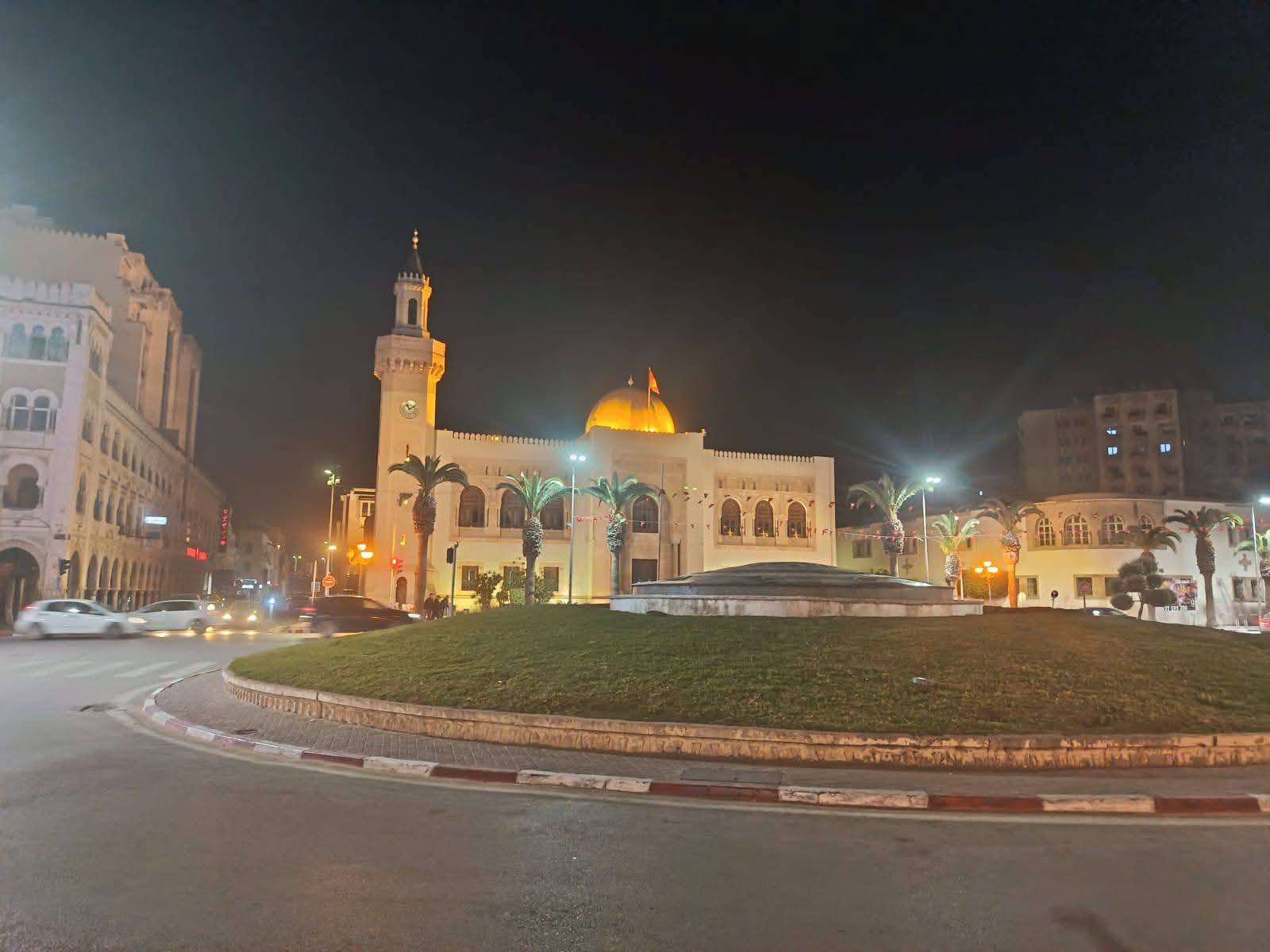
Quick Answer Sfax is Tunisia’s second-largest city after Tunis, the country’s economic engine, and the home of one of the most intact and least touristified walled medinas in the Maghreb. It sits 270 kilometres south of Tunis on the central Mediterranean coast, reachable in three hours by car or train. There are very few hotels designed for tourists and almost no English-speaking tour guides — which is the point. Sfax is a working city of 330,000 people that does not need visitors to make sense, and that fact is what makes a day or two there one of the more honest things you can do in Tunisia.
The first time you drive into Sfax from the north, on the A1, you understand something about Tunisia that the tourist coast does not show. Cement factories. Petrochemical stacks. The smell of phosphate. Container cranes at the port stacked against the sea. A motorway exit that takes you past a chemical plant the size of a small city.
Then, fifteen minutes later, you turn west and find yourself in front of the Bab Diwan — a Fatimid gate set into a curtain wall of fawn-coloured limestone, polished by ten centuries of touch — and beyond it, the medina of Sfax: 24 hectares of densely-packed lanes, working souks, mosques whose oldest courses date to 849 CE, and almost no signs in any language but Arabic.
Tunisia’s second city is the country’s least obvious one. It is also, for the traveller willing to spend a day or two without a guide, one of the most rewarding.
Why Sfax Matters
Sfax is the city Tunisia runs on.
Founded by the Aghlabids in 849 CE on the site of an earlier Roman settlement called Taparura, the city was conceived from the start as a fortified port and a trading hub for the olive oil of the central Tunisian plain. The Aghlabids built the walls — substantially the walls you still see today, three kilometres of them, the most complete medieval ramparts in Tunisia — and the Great Mosque inside them. The city grew rich on olives, fish, and the trans-Saharan trade.
It has done the same thing for the eleven centuries since. Today Sfax produces around 30% of Tunisia’s national GDP, handles roughly half the country’s olive oil exports, lands the largest tonnage of fish of any Tunisian port, and runs the chemical and phosphate industries that, for better and worse, made twentieth-century Tunisia industrially viable. It is the centre of the country’s mercantile bourgeoisie, the home of its most successful trading families, and — by an old Tunisian reputation that Sfaxians both resent and quietly accept — the country’s frugal city, where money is made carefully and kept carefully.
Visually, the city is bifurcated. The walled medina at the centre is medieval, almost completely so, and almost completely working. Around it stretches the Ville Nouvelle — the French colonial city built between 1881 and the 1950s, with its grid of avenues, its trees, its art-deco municipal buildings, and its bourgeois trading houses. Beyond that, the industrial zones, the port, the fishing harbour, and the long thin Mediterranean. The medina is what most visitors come for. The Ville Nouvelle is what most Sfaxians live in. The two were designed to feel like separate cities and still do.
For the wider arc of the country’s history that produced this place, the piece on Tunisia’s rich history is the standard map.
The Medina
Begin at Bab Diwan.
The main gate of the medina, set into the southern wall and facing the modern city’s Place de la République, is one of the great pieces of Aghlabid military architecture in North Africa. Three successive arched passages, each at a slight angle to the last, so that an attacking force could be stopped and shot at three times before reaching the inner gate. Above the outermost arch, the inscription is in Kufic Arabic and reads, roughly, In the name of God, the Compassionate, the Merciful, this gate was built in the year 240 of the Hijra. That is 854 CE. The gate has been here for 1,172 years.
Step through it and you are inside the densest pre-modern Islamic city centre still in everyday working use in Tunisia.
The first thing you notice — the thing every visitor who has spent time in Tunis or Hammamet notices — is that almost nobody is trying to sell you anything. The souk you are walking down is the Souk er-Rba, the carpenters’ souk, and the men in it are making and repairing furniture for Sfaxian customers. Two streets over, in the Souk el-Kammar, leather is being cut. In the Souk en-Nahas, copper. In the Souk ej-Jezzarine, butchered meat. There are tourist shops, particularly along the route between Bab Diwan and the Great Mosque, but they are outnumbered four to one by working trades. The smell varies by alley. The noise is hammering, prayer call, the cries of donkey drivers, and the murmur of business.
The Great Mosque of Sfax sits at the medina’s heart, set back from the main souk axis. Founded in 849 CE — making it almost exactly contemporary with the Great Mosque of Kairouan — and rebuilt several times across the centuries, it retains its original Aghlabid layout and a remarkable preserved set of 11th-century arches in the prayer hall. As at every working mosque in Tunisia, the prayer hall is reserved for Muslim worshippers; the courtyard is open. The minaret is square and austere, in the Aghlabid manner that the mosques of Kairouan and Sousse share.
A few hundred metres east of the Great Mosque, the Dar Jellouli Museum of Popular Arts and Traditions occupies a beautifully restored 17th-century Sfaxian merchant house — exactly the kind of building in which the city’s trading bourgeoisie lived through the Ottoman centuries. The rooms preserve original tilework, painted ceilings, and intimate domestic spaces, and the collection — ceremonial costumes, silver, ceramics, ceremonial objects — is one of the best of its kind in Tunisia. Entrance is about 5 dinars; allow an hour.
The Kasbah in the southwest corner is the citadel proper: rebuilt under the Hafsids in the 14th century on Aghlabid foundations, it now houses a small archaeological museum and offers, from its ramparts, the best single view of the medina from above. Climb it late in the afternoon for the light.
Three smaller sights worth the detour: the Bordj en-Nar (the “Fire Tower”), a 9th-century watchtower on the eastern walls; the Borj el-Sourour, a Hafsid tower on the western walls; and the Souk el-Robaa, the medina’s textile market, where Sfax’s famous jebbas and brocades are sold.
The Ville Nouvelle
The French built their parallel city outside the western walls, with Avenue Habib Bourguiba (then Avenue de France) as the spine and the Place Hedi Chaker as the civic centre. The architecture is good. The 1929 town hall, the 1934 cathedral (now an arts centre), the merchant houses along Rue Mongi Slim — these are art deco and neo-Moorish set pieces that have been preserved in better condition than their counterparts in Tunis.
For visitors, the Ville Nouvelle is principally useful as the place where the hotels, the cafés, and the restaurants are. The medina has very few of either. You sleep, drink, and dine in the Ville Nouvelle and walk to the medina by day.
The Sea, the Port, and Karkenah
Sfax is a port city, and the port is part of the experience.
The fishing harbour, immediately south of the medina, lands more fish than any other Tunisian port — particularly octopus, of which Sfax is the country’s capital, and which is exported by the container-load to Japan and Italy. The morning auction, around 5–6 a.m., is one of the more memorable hours you can spend in Tunisia if you can manage to be up for it.
From the passenger port next door, a daily ferry runs to the Karkenah Islands — a flat, sandy archipelago 25 kilometres offshore, with one settled main island (Charguia, also called Karkenah), perhaps 14,000 residents, almost no tourism, a working palm-fishing economy, and a particular slow rhythm that has nothing in common with the Mediterranean Tunisia of Hammamet or Sousse. The crossing takes about an hour. Day trips are possible; overnighting in one of the small island hotels is better. Karkenah is the kind of place a certain kind of traveller spends a week in and a more impatient kind of traveller cannot understand the point of. Both responses are reasonable.
What Sfax Eats
Sfaxian cuisine is its own particular sub-region of Tunisian food.
The trinity is fish, octopus, and olive oil, all sourced from within forty kilometres of where you are sitting. The signature local dish is karkanaiyya — octopus stewed slowly in tomato, harissa, garlic, and oil, served over rice or with bread. The Sfaxian version of lablabi, the chickpea breakfast soup, is heavier, more harissa-forward, and almost always topped with a substantial portion of tuna. Marqa hloua, a sweet-savoury stew of lamb with prunes and honey, is a Sfaxian wedding dish that turns up on better menus.
The city’s pastry tradition is also distinctive. Ftayer (the fried doughnut, eaten warm with honey), baklawa Sfaxia (denser and less syrupy than the Tunis version), and yo-yo Sfaxi (a small round honey-soaked pastry) are the local specialities.
For the best fish, the seafront restaurants along Avenue Hedi Chaker in the Ville Nouvelle are reliable; Le Corail and Le Bec Fin are the long-running options. For the medina experience, look for the small unmarked workmen’s restaurants along Rue de la Driba — they serve lunch only, run out by 2 p.m., and cost less than 15 dinars a head. For the wider Tunisian food landscape, see the top foods to eat in Tunisia.
Getting There, Getting Around
From Tunis, Sfax is 270 kilometres south on the A1 motorway. By car, the drive is three hours; by SNCFT train, three and a half (the Khlij express runs three times a day and is the comfortable option, about 22 dinars in first class); by louage, two and three-quarter hours from Moncef Bey, around 18 dinars.
Sfax-Thyna International Airport (SFA) sits 6 kilometres south of the city and has limited scheduled service (mainly Tunis, Tripoli, Istanbul, and seasonal European charters). Most travellers fly into Tunis-Carthage and drive or train down, or — if coming directly to the Sahel — into Monastir, 130 kilometres north. See flights to Tunisia for the wider picture.
Inside Sfax, walking covers everything within and around the medina. Taxis are abundant, metered, and cheap; insist on the meter. There is no metro and no light rail. The Sahel Metro stops at Mahdia, 80 kilometres north of Sfax, and does not run further south.
For Karkenah: the Sonotrak ferry runs daily from the passenger port near the fishing harbour, typically at 8 a.m. and 5 p.m. with returns on a similar schedule. Tickets are under 10 dinars one-way. Schedules shift with the seasons; check on the day.
When to Go
Sfax has the central Tunisian Mediterranean climate: hot summers, mild winters, very low rainfall. April to mid-June and mid-September to November are the obvious sweet spots — 22–28°C, manageable evenings, the light kind to the limestone of the medina walls.
July and August are hot — 33–36°C is normal — but the medina, well-shaded and stone-built, copes well. The Ville Nouvelle in August is harder; pavement temperatures get high and shade is patchier.
Winter (December–February) is fine for medina walking — 14–17°C daytime, occasional rain — though many of the smaller museums operate reduced hours and Karkenah ferries occasionally cancel for weather. See the best time to visit Tunisia for the regional context.
A Few Practical Notes
Hotels. There are almost no medina riads or tourist-grade boutique hotels in Sfax (this is changing slowly). The reliable mid-range options are in the Ville Nouvelle: Hotel Les Oliviers Palace (the city’s grande dame, art-deco, in need of refurbishment but full of character), Hotel Borj Dhiafa, and the Mercure. Budget travellers will find functional guesthouses near the train station.
Cash. ATMs are plentiful in the Ville Nouvelle around Avenue Habib Bourguiba. Inside the medina, the small shops mostly take cash only. For the dinar generally, see the currency guide.
Dress. Sfax is more conservative than Sousse or Tunis, about on par with Kairouan. Covered shoulders and knees inside the medina; nothing draconian, but the bar is not the beach.
Friday. The Great Mosque closes to non-Muslim visitors during midday prayers. Plan around it. Most souks operate reduced hours on Friday afternoon and reopen Saturday morning.
Photography. Of the architecture, freely. Of people, with permission. Sfaxians are notably more reserved with cameras than Tunisians on the tourist coast; if in doubt, ask, and don’t be surprised by a polite no.
Alcohol. Sold in hotels, in a small number of licensed restaurants in the Ville Nouvelle, and at the Magasin Général and Carrefour supermarkets on the outskirts. Not sold inside the medina. See alcohol in Tunisia for the wider picture.
Day trips. Sfax is the natural base for the inland archaeological sites of central Tunisia. El Jem, the great Roman amphitheatre, is 65 kilometres north (an hour by car, somewhat less by train); the Roman site of Sufetula at Sbeitla is 130 kilometres west; Thaenae, just south of the city, was a Roman provincial capital and is now an archaeological park.
What Sfax Is, Honestly
Sfax is not pretty in the way Sidi Bou Said is pretty or comfortable in the way Hammamet is comfortable. It will not give itself up to a half-day visit. The medina is a working medina, which means it does not perform for outsiders, which means the rewards take a little patience. The Ville Nouvelle has charm but no glamour. The food is excellent and the hotels are limited.
What you get, for the day or two you spend there, is the most accurate experience available in Tunisia of what the country actually is when it is not running a tourist economy. The merchants in the souk are merchants. The workers at the port are workers. The light on the walls of the medina at five in the afternoon, in October, is one of the more beautiful things on the Mediterranean coast, and almost nobody you will meet at home will know what you are talking about when you describe it.
Tunisia’s second city, in other words, is more interesting than its first for travellers willing to do a little work. The reward, when it lands, is the kind of trip people talk about for years afterwards.
You should go.
From the Carthage Magazine Bookshelf
Sfax rewards the slower traveller, and the days in it pair well with three Carthage Magazine ebooks:
- All About Tunisia — the definitive English-language traveller’s guide. 572 pages, 27 chapters, all nine regions — with a full chapter on the Sahel and the central coast that the standard guidebooks rush past. $24.99 · PDF & EPUB
- Speak Like a Local — 200+ Tunisian Arabic phrases with native audio recorded in Tunis. The Sfaxian dialect is distinctive, but the Derja in the phrasebook will get you everywhere in the souk and the fish market. $14.99 · PDF, EPUB, MP3
- The Authentic Tunisian Cookbook — sixty traditional recipes from the heart of North Africa, including the octopus stew and the heavier Sfaxian-style lablabi. $9.99 · PDF & EPUB
All three available as a bundle for $39.99 — guide, language, and food, delivered together.
