
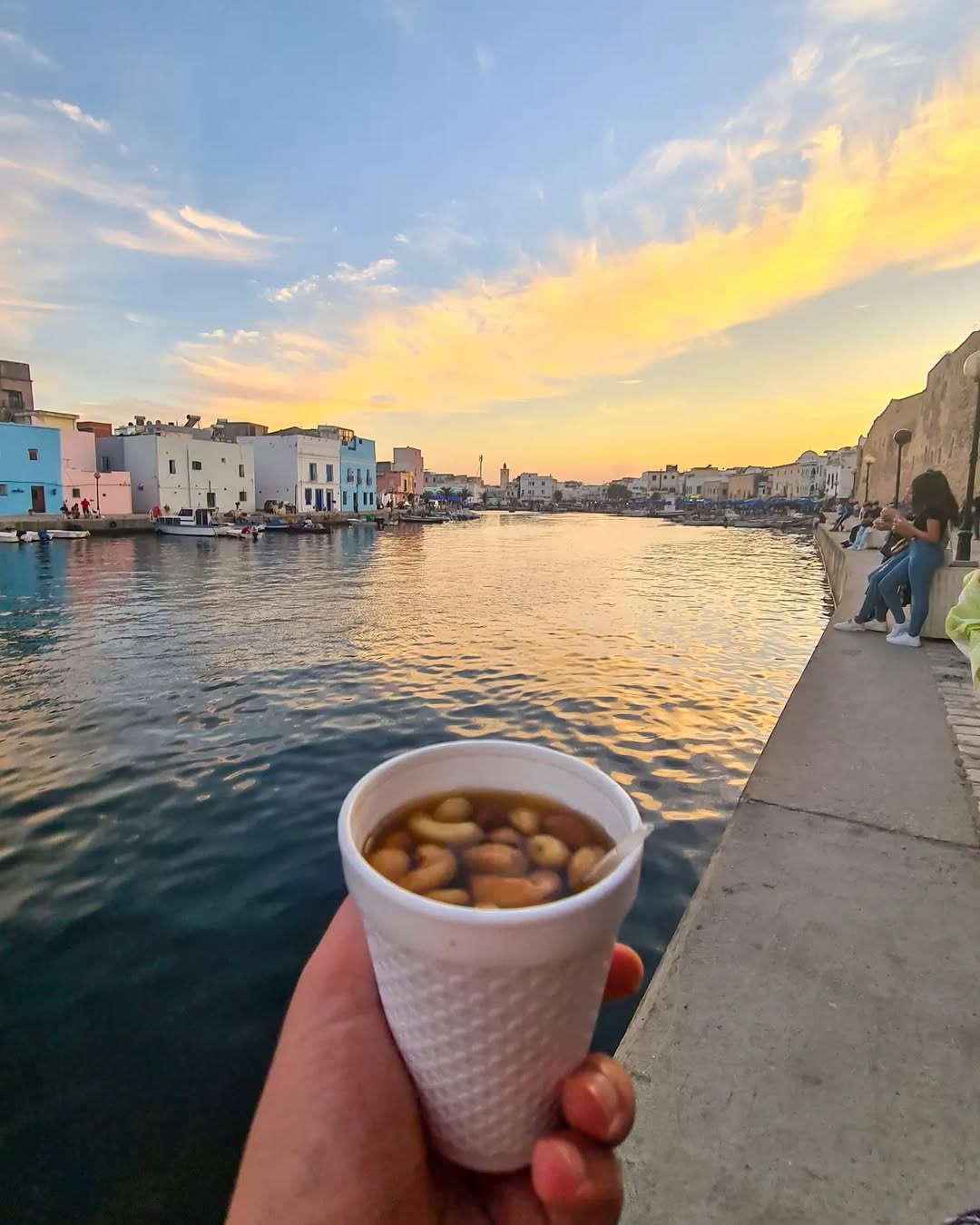
Quick Answer Yes — for most travelers, Tunisia is genuinely worth visiting in 2026. The country offers the best Roman ruins outside Italy, warm Mediterranean beaches, a UNESCO medina that isn’t being trampled, food that is quietly excellent, prices that are roughly half those of Greece or Italy, and a welcome that has not been corroded by mass tourism. It is also smaller, calmer, and less famous than its reputation deserves. The honest case against is real but narrower than the question’s tone suggests: closed-currency friction, lower English fluency than some Mediterranean destinations, summer heat, and the long shadow of news cycles a decade old. If you’re the kind of traveler this article describes in the second half, book the flight.
People do not ask whether Italy is worth visiting. They do not ask whether Greece is worth visiting. They do not ask whether Spain is worth visiting. Those countries are assumed.
Tunisia gets the question because the country has had a complicated couple of decades and the traveling public has, understandably, not yet caught up to where it now is. The question is being asked sincerely, and the honest version of the answer is the one this article tries to give. Not the marketing version. Not the home-team version. The version a friend who lives in Tunis would tell you over a slow lunch if you said you were thinking about coming.
So: is Tunisia worth visiting? Let me try.
Why You’re Asking
It’s worth naming the reasons people hesitate, because they’re legitimate and they shape what the rest of this article needs to address.
- The news cycle. Tunisia was the spark of the 2011 Arab Spring — the country whose protests brought down a thirty-year dictatorship and triggered the wider regional upheaval. The years that followed were politically turbulent. In 2015, two terrorist attacks — one at the Bardo Museum, one on a beach in Sousse — killed a combined sixty visitors and effectively ended Western tourism to the country for several years. Most foreign-office travel advisories were updated, downgraded, then quietly restored. The travel sections of major Western newspapers, which used to write about Tunisia routinely, mostly stopped. That gap in coverage has not entirely closed.
- The unknowns. Most travelers know Morocco. Many know Egypt. Tunisia sits in the middle and is, by comparison, an information desert in English. People reasonably wonder whether the country is “doing” tourism well, what the infrastructure is like, whether food poisoning is a problem, whether they’ll be hassled, whether they’ll be understood, whether they’ll be safe.
- The closed currency. Tunisia’s dinar is non-convertible — you can’t get it before you arrive, you can’t take it home with you, and the entire system feels slightly unfamiliar to a traveler used to drawing euros from an ATM in Naples. (It’s all manageable; our primer on the Tunisian dinar walks through it.)
- The package-tour reputation. A lot of what the wider European market knows about Tunisia is the resort zones in Sousse and Hammamet — the all-inclusive beach hotels that European tour operators have been filling with sun-seekers since the 1970s. The resort version of Tunisia is real, and for the right traveler it is fine, but it is a poor representative of the country. If your only mental image of Tunisia is a Thomson Holiday brochure, the hesitation is understandable.
These are the questions worth answering. Here are the answers.
The Honest Case For
The country has a half-dozen things going for it that, taken together, make a serious case.
Roman ruins on the scale of Italy. This is the single most undersold fact about Tunisia. The country has somewhere between two and three hundred substantial Roman sites, half a dozen of them extraordinary, and several — Dougga, El Jem, Bulla Regia, Sbeitla — that are better preserved than almost anything in Italy itself. The amphitheatre at El Jem is the third-largest Roman colosseum ever built and on a Tuesday morning you may share it with a dozen other people. The Bardo Museum in Tunis holds the largest collection of Roman mosaics on Earth. If you have any interest in the ancient Mediterranean, this is the country.
Mediterranean beaches that work. Tunisia has roughly thirteen hundred kilometres of coastline, almost all of it warm, swimmable Mediterranean. The water is bath-temperature from May through October. The beaches of Djerba, the long sand stretches of Hammamet and Cap Bon, the calmer coves of the north — these are real beach destinations at a price point Croatia, Greece, and Italy stopped offering twenty years ago.
Carthage, on the same suburban train line as Sidi Bou Said. This is genuinely odd and genuinely wonderful. The ruins of one of antiquity’s great cities are a fifteen-minute ride from central Tunis on a light rail line that costs less than a dollar. Three stops further along is Sidi Bou Said, the blue-and-white village that gave the Mediterranean its postcard. Few countries put their headline experiences this conveniently close together.
A UNESCO medina that is still a working district. The medina of Tunis is one of the largest, oldest, and best-preserved medieval Arab cities in the Mediterranean. It is also still a working district — about a hundred thousand people live in it — which means it has the texture of an actually inhabited place rather than the polished feeling of a fully restored heritage zone. The shopkeepers are mostly not depending on tourists. The hassle level is markedly lower than Marrakech or Fez.
Food that is consistently better than its reputation. Tunisian food is one of the great underrated Mediterranean cuisines. The slata méchouia was ranked the second-best salad in the world by TasteAtlas. The brik — the country’s signature crisp pastry with a runny egg inside — is unique to Tunisia and unforgettable. Harissa is now globally famous and UNESCO-listed. The slow-cooked tagines, the mloukhiya, the koucha of Sfax, the saffron rice of Djerba — these are dishes you will remember.
Value that has almost no equivalent in the wider Mediterranean. A mid-range hotel in Tunis runs sixty to ninety dollars a night. A serious restaurant meal with wine is twenty-five to forty dollars a head. A local taxi across central Tunis is two dollars. A bottle of decent Tunisian wine is four dollars at a supermarket. A camel trek into the Sahara from Douz, with a guide and an overnight in a Bedouin camp, is under a hundred. The cost of living guide has the longer picture; the short version is that your money goes roughly twice as far as it does in Italy or Greece.
An absence of crowds. This deserves its own line. In a Mediterranean year when Greece is groaning, Spain is debating tourist caps, Italy has installed turnstiles at the Trevi Fountain, and Marrakech sees more international visitors than the entire Cycladic island chain, Tunisia is largely empty of foreign visitors outside the resort zones. Dougga on a weekday is essentially yours. El Jem after lunch is almost yours. The medina of Tunis is busy, but with Tunisians. If solitude in great places is something you have stopped expecting on a Mediterranean trip, Tunisia is one of the few places it is still available.
A genuinely warm welcome. This one is hard to write without sounding like a tourism board. But it is true, and worth saying plainly: Tunisia has not yet had its hospitality corroded by mass tourism. When a stranger invites you in for tea, they actually mean it, and they will be hurt if you offer to pay for the tea. This is what most travelers report about the country, and it is the thing that most reliably exceeds their expectations.
The Honest Case Against
Now the other side. This is the part most articles like this skip, and it is the part that makes the rest of the article worth reading.
You will deal with the closed currency. You cannot buy Tunisian dinars at home. You will exchange or withdraw on arrival. You should leave the country with no significant dinar holdings, because you cannot legally take them out. ATMs work but charge international fees. Credit cards are accepted in mid-range and up but not universally. This is all manageable and most travelers stop noticing it after day two, but if frictionless money handling is non-negotiable for you, it’s a real consideration.
English fluency is uneven. French is the working second language and is widely spoken; English fluency is rising fast, especially among under-thirties in the cities, but it is not universal. In rural areas and in the south, French will get you further than English will. If you are an English-only traveler, you’ll do fine in the major destinations and you will sometimes be working harder than you would in Morocco’s tourist zones, which see more long-haul English-speaking travellers.
The resort zones don’t represent the country. A lot of what European package tourists experience of Tunisia is the all-inclusive beach hotels of Hammamet, Sousse, and Yasmine Hammamet — and the experience inside those compounds is, frankly, not great. The food is buffet-Mediterranean. The cultural exposure is zero. If you book the package version of Tunisia, you will have a perfectly fine beach holiday that could happen in any Mediterranean country and you will leave wondering what the fuss was about. The country rewards travelers who go beyond the compound. It does not reward travelers who don’t.
The interior is hot in summer. July and August in Tunis are warm but bearable; July and August in Kairouan, Tozeur, or the Sahara are not — daytime temperatures cross forty-five degrees Celsius and stay there for weeks. If your only trip window is high summer and you want to do anything more than swim, the heat is real and you should plan around it.
Flights from North America are limited. There are no direct flights from the United States or Canada to Tunisia. Most North American travelers connect through Paris, Frankfurt, Rome, or Istanbul. The trip is doable — Royal Air France, Lufthansa, Turkish, Tunisair, ITA all serve the route via their hubs — but it is one extra leg and the total journey time runs twelve to seventeen hours from the East Coast.
Some of the bureaucracy is slow. Most travelers will not encounter government bureaucracy directly. But if your visit involves anything administrative — applying for a residency permit, registering a long stay, dealing with customs on a complicated import — be prepared for slower processes than you’re used to. This is not a problem for normal tourism.
You are not getting Marrakech. If your mental image of North Africa is the spectacle of Jemaa el-Fnaa at dusk, the carved cedar of the Bou Inania Madrasa, the riad-stay experience, or the four-thousand-metre peaks of the High Atlas — Tunisia is not Morocco and does not pretend to be. The Tunis medina is calmer, smaller, less theatrical, more livable, and (for some travelers) more rewarding. But it is not the medina of Fez. Be honest with yourself about which trip you want.
A Word About Safety and the Last Decade
This is the section most readers wanted me to write first.
In March and June of 2015, two terrorist attacks struck Tunisia — one at the Bardo Museum, one on a beach near Sousse — and killed sixty visitors between them. The events were devastating, internationally consequential, and effectively ended Western tourism to the country for several years.
What has happened since.
Tunisia spent the following years overhauling its tourism-zone security architecture in a serious way — armed police visible at major sites, tourist police units at all UNESCO sites and major resort zones, hardened security on coastal hotels, expanded coordination with European partners on intelligence and travel safety. There has been no major incident affecting tourists since 2015. By any objective metric — incident rate per million visitors, foreign-office advisory level, insurance industry pricing — Tunisia is now safer for tourists than France, the UK, Spain, or Germany. The U.S. State Department’s current travel advisory for Tunisia is Level 2 (“exercise increased caution”), the same level it applies to France, Italy, the Netherlands, and most of Western Europe.
The country received over ten million international visitors in 2024 — its highest figure ever, surpassing the pre-2015 peak. The 2025 numbers were higher still. In late 2025, the Arab League named Tunis the Arab Capital of Tourism 2027, an inflection point worth knowing about.
This is not the same country whose news cycle dominated the 2015 mid-year. The cycle moved on. The country, in the meantime, did the work.
For the longer picture, our Is Tunisia Safe? primer goes deeper into current ground conditions.
Who Tunisia Is For
Reading back through the case, you can map the kind of traveler this country fits.
Tunisia is for you if:
- You want a Mediterranean trip but you’ve already done the obvious ones — Italy, Greece, Spain — and you’re looking for the next layer that isn’t yet a cliché
- You’re a serious ancient-world traveler and Italy, Greece, and Egypt are starting to feel processed
- You want a beach holiday where the water is warm, the prices are reasonable, and the resort hotel is not the whole experience
- You read books, walk slowly, and want a country where the medina is still a working district
- You can manage some French (or you’re willing to point and smile)
- You’re traveling on a budget that wouldn’t get you a great trip in Greece anymore
- You like food and you’re not afraid of it
- You’d rather have a smaller, less famous country mostly to yourself than a famous one full of tour buses
- You’re a serious photographer of light rather than of monuments
- You enjoy the small daily encounter — the waiter who refills your wine without asking, the shopkeeper who insists on tea, the taxi driver who recommends his cousin’s restaurant — and a country whose hospitality hasn’t been worn out
Who Tunisia Is Not For (Be Honest)
This is the section most magazines wouldn’t write. Here it is anyway.
Tunisia is probably not for you if:
- You want the Instagram-famous, postcard-recognised version of North Africa. Morocco will deliver that. Tunisia, mostly, won’t.
- You don’t like dealing with even minor friction — closed currency, occasional French-only menus, the small everyday navigations of a country whose infrastructure is competent but not seamless.
- You only want to stay at five-star international-chain properties. There are some, particularly in Tunis and Hammamet, but the inventory is thinner than in Morocco or Turkey.
- You want a country where everyone speaks English. Some do; most do not.
- The news cycle is still in your head and you have not yet been reassured by the safety paragraph above. Better to wait and watch another year than to go uneasy.
- You only travel to places everyone you know has already been. Tunisia is, in 2026, the country your well-travelled friends quietly know about and haven’t told you about yet. If that doesn’t appeal, the country will probably underwhelm you on arrival.
This is not a case against the country. It is a case against booking a trip you weren’t actually going to enjoy.
The Verdict
Tunisia, in 2026, is one of the most underrated travel countries in the wider Mediterranean and one of the best-value cultural destinations on Earth. It has the ruins, the beaches, the food, the medina, and the welcome to justify a serious trip, and it has the prices to make that trip affordable in a way most of its competition no longer is. The case against is real but narrower than the question of whether to come tends to imply: closed-currency friction, less spectacle than Morocco, summer heat in the interior, and the long tail of a news cycle that ended years ago.
If you are the traveler the second half of this article described, the answer is yes, and the country will reward you considerably more than you came expecting. If you are the traveler the third-last section described — the one who needs spectacle, frictionlessness, and zero unfamiliarity — your trip is somewhere else, and that is also fine.
The honest one-line summary is this: Tunisia is, right now, what Morocco was twenty years ago — a serious country at the beginning of a tourism arc, not yet crowded, not yet expensive, not yet on every list, still rewarding the traveler who arrives without a fixed picture of what they’re about to find.
Come now if you can. The arc is moving.
From the Carthage Magazine Bookshelf
If you’re considering the trip, three Carthage Magazine ebooks were built for the traveler who wants the real cultural keys before they arrive:
- All About Tunisia — the definitive English-language traveler’s guide. 572 pages, 27 chapters, all nine regions, every UNESCO inscription, and five thematic trails — including the answers to most of the practical questions this article didn’t have space for. $24.99 · PDF & EPUB
- Speak Like a Local — 200+ Tunisian Arabic phrases with native audio recorded in Tunis. The phrases that move the needle when you arrive — the taxi, the souk, the café, the dinner table. $14.99 · PDF, EPUB, MP3
- The Authentic Tunisian Cookbook — sixty traditional recipes from the heart of North Africa. The food this article praised, in a form you can cook at home before you go. $9.99 · PDF & EPUB
All three available as a bundle for $39.99 — guide, language, and food, delivered together.
