
Quick Answer — La Marsa is the last stop on the TGM line, 18 km north-east of central Tunis, a seaside town that has been the capital’s summer retreat since the Hafsid sultans built a palace here in the 1500s and the beys followed. It has the city’s most used beach, a Corniche of cafés and restaurants, the Saf-Saf café with its Hafsid well, and, in the streets behind, the villas, embassies and lycées that make it the centre of expatriate life in Tunisia. It is not a sight so much as a way of living; come for an evening, stay if you are in Tunis for more than a few days. Here’s the whole story.
Every capital has the place it goes when the week is over. For Tunis that place has been La Marsa for five hundred years, and the reason is simple: the city stands on a lagoon, and La Marsa stands on the sea. The Hafsid sultan Abu Abdallah Mohamed built his summer palace here in the early 16th century; the Husseinid beys built theirs in the 19th, and in 1881 one of them, Sadok Bey, sat in his Marsa palace and signed the treaty that handed Tunisia to France. The French, naturally, moved in too. So did the ambassadors, the old Tunisois families, the lycée, and, lately, the brunch places.
The result is a town that is neither a resort nor a suburb, but a seaside quarter of the capital with its own rhythm: dead on winter weekday mornings, roaring on summer nights, and at its best on a spring evening when the light goes gold on the Corniche and half of Tunis seems to be out walking it.
The Beach and the Corniche
Marsa Plage is where the TGM ends and the town begins: a wide beach of fine sand, lined with the changing cabins and chair concessions of an older seaside, and backed by a promenade that runs north towards Gammarth.
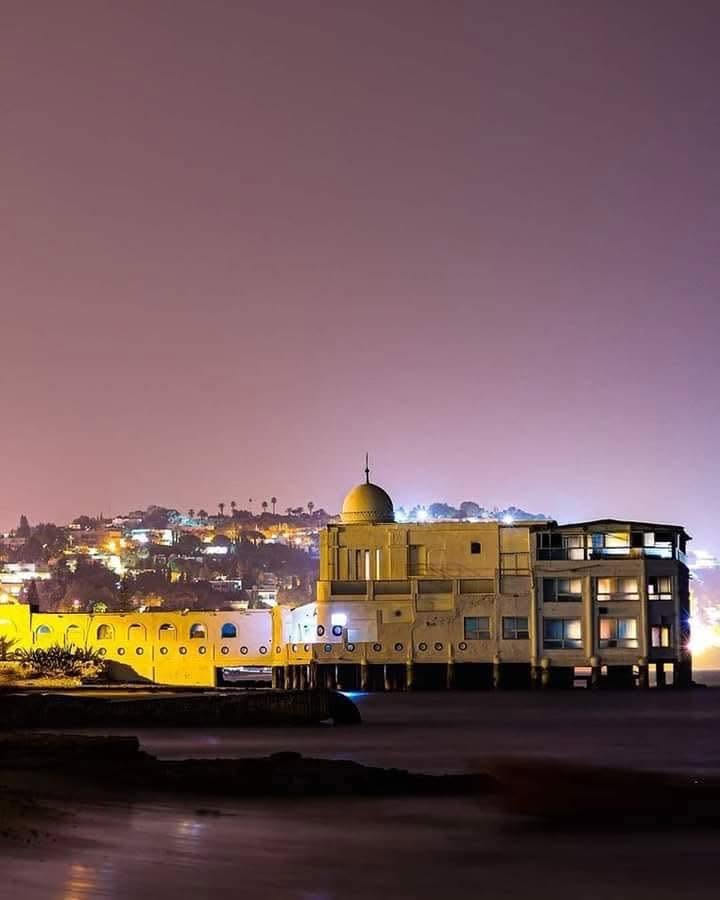
It is the beach the capital actually uses, which means it is busy, cheerful and not pristine; for a quieter swim walk north past the end of the Corniche, or take the road to Gammarth, where the hotels have their own stretches. At the southern end, on the sand itself, stands Kobbet El Hawa, a 19th-century beylical pavilion on stilts, long under restoration and still the most photographed building on the front.
The Corniche is the evening. Cafés and restaurants face the water, families walk the length of it after dinner, and in summer the crowd does not thin until midnight. Several of our date-night picks in Tunis are here, and the better seafood places are reviewed in our where to eat in Tunis guide.
Café Saf-Saf
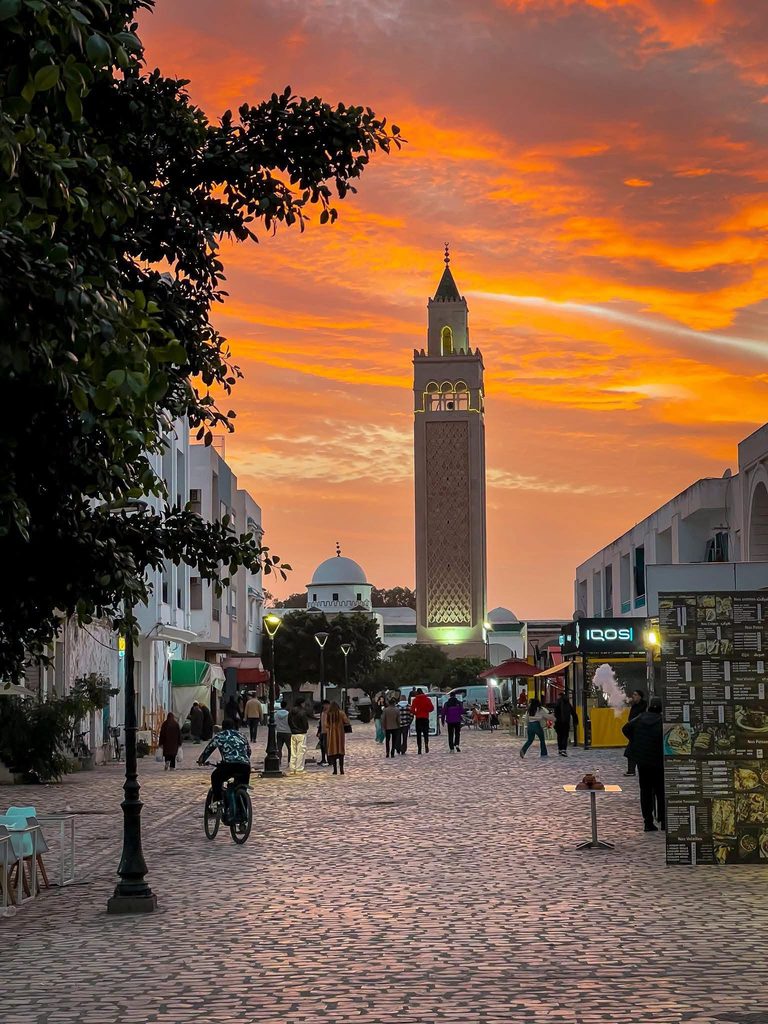
Near the Great Mosque, a few minutes’ walk from the station, is the café that every Tunisian has an opinion about. Saf-Saf takes its name from the poplars that shade it, and its fame from the well at its centre, which tradition dates to the Hafsid era and which for generations was worked by a blindfolded camel walking in circles to raise the water.
The camel became a symbol of the town; the singer Naama put it in a song. Today you come for mint tea, a plate of the house crisps, and a seat under the trees that your grandparents’ generation also sat in. It is the single most essential stop in La Marsa, and the thing to read about in our piece on Tunisian coffee culture before you go.
Palaces: Abdelliya and the Beys
The Abdelliya Palace, set back from the sea in the old quarter, is the oldest surviving example of royal domestic architecture in the Maghreb: a Hafsid pleasure house of the early 1500s, with a vaulted reception hall and a courtyard that has been carefully restored. It now hosts exhibitions and opens irregularly, so ask at the town hall or check the posters outside.
The beylical palaces that followed are mostly in private or diplomatic hands: Dar El Kamila is the residence of the French ambassador, and Ksar Essaada, the palace of Naceur Bey, has been a cultural centre. You will not get into most of them, but the walk through the streets that hold them, past high walls, bougainvillea and some of the finest doors in the country, is one of the quiet pleasures of the town.
Living Here
Ask anyone in Tunis where the foreigners live and the answer is La Marsa, then Gammarth, then Sidi Bou Said. The French lycée is here, several embassies are here or next door, and the cafés on the Corniche are where the expatriate community meets. That makes it the easiest soft landing in the country for a newcomer, and also the most expensive residential district outside the Lac.
Rents, schools and the practical business of settling are covered in our guides to living in Tunisia, renting and housing and, for the laptop crowd, Tunisia for digital nomads.
Honestly
La Marsa is pleasant rather than remarkable. If you have one day for the northern suburbs, spend it in Sidi Bou Said and Carthage, which are prettier and older. The beach is urban. The Corniche in August is loud and parking is hopeless. The palaces are mostly closed.
What La Marsa offers instead is the ordinary life of a well-off Mediterranean town that happens to be ten minutes from a Punic capital: the evening walk, the tea under the poplars, the swim before work. If that appeals, it is the best base in the Tunis area; if you want monuments, it is a stop on the way to them.
Practicalities
Getting there. The TGM suburban train runs from Tunis Marine, at the foot of Avenue Bourguiba, to La Marsa Plage in about 35 minutes for well under a dinar, stopping at La Goulette, Carthage and Sidi Bou Said on the way; the full route is in our TGM guide. Service can be erratic and the carriages are old, so allow extra time. A taxi from the centre is 20–30 minutes outside rush hour and costs a few dinars more than you might expect for the distance; see taxis in Tunisia for the going rate. From the airport, La Marsa is 25 minutes.
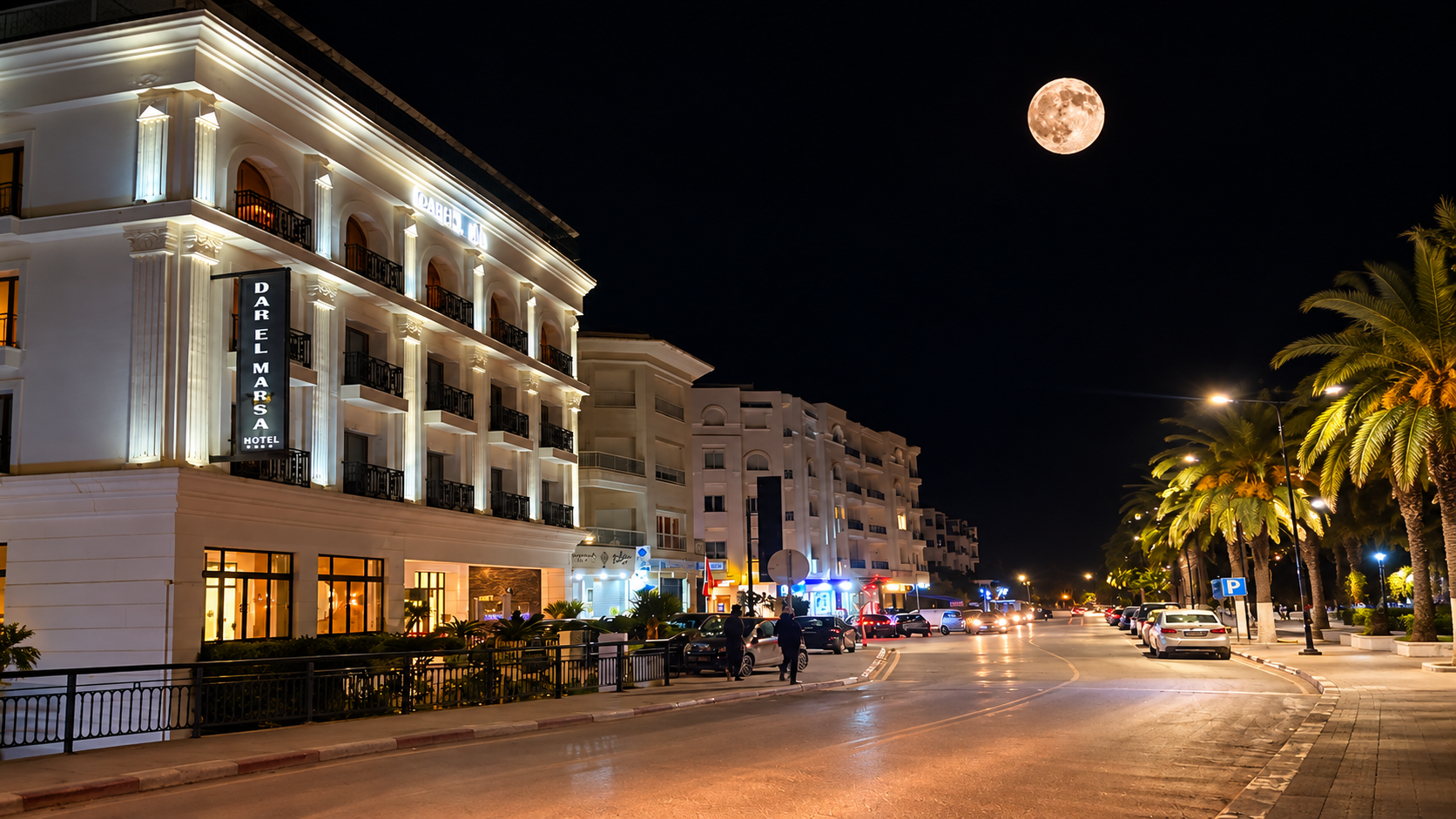
Staying. Hotels are few but good: Dar El Marsa on the Corniche, the old Plaza Corniche up the hill, and the resort hotels of Gammarth next door. Our where to stay in Tunis guide weighs the suburbs against the centre.
Eating. Fish on the Corniche, fricassé from the stands near the station, and the Saf-Saf for tea.
When. Spring and autumn for walking; June–September for the beach; avoid August weekends unless you want the full Tunis experience.
From the Carthage Magazine Bookshelf
If La Marsa is where you end up living for a season, these are the three books that will make the first month easier.
- All About Tunisia — the definitive English-language traveler’s guide. 572 pages, 27 chapters, all nine regions, every UNESCO inscription, five thematic trails — and the practical answers (visa, currency, transport, etiquette) most travelers wish they’d had on the plane. $24.99 · PDF & EPUB.
- Speak Like a Local — 200+ Tunisian Arabic phrases with native audio recorded in Tunis. The phrases for the taxi, the souk, the café, and the dinner table. $14.99 · PDF, EPUB, MP3.
- The Authentic Tunisian Cookbook — sixty traditional recipes from the heart of North Africa. For when you get home and find yourself missing the food. $9.99 · PDF & EPUB.
All three available as a bundle for $39.99 — guide, language, and food, delivered together.
