
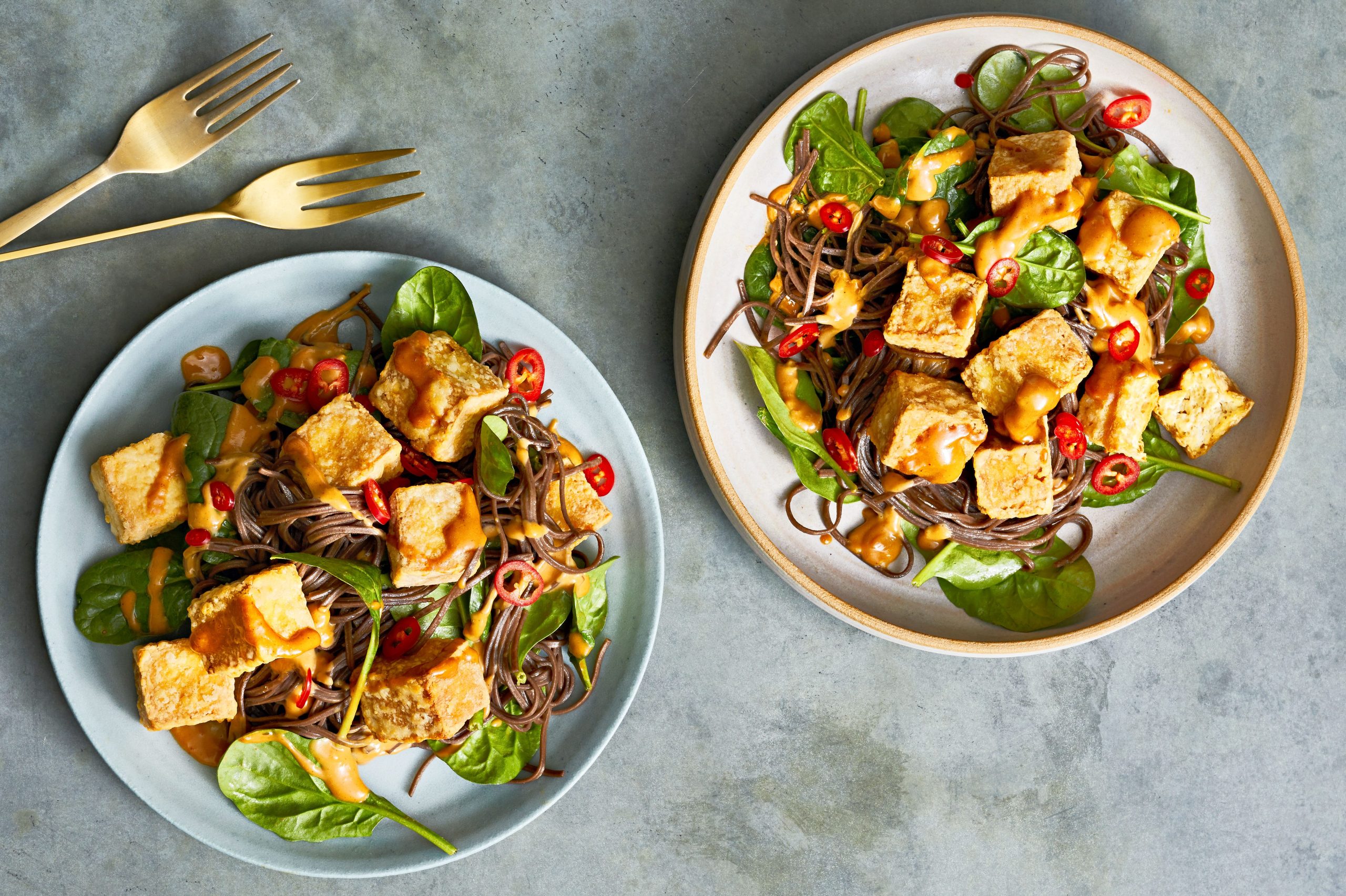
A Tunisian salad can look like the answer to every vegetarian traveler’s prayers. Peppers blistered over a flame. Tomatoes softened and chopped. Garlic, spices, and enough olive oil to leave a shine on the bread.
Then comes the spoonful of tuna.
That small addition explains much about eating vegetarian or vegan in Tunisia: the vegetables are not missing, but animal ingredients can appear where a visitor least expects them. Even a grilled salad needs a question before it reaches the table. Carthage Magazine
Learn which questions to ask, and the menu becomes considerably more inviting.
Can you eat vegetarian or vegan in Tunisia?
Yes—but vegetarian and vegan travelers need different strategies. Those who eat eggs have options such as meat-free ojja and kafteji. Vegans should look for plant-based preparations of salads, chickpea dishes, breads, and couscous, while checking both the cooking ingredients and the finishing touches. Carthage Magazine
The foundations of Tunisian cuisine offer plenty to work with. The difficulty is that a dish’s name does not necessarily tell you everything in it.
Treat the suggestions below as things to discuss with the kitchen, not universal guarantees. A vegetable-based recipe, a vegetarian restaurant option, and a fully vegan meal are three different things.
Start with the salads, but check the garnish
Slata mechouia, Tunisia’s grilled salad, is a particularly good place to begin. Peppers and tomatoes are charred, peeled, and chopped, with garlic, spices, and olive oil bringing them together. The pleasure is in the smoke and texture: this is something to scoop up with bread, not a few leaves beside the main course. Tuna is a familiar addition, so order without it. Carthage Magazine
Omek houria offers a different character: a spicy carrot salad, softer and sweeter than mechouia. Both can be suitable for vegans when prepared without animal ingredients, but tuna and boiled eggs may be added as garnishes. Ask for neither before the plate is assembled. Middle East Vegan Society
Several vegetable dishes with bread can make a satisfying lunch. Ask what is available that day, then confirm the ingredients of each rather than relying on the word “salad.”
Lablabi: the bowl to learn first
Lablabi is built around chickpeas and their hot cooking broth, poured over torn bread and seasoned with cumin, garlic, harissa, and olive oil. It is substantial, warming food, particularly welcome when a morning has turned cool. Tuna and egg are common additions, but they are not what gives the bowl its character. Carthage Magazine
For a vegan order, ask whether the chickpeas and broth have been cooked without meat or animal stock, then request no tuna and no egg. A vegetarian who eats eggs can keep the egg while making the same checks about the broth and fish.
Explain this before the bowl is finished. Once everything has been stirred together, removing a topping is no longer a meaningful solution.
A confirmed plant-based lablabi is worth remembering: a proper meal rather than a collection of substitutions.
Kafteji, ojja, and brik: the egg question
Kafteji brings together vegetables such as potatoes, pumpkin, peppers, and tomatoes, traditionally fried and chopped. Eggs are part of many preparations and can be mixed through the vegetables rather than simply placed on top. That makes it a promising vegetarian option, but not an automatically vegan one. Carthage Magazine
Ask whether an egg-free portion can be prepared separately. When the whole batch has already been mixed, ordering it “without egg” cannot undo the preparation. Vegetarians should also confirm that the serving comes without any meat or fish accompaniments.
Ojja is another option for egg-eating vegetarians: eggs cooked in a spiced tomato-and-pepper sauce. However, versions with merguez sausage or seafood are well established. Ask for a fresh preparation without either, not a finished dish with the visible pieces removed. Carthage Magazine
Brik requires a similar conversation. The crisp fried pastry commonly contains egg and may contain tuna or meat. A meat-and-fish-free filling can suit vegetarians; a vegan version needs confirmation of the entire filling and pastry, not merely an instruction to leave out the tuna. Discover Tunisia
Is vegetable couscous actually vegetarian?
It can be, but the vegetables on top are only part of the answer.
Tunisian couscous can be prepared with meat, fish, or vegetables, with the grain steamed over the stew. A serving without visible meat does not establish that the cooking liquid or sauce is meat-free. Carthage Magazine
Ask whether the vegetables and sauce are cooked separately from meat and fish, and whether any animal stock is used. Vegans should also ask about butter and other animal ingredients.
The useful distinction is between couscous cooked as a vegetarian or vegan dish and ordinary couscous served without its meat. Give the kitchen enough notice to offer the former.
Mlewi and sandwiches: order before the filling
Mlewi—also written mlawi or mlaoui—is a layered flatbread that can be made with semolina, water, salt, and olive oil. At sandwich counters, it may be filled with harissa, cheese, egg, tuna, and other additions. The bread and the finished sandwich therefore need separate consideration. Carthage Magazine
Ask about the dough and cooking fat first. Then choose suitable fillings, such as vegetables or an ungarnished grilled salad, while specifying which sauces and extras to leave out.
A made-to-order sandwich is useful because the conversation can happen before assembly. Be clear from the beginning rather than waiting until the cheese or tuna is already inside.
Useful French phrases for ordering
A written explanation can be easier than repeating yourself across a busy counter. For a vegetarian order, this makes the exclusions explicit:
Je ne mange ni viande, ni poulet, ni poisson, ni fruits de mer.
I don’t eat meat, chicken, fish, or seafood.
For a vegan order, add:
Je ne mange pas non plus d’œufs, de produits laitiers ni de miel.
I also don’t eat eggs, dairy products, or honey.
For soups, sauces, and couscous, ask:
Est-ce préparé avec un bouillon de viande, de poulet ou de poisson ?
Is this made with meat, chicken, or fish stock?
The smaller phrases are useful too: sans thon means without tuna, sans œufs without eggs, and sans fromage without cheese.
Do not expect sans viande—without meat—to communicate every part of a vegan diet. Name the ingredients that matter, and ask for help translating when the explanation is not understood.
Breakfast, coffee, and something sweet
Bread dipped in olive oil is already part of the Tunisian breakfast repertoire. It offers a straightforward starting point, alongside suitable fruit or other ingredients you can identify. More elaborate preparations need checking: grain-based breakfast mixtures, for example, may be served with honey. Carthage Magazine
For coffee without milk, an express is the useful order to remember. A capucin normally includes milk or foam, while a café crème is milkier still. Our guide to ordering coffee in Tunisia explains the vocabulary. Ask directly about plant milk rather than assuming it will be available. Carthage Magazine
At the pastry counter, ask about the dough as well as the filling: milk, butter, eggs, and honey are the ingredients to clarify. A date or nut filling tells you little about how the rest of the pastry was made.
When the recipe cannot be confirmed, fresh fruit is a simpler choice. There is no need to turn every snack into an interrogation.
Vegan restaurants, resorts, and meals on the road
Dedicated plant-based dining does exist. Inward, at 7 Passage du Lac Volta in Les Berges du Lac, Tunis, describes a plant-based restaurant serving small plates, main dishes, artisan cheeses, drinks, and raw sweets. It provides a concrete starting point for travelers who would welcome a meal without negotiating every component. Check its current menu and opening hours before making the journey. shop.inward.tn
HappyCow also lists vegan, vegetarian, and vegan-option businesses across Tunisia. Pay attention to the category: a restaurant offering some suitable dishes is not the same as a fully vegan kitchen. Read recent reviews, then confirm directly. happycow.net
For an all-inclusive holiday, contact the hotel before booking. Ask whether it can provide complete vegan meals throughout your stay, how soups and vegetables are cooked, and whether requests need to be arranged with the chef. A photograph of a large buffet does not answer those questions.
For guided excursions or overnight camps, explain your diet before departure and ask what will actually be served. Carry a suitable backup snack rather than leaving the whole day’s food to an assumption.
The aim is not to spend your holiday worrying over every plate. Establish a few reliable dishes, ask clearly, and leave room to enjoy them: smoky peppers, cumin-scented chickpeas, warm bread, and the olive oil left at the bottom of the bowl.
From the Carthage Magazine Bookshelf
To explore Tunisia beyond the menu—and find the words to ask better questions at the table—start with the travel guide, phrasebook, and cookbook below.
- All About Tunisia — the definitive English-language traveler’s guide. 572 pages, 27 chapters, all nine regions, every UNESCO inscription, five thematic trails — and the practical answers (visa, currency, transport, etiquette) most travelers wish they’d had on the plane. $24.99 · PDF & EPUB.
- Speak Like a Local — 200+ Tunisian Arabic phrases with native audio recorded in Tunis. The phrases for the taxi, the souk, the café, and the dinner table. $14.99 · PDF, EPUB, MP3.
- The Authentic Tunisian Cookbook — sixty traditional recipes from the heart of North Africa. For when you get home and find yourself missing the food. $9.99 · PDF & EPUB.
All three available as a bundle for $39.99 — guide, language, and food, delivered together.
