
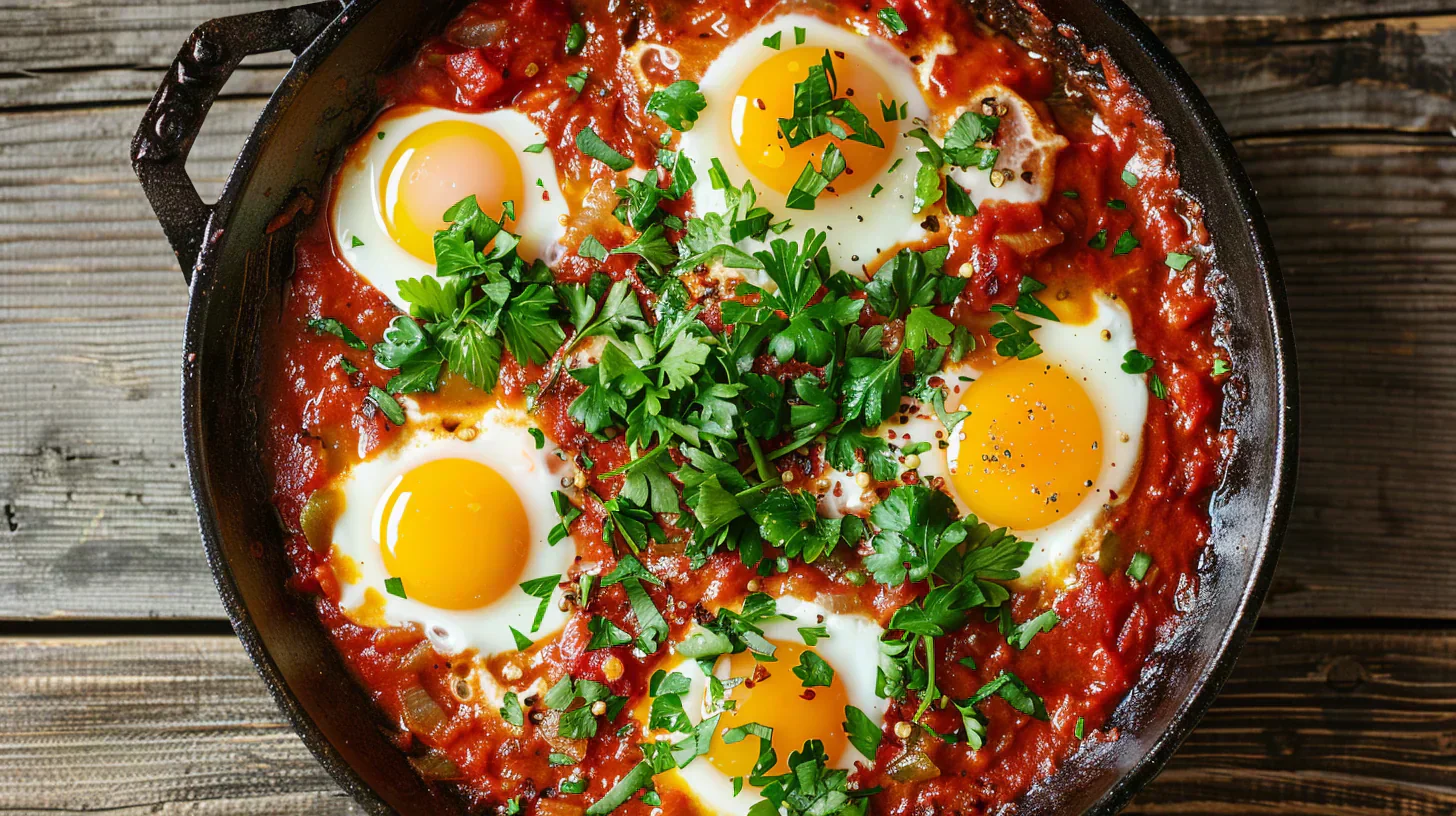
There is a particular sound that means dinner is close in a Tunisian kitchen: the low, insistent bubbling of a pan of sauce gone thick and red, the smell of garlic and caraway and harissa filling the room, and then the soft plop of eggs cracked straight into the simmer. This is ojja — ojja, said with a soft j — and it is one of the dishes Tunisians reach for when they want something fast, fiery, and deeply comforting, eaten communally from the pan with torn bread. It is the country’s answer to the question every cuisine eventually asks: what can you make from eggs, tomatoes, and whatever heat you have on hand? In Tunisia, the answer is loud and unmistakable.
It is, oddly, one of the few staples of Tunisian cuisine we hadn’t yet given its own place at the table. Here it is.
What Ojja Actually Is
At its core, ojja is eggs poached in a spiced tomato-and-pepper sauce — but that flat description undersells it. The base is built from tomatoes (fresh, paste, or both), green peppers, plenty of garlic, and a generous spoon of harissa, the chilli paste that is the backbone of so much Tunisian cooking. It is seasoned hard with tabil, the Tunisian spice blend, and especially with karwiya — ground caraway — which gives ojja its distinctive, slightly bitter warmth. The sauce is cooked down until it’s rich and loose, never dry, and the eggs are added at the end: sometimes left to set in soft pockets, sometimes stirred through so the whole thing turns silky and scrambled. Then it goes to the table in the pan it was cooked in, and everyone eats from the centre with bread.
Foreign visitors often meet ojja and reach for the word “shakshuka.” They’re cousins, and the line between them blurs from kitchen to kitchen — but Tunisians draw a distinction. Ojja tends to be spicier, looser, and built around the sauce as much as the egg, and it is very often carried by a protein. Our shakshuka recipe sits at the gentler, more vegetable-forward end of the same family; ojja is the one with the kick.
The Variations That Define It
Ask for ojja in Tunisia and the next question is ojja with what? The variations are the whole point.
Ojja merguez is the icon — the version that turns up on menus and at family dinners more than any other. Slices of merguez, the spiced lamb-and-beef sausage stained red with harissa and spices, are browned first so their fat and chilli oil colour the whole pan before the sauce and eggs go in. It is rich, smoky, and unapologetically heavy; the dish many Tunisians would name if you asked them for comfort food.
Ojja with seafood belongs to the coast. Shrimp, or sometimes crab or squid, are folded into the sauce in place of sausage — lighter, sweeter, the heat of the harissa cutting against the brine. In the fishing towns it can be the better-known version.
And then there are the older, more rural variations that don’t make it onto tourist menus: ojja bel mokh (with brains) and versions made with kidneys or other offal, frugal dishes that turned humble cuts into something generous with nothing more than eggs and spice. Whatever goes in, the architecture holds: sauce first, protein to flavour it, eggs to finish, bread to eat it.
How and When It’s Eaten
Ojja is not formal food. It is the dish you make when people turn up unannounced, the quick dinner after a long day, the thing students cook in shared flats, and — by long tradition — a favourite late-night and morning-after restorative, the harissa and eggs doing their reviving work. It is almost always shared, scooped straight from the pan with a torn piece of khobz or baguette rather than plated up. In casual restaurants it arrives still spitting in a little cast-iron or copper pan, an egg trembling on top. It sits in the same everyday register as brik, fricassé, and kafteji — the unpretentious, deeply Tunisian food that rarely makes the postcards but defines how the country actually eats. (For the wider map of that everyday table, see what Tunisians eat for breakfast and our Top 20 foods to eat in Tunisia.)
Making It at Home
The method is forgiving, which is part of its charm. Soften chopped garlic and green pepper in olive oil, then stir in a good spoonful of harissa and a little tomato paste and let it cook out for a minute so the rawness goes. Add chopped tomatoes (or passata), a generous pinch of ground caraway, salt, and a splash of water, and let it simmer into a thick, glossy sauce. If you’re making ojja merguez, brown the sliced sausage first and set it aside, then return it to the sauce. When everything is bubbling, crack in the eggs — one or two per person — and either leave them to set into soft pockets or stir gently for a looser, scrambled finish. Pull it off the heat while the yolks are still a little soft, and bring the pan to the table with plenty of bread. The single rule that matters: don’t let it dry out, and don’t skimp on the harissa.
From the Carthage Magazine Bookshelf
If the food is what pulls you toward Tunisia — the harissa, the eggs, the shared pan — three Carthage Magazine ebooks were built for exactly that:
- The Authentic Tunisian Cookbook — sixty traditional recipes from the heart of North Africa, including the everyday classics like ojja that anchor the Tunisian table. $9.99 · PDF & EPUB
- Speak Like a Local — 200+ Tunisian Arabic phrases with native audio recorded in Tunis. The words for the market, the spice shop, and the dinner table. $14.99 · PDF, EPUB, MP3
- All About Tunisia — the definitive English-language traveler’s guide. 572 pages, 27 chapters, all nine regions, five thematic trails, and the practical answers most travelers wish they’d had on the plane. $24.99 · PDF & EPUB
All three available as a bundle for $39.99 — guide, language, and food, delivered together.
