
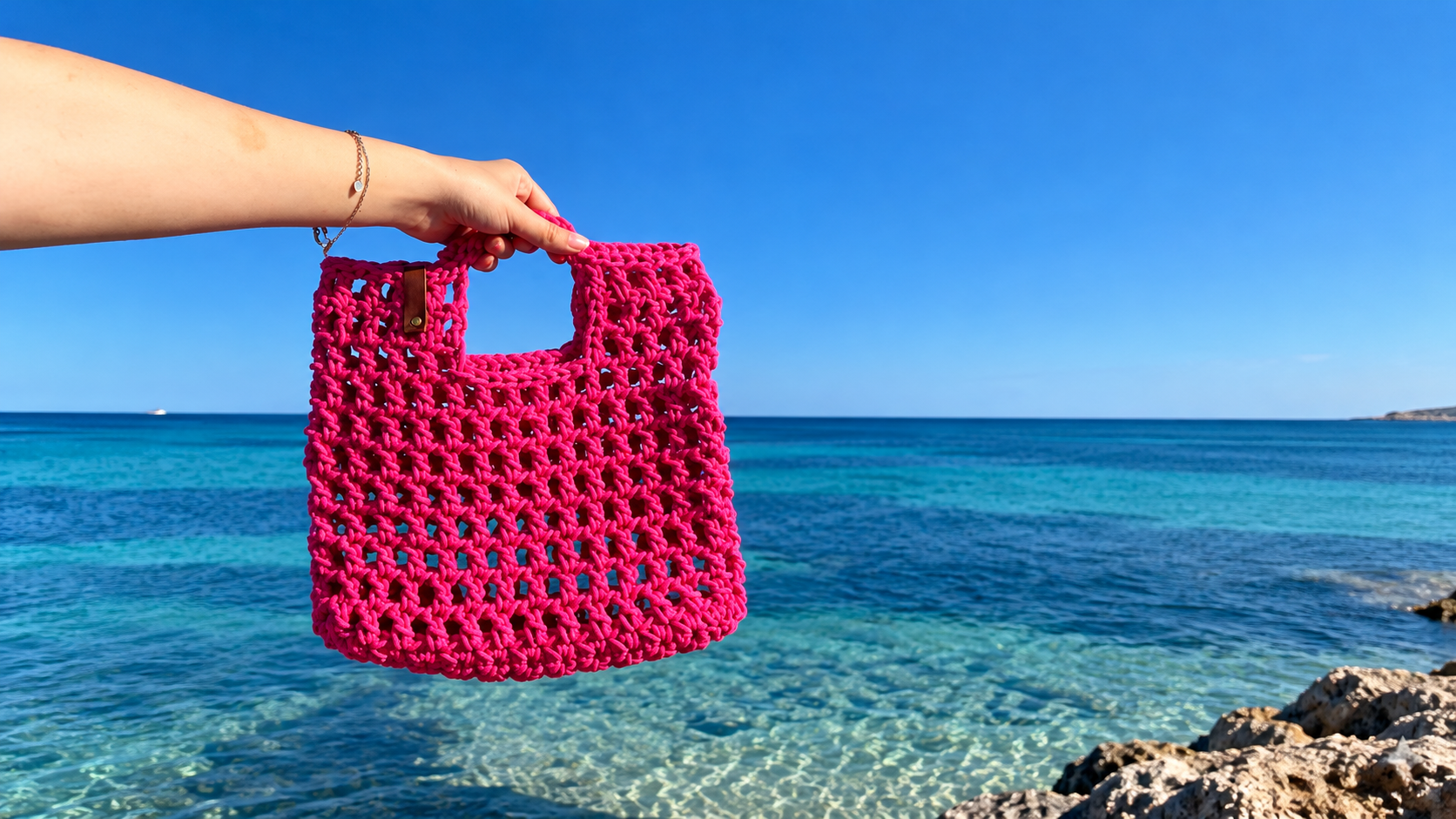
Type “Tunisian crochet” into any search engine and you will get ten thousand tutorials, a long hook with a cable, and a fabric that looks like knitting but is made with one tool. What you will not get, anywhere, is Tunisia. No souk, no grandmother, no village. The country in the name is a ghost.
We publish from Tunis, and the question lands in our inbox often enough that it is time to answer it properly: is Tunisian crochet Tunisian? Here is what the records say, what they do not, and what is actually being crocheted in this country while the rest of the world argues about the name.
Quick Answer — Tunisian crochet is a 19th-century European technique: a hybrid of knitting and crochet worked on a long hook, first printed without a name in the 1850s and first called “Tunisian” in Sweden in 1857, Germany in 1859, and English in 1862. No historian has found it practiced in Tunisia before those dates. The name was almost certainly a fashion of the age, when Europe was naming stitches after faraway places and Tunisia was unusually visible in European newspapers. Tunisia has its own living crochet and lace traditions, but they are ordinary crochet and needle-lace, not the long-hook technique that carries the country’s name.
What is Tunisian crochet?
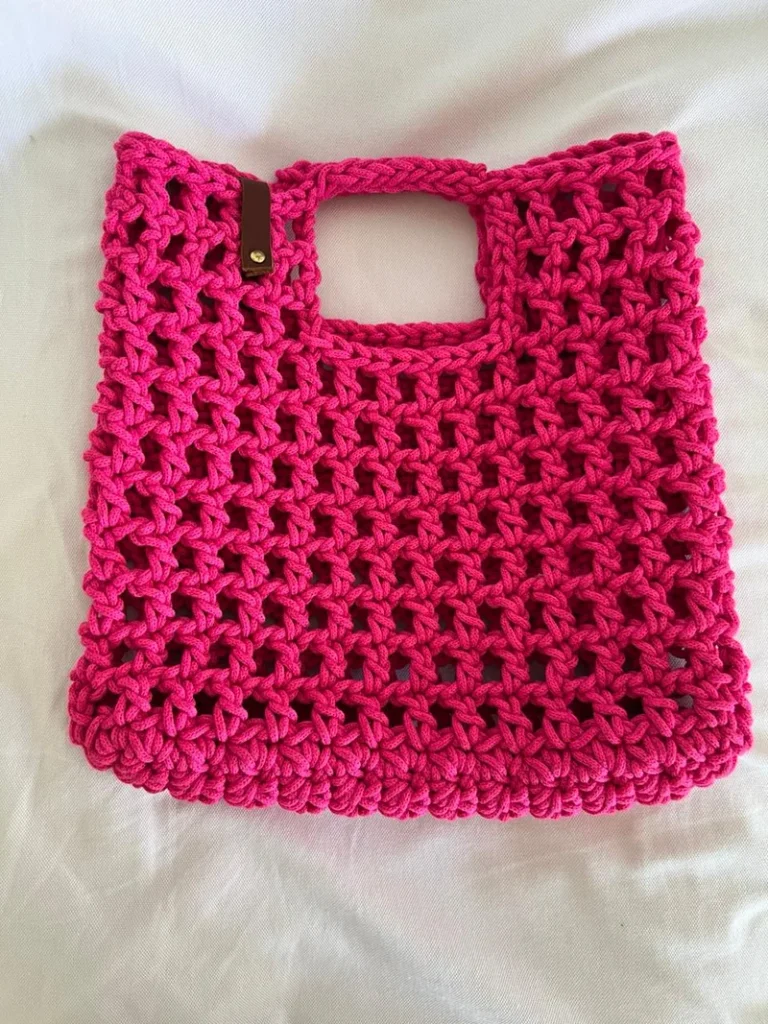
Tunisian crochet is a method of making fabric with a single long hook, worked in two passes. On the forward pass you pick up a loop from every stitch across the row and keep them all on the hook, the way a knitter keeps stitches on a needle. On the return pass you work them off, two at a time, until one loop remains. The result is a dense, slightly stiff fabric with a woven or knitted look, thicker than ordinary crochet and faster than knitting. The basic version is the Tunisian simple stitch; there are dozens of variants, and the Tunisian knit stitch is close enough to stockinette that most people cannot tell them apart.
That is the whole technique. Nothing about it requires a particular yarn, a particular climate, or a particular country. Which is the first reason to be suspicious of the name.
Is Tunisian crochet from Tunisia?
No, as far as anyone has been able to document.
Dora Ohrenstein, whose The New Tunisian Crochet is the standard history, went looking for an origin in Tunisia and reported that she found “absolutely no evidence” the technique was ever done here. Pauline Turner, author of The Art of Tunisian Crochet, reached the same conclusion and devotes part of her book to dispelling the assumption. The Reddit community dedicated to the craft keeps a wiki page whose first line is “Short answer: no.”
What the record does show is a technique assembling itself in Europe. Knitting with hooked needles turns up in the German-speaking lands around 1787 to 1800 and in France by 1817. A Swedish ladies’ magazine, Penelope, printed instructions for a window shade in the stitch on 1 January 1856 without giving it a name. In England, Mathilde Pullan’s Lady’s Manual of Fancy Work published the first English pattern in 1858 and called it the Princess Frederick William stitch, after Queen Victoria’s eldest daughter, who had married a Prussian prince that January. Other English and French books of the same years called it tricot crochet, crochet à tricoter, tricot écossais, railway stitch, shepherd’s knitting, and, less kindly, idiot stitch, because it was easy and impossible to put down.
Tunisia, in other words, was one candidate in what one textile historian calls a name-the-baby contest. It happened to win.
Why is it called Tunisian crochet?
Nobody knows for certain, and anyone who tells you otherwise is guessing. But the guesses are not all equal, and the dates narrow them down.
The word first attaches to the stitch in Sweden, where the 15 December 1857 issue of Penelope retrospectively labeled its 1856 window-shade stitch tuniska virkstygn, Tunisian crochet stitches. The German periodical Der Bazar followed on 8 June 1859, explaining that the hooked-knitting method it had shown the previous year was called der tunesische Häkelstich or tricot tunisien. The English phrase “Tunisian crochet” is first found in an American publication in 1862.
So the name was born between 1857 and 1862, in Stockholm, Berlin, and Paris before London or New York. Three explanations fit that window.
The exotic-name fashion. This is the one most historians favor. Mid-Victorian needlework borrowed geography freely and inaccurately: the same stitch was being called Scottish knitting in France, the thick blankets it produced became “afghans” after Afghanistan, and pattern books were full of Turkish, Egyptian, Persian, and Moorish borders that had never seen those countries. A name from the southern shore of the Mediterranean sounded warm, rich, and far away. It sold magazines.
Tunisia in the news. Here is the part the craft blogs miss, because it requires knowing Tunisian history. The 1850s were the decade Tunisia became visible to ordinary Europeans. Ahmed Bey had made a state visit to Paris in 1846, the first by a Muslim ruler of the Maghreb, and the French press covered it lavishly. In 1854 Tunisia sent a contingent of some ten thousand troops to fight alongside France and Britain in the Crimean War, which put the word “Tunis” in newspapers from Stockholm to Boston for two years. In 1857 the Bey signed the Fundamental Pact, a charter of rights that European liberals praised in print. Tunis itself had large Italian, Maltese, and French communities, European consulates, and a steady traffic of travelers, merchants, and officers writing home. If a Swedish or German editor in 1857 wanted a name that sounded both exotic and current, Tunisia was the obvious one.
A real but undocumented contact. The more romantic theory holds that European needlewomen first saw long-hook work in the Mediterranean, perhaps in North Africa, perhaps via the hooked-needle knitting of Egypt and the Levant, and the name preserved a genuine memory. It is not impossible. But no Tunisian example from before 1857 has ever been found, no European source of the period describes seeing it here, and the technique’s European paper trail starts in Germany sixty years before the name appears. The burden of proof is on the romance.
Our honest reading: the name is European, the timing points to Tunisia’s unusual prominence in the 1850s, and the technique came out of German and French hooked knitting rather than out of any Tunisian workshop. The country lent its name the way Delft lent its name to blue tile and Afghanistan to blankets: as a label, not a birthplace.
What do Tunisians actually crochet?
A great deal, and almost none of it is Tunisian crochet.
Ordinary crochet, worked with a short hook and a single loop, is everywhere in Tunisia and has been for generations. The Derja word is simply kroshi, borrowed from the French crochet, which tells you roughly when and how it arrived: through the French and Italian households of the 19th and 20th centuries, through the nuns’ schools and the ouvroirs, and then outward into every family. Tunisian women crochet the lace edging on bed linen and fouta towels, the covers for the ceremonial trays at a Tunisian wedding, baby bonnets and blankets, doilies for the salon, the little caps and cardigans that come out at a saboua. A trousseau without crochet in it would look bare. If you want to see the craft alive, visit any Tunisian grandmother in the afternoon.
Then there is the older tradition the name “Tunisian crochet” ought to point at and does not. Chebka, the needle-lace of Bizerte, is made with a needle and thread rather than a hook, in a tight net of knots that produces collars, edgings, and panels of extraordinary fineness. It was the lace of the Tunis bourgeoisie and the Beylical court, and it travelled: 1960s accounts describe Bizerte women working it with imported Irish thread for export. It is a genuinely Tunisian textile art, it predates every pattern book above, and it is far closer to what a 19th-century European might have admired on a visit to Tunis than any long-hook stitch. If the name was ever attached to something real, this is the most plausible candidate, and it is still not the technique the world calls Tunisian crochet.
Tunisia’s heavier textile heritage is weaving, not hooking: the Kairouan carpet, the mergoum and klim of the steppe, the striped blankets of Djerba, the burnous and kachabia of the south. The same women who shaped three thousand years of clay in Sejnane, whom we visited in our story on the potters of Sejnane, weave their own blankets on vertical looms. None of this was ever crochet. The country’s hands were busy with other things.
Tunisian, Andalusian, Ottoman: a habit of borrowed names
It helps to remember that Tunisia has been on both ends of this. The tiles that line every courtyard of the medina are called Qallaline after a Tunis neighborhood, though the method came from Spain and the flowers from Istanbul; we told that story in our guide to Tunisian tiles. The chechia came with the Andalusian refugees of 1609 and is now the most Tunisian object there is. Half of what the world calls Moroccan is Maghrebi, and a good deal of what Tunisians call Turkish is Tunisian. The shared inheritance with Spain we traced in Tunisia or Spain? runs on exactly this kind of mislabeling.
So when a Swedish editor in 1857 reached for “Tunisian” to make a German hooked stitch sound interesting, she was doing something the Mediterranean has always done. The difference is that this time the label stuck to something Tunisia never made.
Should the name bother Tunisians?
Not much. It is mildly funny, and occasionally confusing: Tunisians abroad get asked about a craft their grandmothers never did, and visiting crocheters arrive hoping to buy a long hook in the souk and find doilies instead. But a country that gave the world harissa, the chechia, and a breed of sheep that still carries the name of its capital in American registries can afford to be relaxed about an accidental one.
If anything, the name is an invitation. Tunisian crochet is one of the fastest-growing techniques in the fiber world, and almost nobody practicing it has seen the country. Come. Bring the long hook. We will show you the chebka.
Frequently asked questions
No. The technique developed from European hooked knitting in the early 1800s and was named “Tunisian” in Scandinavian and German publications between 1857 and 1859. No evidence of it in Tunisia before those dates has been found.
The exact reason is unrecorded. The best explanation is the Victorian habit of giving stitches exotic place-names, combined with Tunisia’s unusual visibility in European newspapers in the 1850s after the Bey’s visit to Paris and the Crimean War.
They are the same technique. “Afghan stitch” was the common American name for the Tunisian simple stitch, because it was used to make afghan blankets; “Tunisian crochet” is the older European term and now the standard one.
Rarely, and only recently, through the same online tutorials as everyone else. Tunisians do practice ordinary crochet (kroshi) widely, and Bizerte has its own needle-lace tradition, chebka.
The first printed pattern appeared in Sweden in 1856 and in England in 1858; the technique’s roots in hooked knitting go back to roughly 1790 in German-speaking Europe.
Suggested Read: Tunisian Doors: A Guide to the Arches, the Nails, and the Blue
Suggested Read: Inside a Tunisian Wedding: Seven Days, Seven Dresses
From the Carthage Magazine Bookshelf
If a stitch can borrow Tunisia’s name without ever visiting, you can do better: these three bring the real country to you.
- All About Tunisia — the definitive English-language traveler’s guide. 572 pages, 27 chapters, all nine regions, every UNESCO inscription, five thematic trails — and the practical answers (visa, currency, transport, etiquette) most travelers wish they’d had on the plane. $24.99 · PDF & EPUB.
- Speak Like a Local — 200+ Tunisian Arabic phrases with native audio recorded in Tunis. The phrases for the taxi, the souk, the café, and the dinner table. $14.99 · PDF, EPUB, MP3.
- The Authentic Tunisian Cookbook — sixty traditional recipes from the heart of North Africa. For when you get home and find yourself missing the food. $9.99 · PDF & EPUB.
All three available as a bundle for $39.99 — guide, language, and food, delivered together.
