
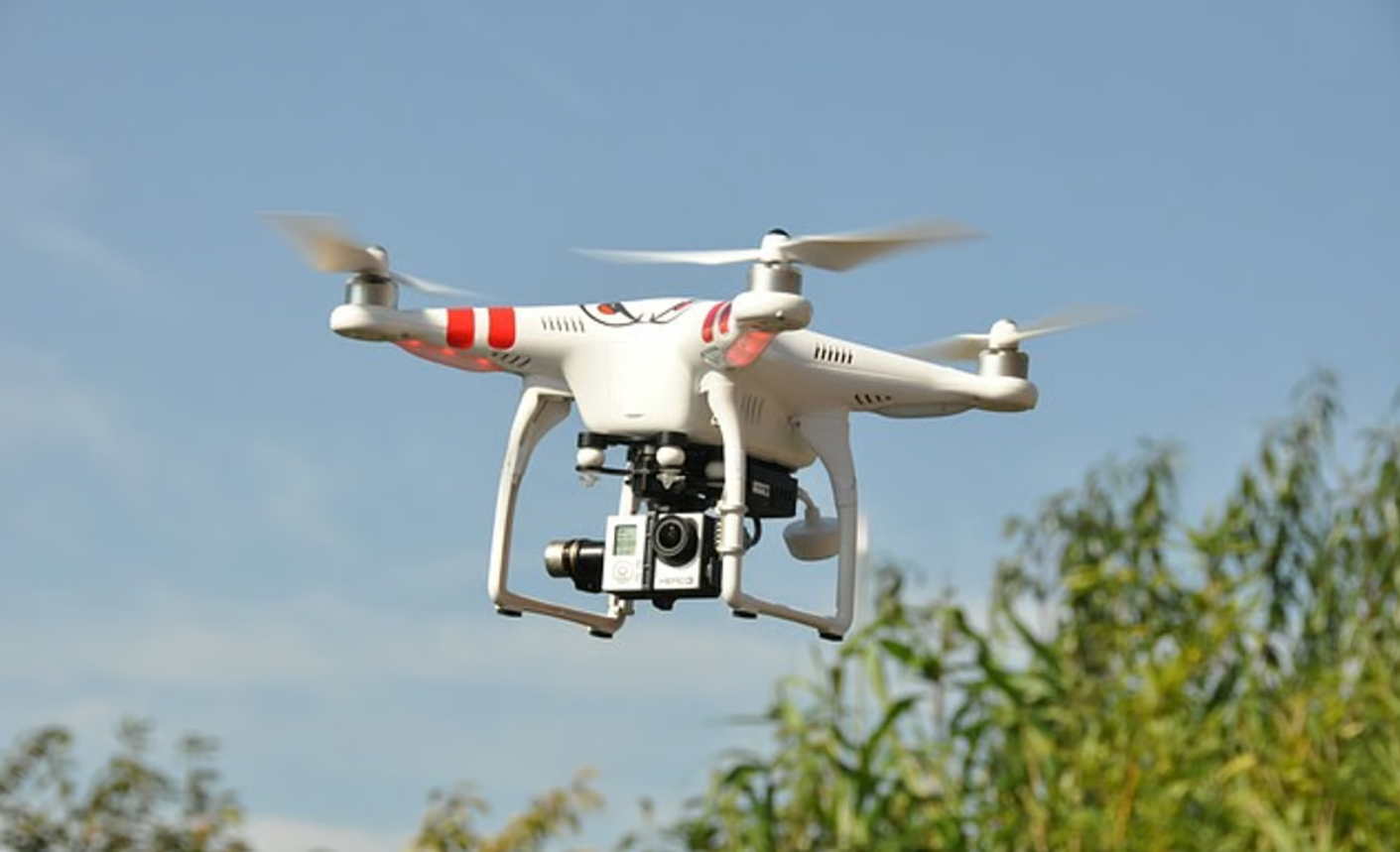
The baggage scanner at Tunis-Carthage has a particular silhouette it is trained to find, and it is not a bottle of gin. It is four small rotors folded against a plastic body, and when that shape rolls past on the belt a customs officer will, politely and without much interest in your explanation, ask you to step aside. Every summer a few hundred visitors learn this way that Tunisia is one of the handful of countries where a tourist cannot simply bring a drone, and the question travels back to the forums in the same wording every time: can you bring a drone to Tunisia?
The short answer is no, not without a permit you will almost certainly not get. But the drone is only the most dramatic item on a list that most travelers never read, and the rest of it, from how much cash you must declare to why your prescription needs a translation, is worth ten minutes before you pack.
The short answer
Tunisian customs waves most visitors through. You may bring in personal effects freely, a litre of spirits or two of wine, two hundred cigarettes, and as much foreign cash as you like provided you declare anything from 20,000 dinars’ worth upward and, in practice, anything over about 5,000 dinars you hope to take home again. You may not bring dinars in or out at all, may not bring a drone without prior authorisation from the Ministry of Defence, and may not bring narcotics of any kind, which in Tunisian law includes cannabis products that are legal where you live. Satellite phones and other transmitting equipment need a licence. Medicines are fine with a prescription. Everything else is detail, and the detail follows.
Drones: the honest position
Tunisia does not ban drones outright; it restricts them so thoroughly that for a tourist the effect is the same. Flying or importing one requires prior authorisation that passes through the ministries of defence and interior as well as the civil-aviation authorities, is applied for in Arabic, in person in Tunis, at least a month in advance, with a map of the areas to be filmed, the aircraft’s serial number, an insurance certificate valid in Tunisia and, for foreigners, in practice a Tunisian production partner to carry the application. Permits are issued to film crews, surveyors and researchers. They are not, in any meaningful number, issued to people who want a shot of Sidi Bou Said from above.
Arrive with a drone and no permit and one of two things happens. If it is found in your luggage undeclared, it is seized, and the paperwork that follows can take the rest of your first day. If you declare it at the red channel, which is the better course, customs will usually place it in storage, give you a receipt, and return it when you leave from the same airport, sometimes against a small storage fee; travelers have reported this working at Tunis. The uncertainty is real, procedures vary by officer and by day, and the only guaranteed outcome is the one where the drone stays at home. The Star Wars sets, the dunes and the medinas have all been photographed from above by licensed crews; the footage is online, and the view from the ground is better anyway.
A 360-degree camera on a pole, a gimbal and a long lens are all unrestricted and will get you most of what a drone would. Professional broadcast kit, the kind that comes in flight cases, is a different category and needs press accreditation; a tourist with a mirrorless camera and three lenses is not that.
Alcohol, tobacco and the duty-free bag
Adults may bring in two litres of drinks under 25 percent alcohol, which covers wine and beer, or one litre over, which covers spirits, and the allowances are alternatives rather than a sum. Tobacco is 200 cigarettes, 100 cigarillos, 50 cigars or 500 grams of rolling tobacco. Go past those and you pay duty on the excess, which is steep enough that it is never worth it; Tunisia makes perfectly good wine and beer of its own, and the alcohol guide explains where to buy it. A bottle of perfume for your own use is not an issue. Nicotine vapes sit in a grey zone: the state tobacco monopoly does not sell them and their import is not formally authorised, but a single device with a few pods for personal use passes without comment. A box of them does not.
Gifts are tolerated in the quantities a visitor would plausibly give; a suitcase of identical items, whether phones or football shirts, is treated as commercial goods and taxed as such, and the same logic applies on the way out to anyone leaving with ten carpets.
Cash: the rule everyone misunderstands
Two numbers matter, and they are easy to confuse. The first is 20,000 dinars, currently about €5,800: foreign currency at or above that equivalent must be declared on entry, on a form stamped by customs. The second is 5,000 dinars, about €1,450: a non-resident leaving with foreign banknotes at or above that amount must show the entry declaration to prove the money came in with them, and without it the excess is held while its origin is checked. The practical consequence, which the head of the customs service himself has recommended, is to declare anything above 5,000 dinars on the way in, whatever the legal threshold says. The form is free apart from a fiscal stamp, takes five minutes, and spares you an interview on the way home.
The dinar itself is a closed currency: it cannot legally be brought in or taken out in any quantity, and the few notes that end up in a jacket pocket are the limit of what customs tolerates. Change what you need inside the country and spend it down before the airport, keeping ATM and exchange receipts in case you want to convert the remainder back; the currency guide and the ATM guide cover the mechanics.
Medicines
Bring what you take, in its original packaging, with the prescription or a doctor’s letter, and in a quantity that matches the length of your stay. For ordinary medicines nobody will look twice. For anything psychotropic, which covers most sleeping tablets, strong painkillers, ADHD medication and some anxiety treatments, the rules harden: Tunisia treats undocumented imports of controlled substances as a drugs matter rather than a customs one, and the prescription should state the international non-proprietary name of the drug, ideally in French. Anything containing cannabis or CBD, including oils and gummies that are sold openly in Europe and North America, is simply prohibited; Tunisian law makes no distinction by quantity or purpose, and the penalties are severe. Leave it at home.
Phones, laptops and anything that transmits
Your phone, laptop, tablet, camera, e-reader and headphones are personal effects and need no declaration. Anything built to transmit on its own account is different. Satellite phones, VHF and amateur radio sets, long-range walkie-talkies and satellite internet terminals all require a licence from the telecoms regulator, and a Starlink dish in particular will be stopped at the border, because the service is not authorised in Tunisia; the Starlink guide explains why, and the SIM guide explains what to do instead. Garmin-style GPS watches and inReach messengers are not a problem in practice. Metal detectors are, because of what they imply about antiquities.
The oddities
Two prohibitions catch people out because they seem so innocent. You may not bring date palms or any part of them into Tunisia, nor henna, both for plant-health reasons that protect the country’s own crops; the irony, given that Tunisia exports both, is not lost on customs officers. Dangerous dog breeds are refused entry, and any pet needs a health certificate. Fireworks and firecrackers are banned outright, which matters for anyone attending a Tunisian wedding with ideas.
Going out, the restrictions are about heritage. Antiquities, meaning anything genuinely old that came out of the ground or off a wall, cannot be exported without a certificate from the national heritage institute, and the airport scanners are good at spotting Roman oil lamps. Buy reproductions, which are everywhere and often beautiful, and keep the receipt. Carpets, coral jewellery from Tabarka, pottery and olive oil in quantity travel freely with a receipt from the shop; the what to buy guide covers all of it, and the duty-free after security at Tunis sells dates, harissa and olive oil that will go through any airport in the world.
At the airport
In practice, customs at Tunis-Carthage, Enfidha and Djerba is a walk-through green channel with a scanner, and the vast majority of visitors never speak to an officer at all. The red channel exists for the honest edge cases: the declared drone, the cash above the threshold, the extra bottle. Use it. Tunisian customs officers deal reasonably with people who declare and badly with people who did not, and the difference between a receipt and a seizure is usually that one sentence at the desk.
Arriving by sea is the same rules with more time: the ferry guide covers the car-import formalities that apply to anyone driving in from Genoa or Marseille, which are a subject of their own.
None of this should put anyone off. The list of things Tunisia does not want is short and, drone aside, intuitive, and the list of things it is happy to see you carry out, from a kilo of Deglet Nour to a rug you spent an afternoon negotiating for, is much longer. Pack accordingly.
From the Carthage Magazine Bookshelf
Once you know what can’t come with you, these three cover everything that should.
- All About Tunisia — the definitive English-language traveler’s guide. 572 pages, 27 chapters, all nine regions, every UNESCO inscription, five thematic trails — and the practical answers (visa, currency, transport, etiquette) most travelers wish they’d had on the plane. $24.99 · PDF & EPUB.
- Speak Like a Local — 200+ Tunisian Arabic phrases with native audio recorded in Tunis. The phrases for the taxi, the souk, the café, and the dinner table. $14.99 · PDF, EPUB, MP3.
- The Authentic Tunisian Cookbook — sixty traditional recipes from the heart of North Africa. For when you get home and find yourself missing the food. $9.99 · PDF & EPUB.
All three available as a bundle for $39.99 — guide, language, and food, delivered together.
