
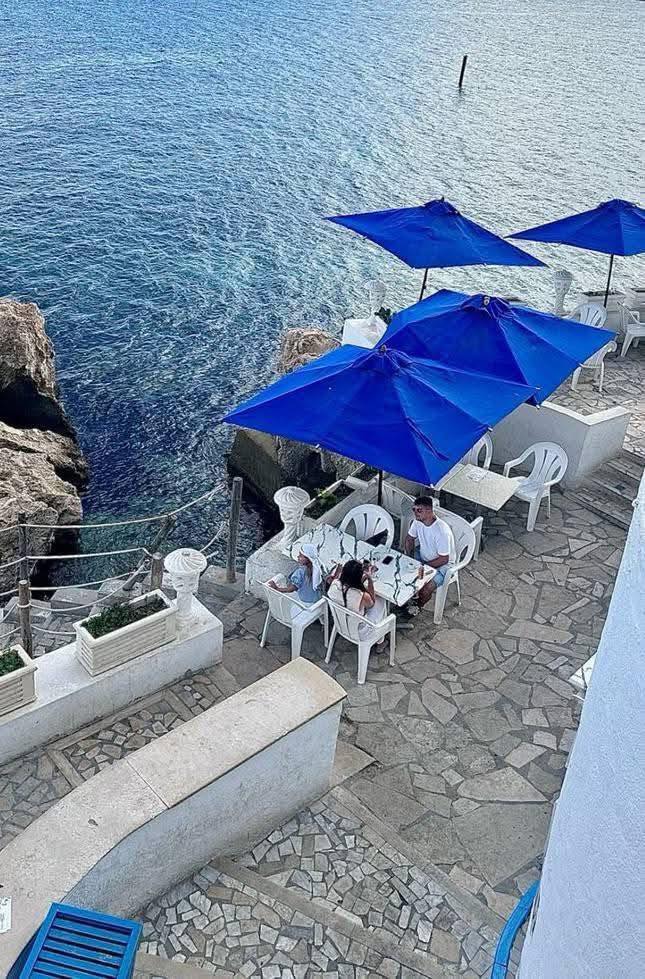
Ask ten Tunisians when you should come to their country, and you’ll get ten different answers — each of them right. A jeweler in the Tunis medina will tell you spring, when jasmine starts to perfume the alleys and the Bardo’s gardens crack open with bougainvillea. A Sahrawi guide in Tozeur will say winter, when the dunes turn copper at four in the afternoon and the night sky pours out stars. A Carthaginian opera-goer will insist on August, when two-thousand-year-old Roman stones throb with music under the heat.
They are all right, because Tunisia in a single calendar year is not one country but several. The same week in July, you can be roasting at 46 °C in Douz and pulling on a sweater in the misty pine forest of Aïn Draham, four hours north. The right month depends almost entirely on what you came for — and getting it wrong is the difference between a trip you’ll talk about for a decade and one you’ll politely never mention again.
The short answer, if you only read one paragraph
For most travelers, April–May and September–October are the sweet spots: warm but not punishing, the sea is swimmable, the medinas don’t melt, the Sahara is approachable. If you came for the desert, come in November through March. If you came for the beach and the festivals, July and August are unmatched, but you’ll share them with everyone else. The only stretches we’d actively warn against are the height of summer in the deep south and the rainier weeks of late January and early February — and even those have their case.
The rest of this guide is about why.
Spring (March to May): when the country exhales
Spring is the most flattering season for Tunisia, the one travel photographers quietly book for themselves. The Mediterranean has shaken off its grey winter mood; the air carries a softness that the August coast can’t quite manage. The interior plains — those endless wheat fields between Béja and Kairouan — turn an electric green that most visitors don’t know to expect from a country they pictured as desert.
In Tunis, daytime temperatures hover in the low twenties. The medina is wearable rather than punishing. Cafés in Sidi Bou Saïd put their outdoor seating back along the cliff. Down on Cap Bon, the orange and lemon orchards finish flowering and the air around Nabeul smells, frankly, like a perfumery accident.
This is also the right window for the south. The Sahara in spring is still cool enough to trek through, the date palms in Tozeur and Nefta are pushing out fresh fronds, and the desert nights are no longer cold enough to ruin a tent. By late May, the heat begins to assert itself below the chotts — Tozeur can hit 38 °C — but the north stays gentle into June.
If you’re choosing one season and one season only, choose this one.
Summer (June to August): two countries, one passport
Tunisian summer is the season everyone outside the country pictures, and the one Tunisians themselves either flee to or flee from, depending on which Tunisia they live in.
On the coast — Hammamet, Sousse, Monastir, Mahdia, Djerba — summer is what summer is supposed to be. Mediterranean blue, water at 25 °C, beach clubs open until midnight, sea breezes that take the edge off the afternoon. This is when European charter flights pour in and the resorts run at capacity. If your trip is mostly about the sea, June and the first half of September will give you that experience with about two-thirds of the crowd. July and August are peak, and prices know it.
The interior, meanwhile, becomes a different country. Kairouan, Sbeïtla, El Jem — the great inland archaeological sites — bake. Tozeur, Nefta, Douz, and the Sahara proper are genuinely dangerous in midsummer. We’re talking 45 °C and up, the kind of heat that takes a fit adult down inside an hour if they wander out without water. Local guides simply don’t run desert treks in July and August. Anyone who offers to is selling you a story.
The honest summer itinerary, then, sticks to the coast and treats inland visits as morning-only affairs — Roman sites at dawn, back to the pool by eleven.
The trade-off you make for the crowds is that summer is also festival season, and Tunisian festival season is one of the most underrated cultural experiences in the Mediterranean. More on that below.
Autumn (September to November): the season locals keep to themselves
If you talk to Tunisians who travel inside their own country, autumn is the answer most of them give. The summer crowds have receded. The water is still warm enough to swim through October. The southern light starts to take on that long, slanted, gold quality that desert photographers chase.
September is, in many ways, summer-minus-the-crowds. Hotel rates relax. The Carthage and Hammamet festivals are wrapping up. The medinas reopen for serious browsing. The fig harvest is in full swing on Cap Bon, and the new season’s olive oil starts pressing in October.
October is the connoisseur’s month. You can sleep with the windows open in Tunis, wear a jacket in the evenings in Aïn Draham, and ride a camel in Douz without melting. November cools faster but compensates: the Sahara becomes magical, the migratory birds settle into Ichkeul, and the cities turn into a sweater-and-mint-tea version of themselves.
Winter (December to February): the Sahara’s golden hour
Tunisian winter has a reputation problem outside the country, and it’s almost entirely undeserved. Tunis isn’t cold in any northern sense — daytime highs hover around 15–17 °C, with rain in concentrated bursts rather than constant gloom. The beach is off, but every other version of the country is on.
December through February is the time for the Sahara. The dunes that would have killed you in July are perfect: warm afternoons, cold beautifully clear nights, skies that pour Milky Way light onto the sand. The classic loop — Tozeur, Nefta, the chott, Douz, Ksar Ghilane, the Berber villages of the south — only really works in winter.
The mountainous north — Aïn Draham and the Khroumirie range — gets genuinely cold and occasionally sees snow. It’s an unexpected Tunisia: pine forests, cork oaks, wild boar, and roadside restaurants serving stews that have no business being this good.
The two soft spots in winter are weather volatility (storms can shut down ferry routes to Kerkennah or Djerba for a day or two) and the fact that some beach resorts close down or skeleton-staff between mid-November and mid-March. If you came for sand and umbrellas, this isn’t your trip. If you came for everything else, winter is criminally underrated.
Timing your trip around the festivals
Tunisia’s cultural calendar is concentrated, dense, and largely unknown to first-time visitors. A few worth planning around:
- July–August: the Carthage International Festival. The Roman amphitheater of Carthage hosts music, theatre, and dance under the open sky — including major Arab and international acts. The setting is, frankly, hard to overstate. You’re watching contemporary music on stones laid down in the second century.
- July: the El Jem International Festival of Symphonic Music. The amphitheater of El Jem — among the largest Roman colosseums in the world, and almost certainly the best-preserved in Africa — hosts orchestras inside its sandstone arches. There is no equivalent experience anywhere else in North Africa.
- July: the Tabarka Jazz Festival, on the northwest coast, with the unusual combination of pine forests, a Genoese fort, and a serious jazz lineup.
- July–August: the Hammamet International Festival, in the cliffside open-air theater of the Cultural Centre — smaller than Carthage, more intimate, often more interesting.
- December: the Sahara Festival of Douz. Camel races, Bedouin poetry, falconry, traditional weddings recreated for the crowd — the closest you can get to a living portrait of southern Tunisian Berber and Arab desert culture.
Plan around any one of these and the trip writes itself.
A word on Ramadan
Ramadan shifts about eleven days earlier every year on the Gregorian calendar, so depending on when you’re reading this, it could fall in spring, summer, or winter. Tunisia is a Muslim-majority country with a deeply social, family-centered relationship to the holy month, and traveling here during it is a particular experience worth understanding before you book.
Daytime rhythms slow. Many local restaurants close until sunset, though tourist areas and hotels typically operate normally. Cafés that would normally be packed at noon empty out. Then, after the iftar call, the country reawakens: medinas glow, food stalls run until three in the morning, families and friends gather in a way that feels, to a respectful outsider, like one long collective celebration of the night.
If you come during Ramadan, plan around it rather than fighting it: book later dinners, embrace evening exploration, and don’t eat, drink, or smoke obviously on the street during fasting hours. The reward is a Tunisia very few foreign visitors ever see.
Putting it together
- If you came for the beach: late May through early July, or mid-September through October.
- If you came for the desert: November through March. Full stop.
- If you came for the festivals and you can handle the heat: late July through August.
- If you came for the photographs, the food, and the idea of Tunisia: April and October, in that order.
- And if you came for the country itself — for the medinas and the cafés and the long conversations over mint tea, for Carthage and Dougga and Sidi Bou Saïd, for the kind of trip you can’t really sum up afterwards — the truth is that Tunisia rewards you in every season. It just rewards you differently.
The real question isn’t when to come.
It’s why you waited this long.
