
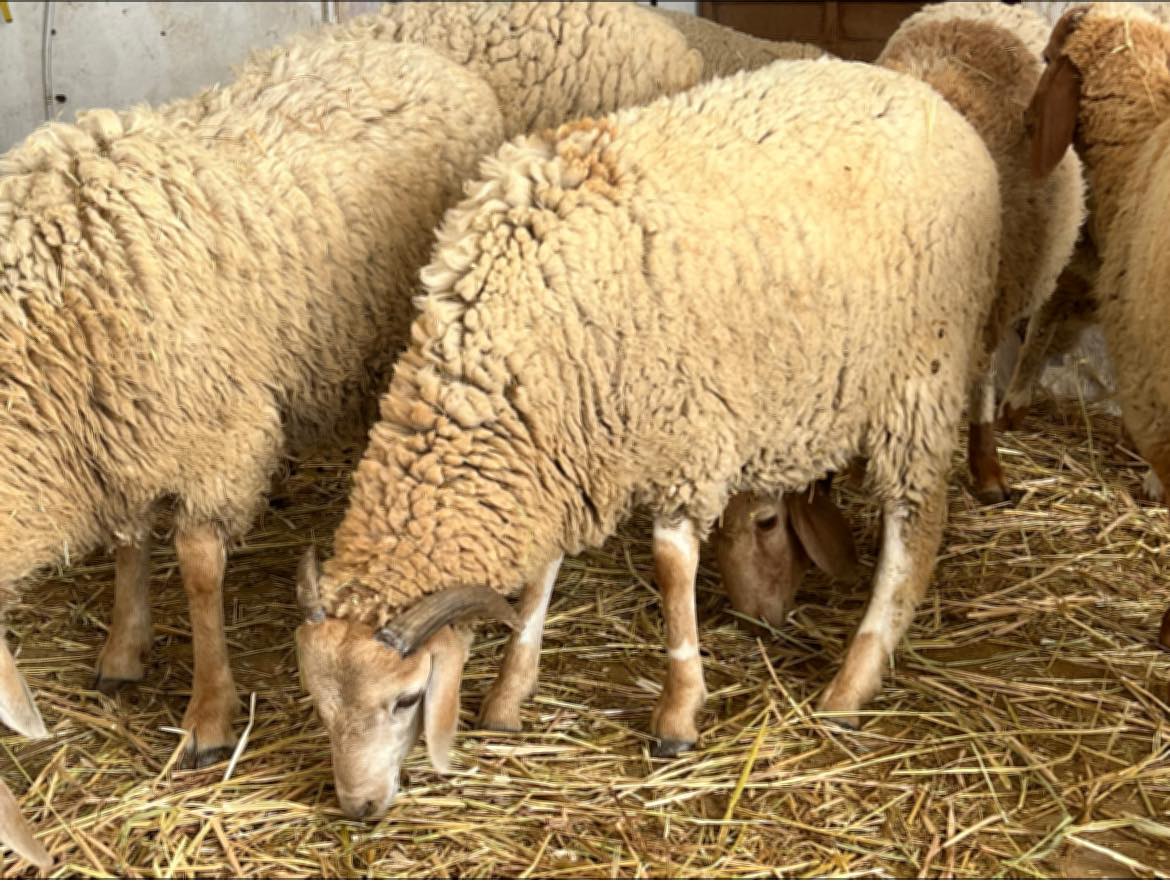
Quick Answer Eid al-Adha — known in Tunisia as Eid el-Idha or, more commonly, Eid el-Kebir (“the Greater Feast”) — falls on Wednesday, 27 May 2026. The country’s religious authority confirmed the date after the sighting of the crescent moon marking the start of Dhul-Hijjah on 18 May. It is the most important religious holiday in the Tunisian calendar, observed for three days and built around the ritual sacrifice of a sheep, a family meal, and visits to relatives. This year, the holiday arrives against a backdrop of record-high sheep prices and government efforts to keep the tradition within reach of ordinary households.
A few days before Eid, Tunisian cities begin to behave differently. The traffic thickens in unexpected places. A child appears at the corner of a residential street tugging a fully grown sheep on a length of rope, perfectly serious, as a neighbour calls down from a balcony to ask how much it cost. Trucks back into garages and onto rooftops. In the working-class districts of Bab Souika and Mellassine, in the medinas of Sfax and Kairouan, in the apartment blocks of Ariana, a low and unmistakable sound begins to layer itself under the usual urban noise: the bleating of two million sheep.
This is the week before Aïd el-Kebir. The Greater Feast. The single most important date on the Tunisian social calendar, religious or otherwise.
When is Eid al-Adha 2026 in Tunisia?
Wednesday, 27 May 2026, with the celebration extending across the two days that follow. The Tunisian Mufti’s office confirmed the date after the country’s religious authorities established Monday, 18 May as the first day of Dhul-Hijjah, the twelfth and final month of the Islamic lunar calendar. Eid al-Adha always falls on the tenth day of this month.
Tunisia, along with Turkey, was among the first countries to officially announce the date this year, ahead of Saudi Arabia’s own confirmation. The 27th will be a public holiday; most Tunisian workplaces will be closed through Friday, and many through the weekend. Public transport runs reduced schedules. Banks shut. Government offices stay dark.
What Eid El-Adha is, and why Tunisians call it the Greater Eid
There are two principal feasts in the Islamic year. Eid al-Fitr — Aïd el-Sghir, “the Little Feast” — marks the end of the Ramadan fast and is celebrated with pastries, family visits, and dishes like charmoula on the breakfast table. Eid al-Adha is the other one. The bigger one. The one with the sheep.
The holiday commemorates the willingness of the Prophet Ibrahim — Abraham, in the Judeo-Christian tradition — to sacrifice his son in obedience to God, and God’s last-moment substitution of a ram in the son’s place. The story sits at the foundation of all three Abrahamic religions, though the details diverge between them. In the Islamic narration, the son is Ismail. The ram is provided by the archangel Gabriel. The lesson is submission.
Tunisian Muslims commemorate this each year by sacrificing a sheep — occasionally a goat, very rarely a calf — at home or at a designated municipal abattoir, and dividing the meat into three parts: one for the family, one for relatives and neighbours, one for the poor. The sacrifice is not technically a pillar of Islam, and households without the means are not religiously obligated to perform it. But in Tunisian social custom, going without the kebch — the ram — is a quiet thing, a thing one does not advertise.
The sheep: why it costs so much in 2026
This is the part of the story that has dominated Tunisian living rooms, café conversations, and call-in radio shows for the better part of three months. Sheep prices for Eid 2026 have reached levels that older Tunisians say they have never seen.
A “modest” sheep — the entry point a Tunisian middle-class family would aim for, roughly 40 to 45 kilograms live weight — is changing hands for between 1,100 and 1,300 Tunisian dinars in the official livestock markets, the rahbas (around €330–400). A larger animal of 70 kilograms or more can exceed 1,700 dinars (€500+), with premium specimens running considerably higher. To put that in the context of Tunisian wages — for the income context, see our cost of living guide — a sheep at this price represents a full month’s gross pay for a worker on the recently-raised minimum wage, and a substantial week’s salary even for a comfortably middle-class household.
The reasons are a tangle. Three consecutive years of drought have thinned the national flock and driven up the cost of animal feed. Importers and intermediaries — the gassara who buy from breeders and resell at the urban markets — have inserted themselves more aggressively between farm and consumer than in previous years. Speculative buyers, including some with no agricultural background, have entered the trade in the weeks before the holiday. And the country’s broader inflation has hardened the ground beneath everyone.
The Tunisian government has responded on two fronts. The Ministry of Trade published reference prices for live sheep — a guideline range of roughly 23.8 to 27 dinars per kilogram, depending on weight class, intended to anchor the market. And the Ministry, in coordination with the Société des Viandes (the state-linked meat company), launched an international tender earlier this spring to import live sheep from abroad, with the imported animals to be sold by weight at controlled prices through official channels. The aim is to expand supply enough to take some pressure off the rahbas.
Whether it has worked is, as of this writing, a matter of debate at every Tunisian dinner table.
A Maghrebi crossroads
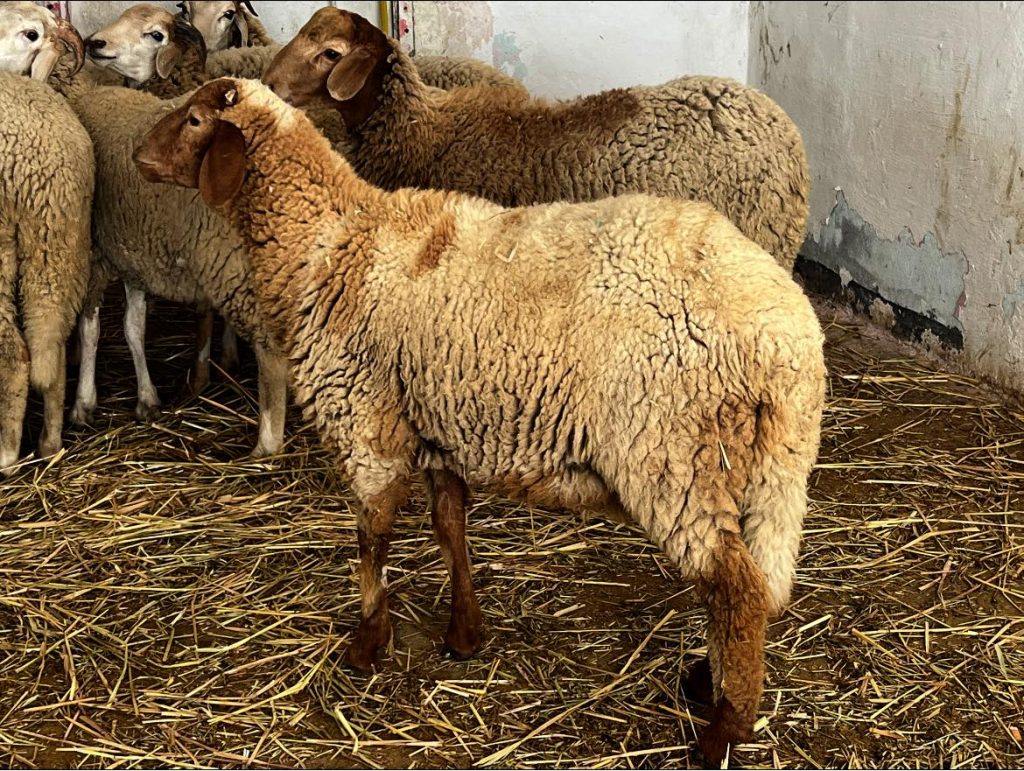
It is worth pausing on the regional picture, because Tunisia’s choice is one of three different North African strategies.
In Morocco, King Mohammed VI took the rare step in 2025 of calling on Moroccans to forgo the sacrifice entirely, citing a severe drop in the national flock — a decision unprecedented since 1996. The 2026 sacrifice has resumed, with prices reportedly more accessible at souks like Tnine Chtouka, but the rebuilding is incomplete.
In Algeria, the government has leaned into mass imports, granting full customs exemptions and rolling out a digital platform — adhahi — where citizens reserve their animal in advance, receive a QR code, and collect it at a controlled depot. The target retail price sits around 48,000 to 50,000 Algerian dinars (roughly €310–320).
Tunisia has taken the middle path: reference prices, official tenders, supplemental imports, and the rest left to the open market. It is a policy that reflects the country’s broader instinct — neither full state control nor full deregulation, but a balance struck imperfectly and renegotiated each year.
The day itself
Eid morning in Tunisia begins early. Before sunrise, men of the household wash, dress in something new or freshly pressed, and walk to the neighbourhood mosque for the salat al-Eid, the special Eid prayer. The sermon that follows is short. Greetings — Aïdkoum mabrouk, “blessed Eid to you” — are exchanged among neighbours, often with the formal embrace of three alternating cheek-kisses.
Then the ritual itself. In urban Tunisia, the sacrifice is increasingly performed at municipal abattoirs or by hired professionals who travel from house to house, knife sharpened, prayers ready. In rural areas and in older neighbourhoods, the head of the household still performs it in the family courtyard or on the roof. The animal is faced toward Mecca, the bismillah is recited, and the cut is made — quickly, by Islamic ritual law, to minimize suffering.
What follows is a flurry of activity that has occupied Tunisian families for centuries. The animal is dressed and butchered the same morning, often with neighbours helping in exchange for a share. The offal — liver, heart, kidneys — is grilled almost immediately and eaten for lunch, sometimes with a glass of strong mint tea or a cold beer (more on alcohol’s complicated place in Tunisian Eid life shortly).
The food
There is no Tunisian household where Eid al-Adha is a quiet meal. The three days are organized around the systematic cooking of every part of the animal.
Day one. Mlouhia kebda — the liver, grilled over olive-wood charcoal or pan-seared, dressed simply with cumin, salt, and a wedge of lemon. The lighter cuts of offal follow, with bread and salad. It is not a heavy meal. It is, in some sense, the first taste — the family quietly confirming that the animal has been well-prepared.
Day two. This is when the serious cooking begins. Kabkabou (a fragrant fish and capers stew) sometimes appears for variety, but the central dish is almost always a slow-braised lamb preparation — mosli, charmoula-style, or simply roasted with rosemary, garlic, and harissa. Side dishes proliferate. Aunts arrive with platters. The table extends.
Day three. Couscous. The national dish, prepared with the larger cuts of lamb — shoulder, leg, ribs — slow-cooked into the broth until the meat falls from the bone. This is the meal cousins fly home for. Three generations at one table, a forest of forks, and a covered pot of broth being passed from hand to hand.
There are regional accents. In Djerba, the island’s Sephardic-influenced kitchen yields harissa-heavy braises and the famous Djerban rice dishes. In the south, mermez — a chickpea-and-lamb stew — appears in versions that vary village by village. In the Sahel coastal cities, fish is more present alongside the lamb.
The cooking is the part of the holiday that most defines it. If you would like to bring it home, the Eid chapter in The Authentic Tunisian Cookbook covers the day-one through day-three sequence in detail.
A country that stops
For three days, Tunisia is not really open for ordinary business. Roads empty as families travel from the cities back to ancestral villages — the bled — to be with grandparents. The TGV-style trains run packed. Louages (the shared minibuses that connect Tunisia’s inter-city network) book out a week in advance. Coastal hotels close their kitchens; restaurants shutter or operate on skeleton menus. By Wednesday afternoon, central Tunis has the strange, hollow quality of a city after a snowstorm, except hotter and quieter.
For Tunisian travellers and tourists, the implications are practical. If you are arriving in the country in the days before Eid, expect higher prices on inter-city transport and considerably more sluggish service from public services. If you arrive on Eid itself, expect a quieter, more contemplative Tunisia than usual — and an extraordinary opportunity, if you are invited into a family home, to see the country at its most authentic. A kebch lunch with a Tunisian family is the kind of meal one remembers for decades.
What to say
If you are in Tunisia in the coming week — whether as a resident or a visitor — the greetings are simple, and using them will earn you genuine warmth.
- Aïdkoum mabrouk — “Blessed Eid to you.” (The standard, all-purpose greeting.)
- Aïd moubarak — “Blessed Eid.” (Slightly more formal.)
- Koul aam wa intoum bikhir — “Every year, may you all be well.” (The full, elegant version, used with older relatives.)
The expected response is to repeat the greeting back, or to add Allah yibarek fik — “may God bless you.”
— ✦ —
By Saturday evening, the apartment blocks of Tunis will smell of olive-wood smoke and grilled liver. By Wednesday morning, the prayer halls will overflow into the streets. By Friday night, the bled will be full of children, and grandparents will be plating the last of the couscous from a pot that has been on the stove since dawn.
The sheep cost more this year than they should have. The country worked around it, the way Tunisia tends to. The feast happens anyway.
Aïdkoum mabrouk.
