
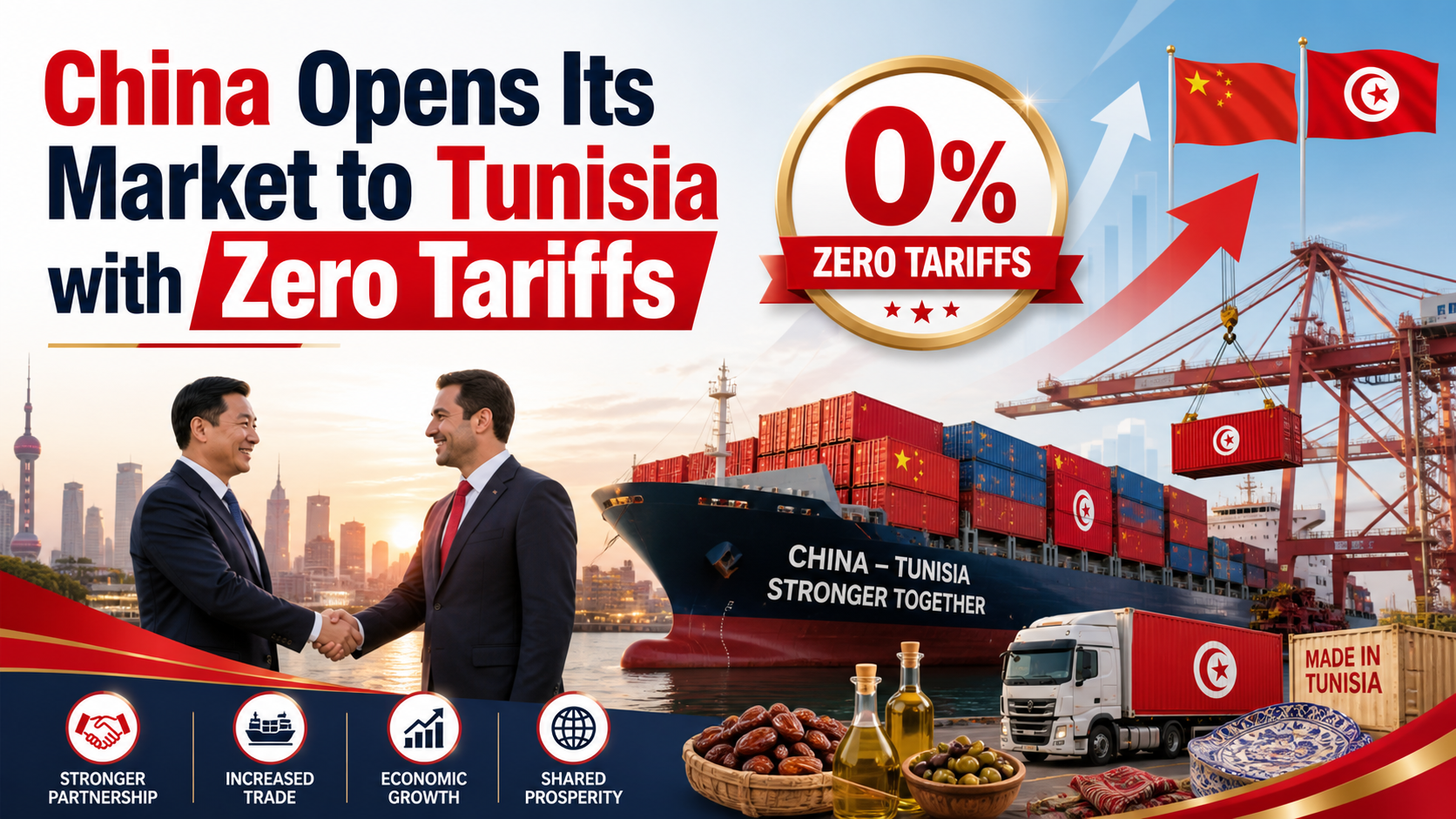
Since the beginning of May, China has implemented a total customs tariffs exemption (0%) on products imported from 53 African countries, including Tunisia. This initiative aims to stimulate trade and strengthen economic cooperation between China and the African continent.
Expansion of an Existing Policy
This exemption is part of an extension of a policy launched in December 2024, which initially benefited 33 of the least developed African countries. As of May 2026, 20 additional countries, including Tunisia, now enjoy this exemption, which will last for two years. This move marks a turning point in China’s trade policy, offering new opportunities for African economies.
A Strategic Partnership with Africa
Chinese President Xi Jinping emphasized that this measure is part of China’s broader strategy to deepen economic ties with Africa. “We aim to strengthen our strategic partnership with Africa, and this customs duty exemption is a tangible demonstration of that. It not only supports African economies but also promotes an equitable and mutually beneficial exchange,” he stated.
Tunisia in a Favorable Position
Among the products benefiting from this exemption, Tunisian olive oil stands out. Tunisian authorities have reported a significant increase in the number of companies registered to export to China. This development is expected to strengthen Tunisia’s position in the Asian market and expand its trade network.
Facilitating Export Procedures
Chinese authorities have also streamlined administrative processes for foreign exporters. Certification and registration procedures have been simplified, making it easier for food products—particularly Tunisian agricultural goods—to access the Chinese market.
New Opportunities to Seize
This exemption is expected to allow Tunisia to diversify its exports by targeting the Chinese market, which boasts over 1.4 billion consumers. Tunisian exporters now have the opportunity to fully leverage the potential of this vast and dynamic market. Experts believe this measure could positively impact the Tunisian economy, contributing to the growth of key sectors such as agriculture, food industry, and textiles.
Towards a Global Partnership Agreement
China and Tunisia are not stopping here. The two countries are in the final stages of negotiations for an economic partnership agreement, which could pave the way for further discussions on trade, supply chains, and industrial cooperation. This collaboration could lead to Chinese investments in Tunisia and a strengthening of logistics infrastructure to facilitate exports.
A Different Approach to Free Trade
Unlike traditional free trade agreements, which rely on reciprocal trade terms, this Chinese measure is a unilateral exemption. It offers preferential access to the Chinese market without immediate reciprocity from the beneficiary African countries. This approach could redefine the rules of international trade, providing African nations with a faster and more direct path to global markets.
China’s policy of customs duty exemption for African products, including Tunisia, ushers in a new era of trade cooperation. Tunisia, in particular, appears well-positioned to take advantage of this initiative while continuing its efforts to diversify exports and establish itself as a key player in the global market.
