
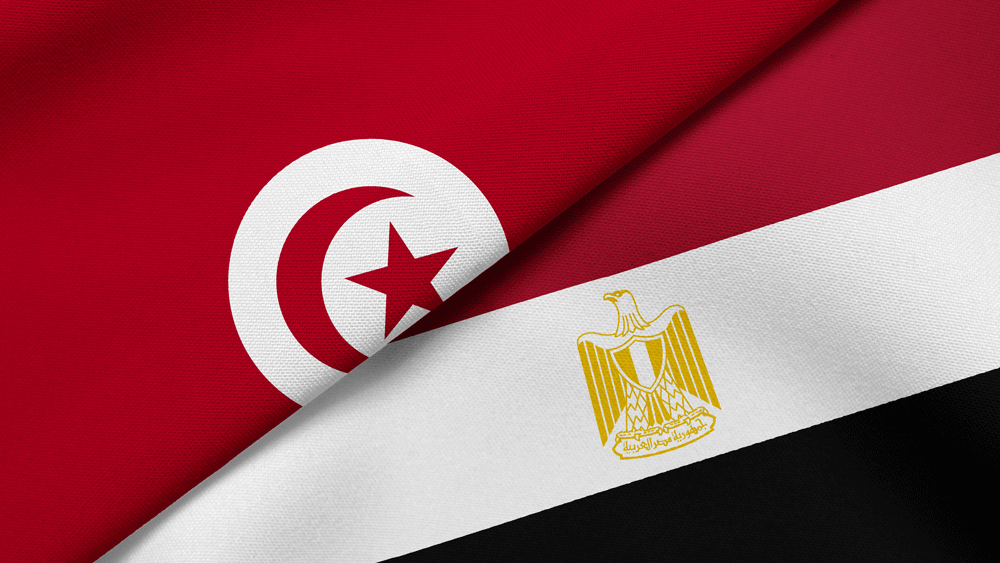
Tunis, November 17, 2025 — Egypt and Tunisia have signed a memorandum of understanding (MoU) to mutually recognize conformity certificates for non-food industrial goods, marking a significant step toward facilitating trade and strengthening economic ties between the two North African nations.
The agreement, signed in Tunis by Essam El-Naggar, Chairman of Egypt’s General Organization for Export and Import Control (GOEIC), and Khaled Soufi, President of the Egyptian Organization for Standardization and Quality (EOS), alongside their Tunisian counterparts, aims to streamline trade procedures, lower inspection costs, and reduce barriers for industrial exports.
Under the MoU, both countries will accept conformity certificates issued by their respective authorities for designated industrial products of Egyptian or Tunisian origin. The measure is designed to cut down pre-export inspection times, eliminate redundant checks, and enhance mutual confidence in regulatory systems and national laboratories.
According to Egypt’s Ministry of Investment, the agreement supports domestic manufacturing, facilitates regional market access, and targets an increase in bilateral trade to $1 billion.
Egyptian Ambassador to Tunis Bassam Hassan and Commercial Attaché Mohamed El-Maghrabi attended the signing ceremony, along with Nafâa Boutiti, Director General of Tunisia’s National Institute of Standardization and Industrial Property (INNORPI), and a Tunisian technical delegation.
Discussions also covered ways to broaden trade and investment cooperation, encourage Tunisian investment in Egypt, promote opportunities for Egyptian businesses in Tunisia, and explore potential joint ventures in key industrial sectors.
Bilateral trade between Egypt and Tunisia reached $434.5 million in 2024, marking a 15.4% increase over the previous year, reflecting growing momentum in economic collaboration between the two countries.
