
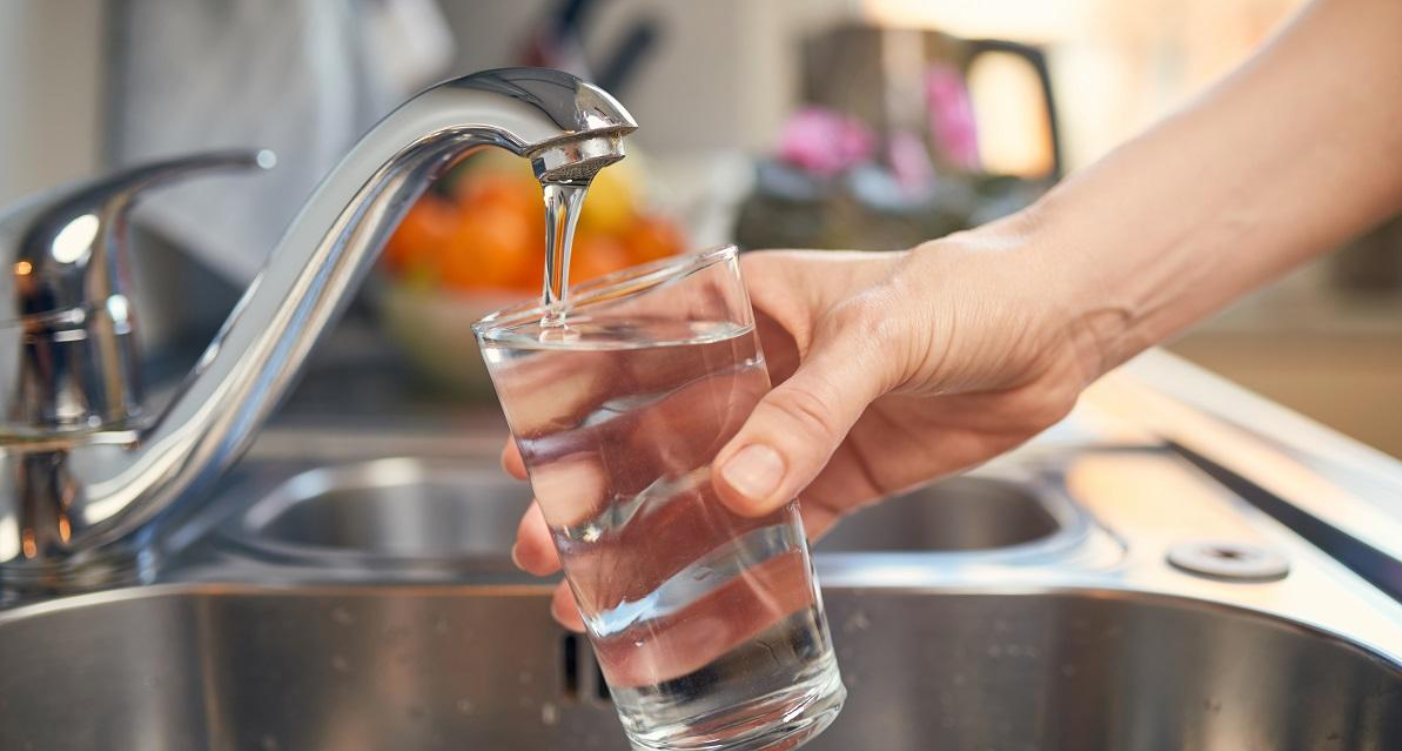
Every Tunisian table tells you the answer before you ask. Sit down for lunch in a family home in Ariana or a fish restaurant in La Goulette and nobody brings a carafe. What arrives is a 1.5-litre bottle of Safia or Sabrine, still beaded with cold from the fridge, set down beside the bread and the harissa as if it were just another ingredient. It is. In a country that drinks more bottled water per head than almost anywhere on earth, the bottle is not a tourist precaution. It is simply how Tunisians drink.
So when travelers ask whether they can drink the tap water in Tunisia, the honest reply has two halves: technically, mostly, yes — and practically, almost nobody does. Here is why, what to buy instead, what it costs, and the handful of everyday rules that actually matter.
The short answer
Tap water in Tunisia’s cities and resort towns is treated, chlorinated and tested. It is not, as in some destinations, a reliable way to get sick. But it is heavily chlorinated, hard and faintly salty, sometimes cut off overnight, and delivered through a network ageing faster than it is being replaced. Tunisians have responded by drinking bottled water almost universally, and the simplest advice for a visitor is to do the same. Use the tap for showering, washing and brushing your teeth; drink from the bottle. It costs less than a dinar, it is sold on every corner, and it is what your hosts will hand you anyway.
What actually comes out of the tap
The water in your hotel bathroom comes from SONEDE, the national utility, which serves some 3.3 million subscribers through 59,000 kilometres of pipe. It chlorinates at the source, again at the treatment plant and once more in every storage reservoir, and its laboratories in Tunis, Sousse and Sfax test constantly: in 2025 SONEDE ran 58,661 samples and found 1.6 percent non-compliant with national standards. At the end of August 2026, with the country mid-way through a bottled-water shortage, the head of its central lab went on record to say the tap water was potable and that boiling it was unnecessary.
In the north, that is broadly true. The reasons Tunisians don’t trust it have less to do with germs than with everything else. The chlorine is strong enough to smell in a glass. The water is hard, leaving limescale on kettles and a chalky edge on the palate. Since 31 March 2023 SONEDE has dropped the pressure overnight across much of the country to stretch dam reserves, and in a system where a fifth of the pipes are classed as obsolete and close to a third of the water leaks away before it reaches a tap, every outage and refill is a chance for the taste to change. We walked through that arithmetic in Tunisia had a wet year, the taps still went dry. Civil-society monitors have been blunter than the utility: the FTDES found bacteriological non-compliance in roughly one sample in ten in 2019 and 2020, and accused the state of nurturing the bottling industry while the public supply slipped.
Then there is the building you’re standing in. Most apartment blocks and hotels hold water in rooftop tanks against the night cuts, and a tank is only as clean as whoever last looked inside it. What SONEDE sends may be fine; what reaches the sixth floor after a week in the sun is a different question.
Why Tunisians buy more bottled water than almost anyone
Tunisians drank about 44 litres of bottled water per person in 2007. By 2022 the figure was 227 litres, and the latest industry count puts it at roughly 241 — fourth in the world and about six times the global average. Some thirty plants, clustered around the springs of Kairouan, Zaghouan and Siliana, bottle close to three billion litres a year. The first line opened in Nabeul in 1963; the habit became a national reflex over the last fifteen years, as trust in the tap fell in step with the drought.
It is also why you will never struggle to find water. Every épicerie, petrol station, pharmacy and café sells it cold; supermarkets stack six-packs and six-litre jugs by the pallet; hotels leave a bottle in the room. On any cost of living spreadsheet, water will be the cheapest line.
Which bottled water to buy, and what it costs
Walk into a Monoprix and you face a wall of labels. Safia, bottled by SFBT, the company behind Celtia beer, is the market leader and the default on most tables; Sabrine is its closest rival. Marwa, Cristaline, Aqualine, Melliti, Jannet, Hayet and Fourat share the rest of the shelf. For most travelers the differences are a matter of taste, and all are regulated and safe.
Two distinctions are worth knowing. If you watch your sodium, Melliti’s published analysis shows under one milligram per litre, and Safia, Hayet and Palma all sit under 20 mg/L, while some sparkling waters run into the hundreds. And if you want bubbles, the two Tunisian classics are Garci, from Enfidha, and Aïn Oktor, drawn from the thermal springs on the Cap Bon cliffs that also feed the Korbous hot springs. Oktor is mineral-heavy and frankly salty, an acquired taste Tunisians swear by for digestion.
Prices are low and, since August 2026, state-controlled: the Commerce Ministry capped a 1.5-litre bottle at 850 millimes and limited trade margins to 15 percent. Expect to pay 700 to 850 millimes in a supermarket, about a dinar in a corner shop, and two to three dinars at a beach café or hotel bar, where you are paying for the fridge and the view. A six-pack runs around five dinars; a six-litre jug is the best value for a rental apartment. The only rule that matters is the seal: buy bottles with the cap ring intact, and be wary of anything sold loose from an unmarked crate, a warning consumer groups repeated all summer.
Ice, tea, coffee, salad and your toothbrush
This is where most of the anxiety lives, and most of it can be put down.
Tea and coffee are made with boiled water, which settles that. The mint tea poured at every café and the express you order at the counter are as safe as anything in the country. Ice is a judgement call: hotels and good restaurants run machines fed by filtered or bottled water, while the crushed ice in a roadside citronnade or a medina juice stall more likely came from the tap. Tunisians drink both without a thought. A visitor with a sensitive stomach might skip street ice for the first couple of days, then relax.
Salads are rinsed in tap water everywhere, including your own kitchen if you self-cater, and the national devotion to slata mechouia means you will eat plenty of raw vegetables. In Tunisia’s cities this is not a meaningful risk. Brushing your teeth with tap water is fine; most long-term residents do, and the chlorine that makes it unpleasant to drink is what makes it safe to rinse with. The one everyday exception is babies: Tunisian parents make up formula with bottled water, usually a low-mineral brand, and anyone traveling with small children should copy them.
The south is a different country
Everything above describes the north and the coast. South of a line through Sfax and Gafsa the water comes largely from deep, ancient aquifers rather than northern dams, and it carries the minerals of the rock it has sat in for millennia. Historically the tap water of Gabès, Médenine, Tataouine and Djerba was brackish enough that locals used it only for washing. Natural fluoride is also high in the far south; studies have found levels above the WHO guideline in parts of Médenine, Gabès, Gafsa and Tataouine, a concern for children’s teeth over years of exposure rather than for a visitor’s fortnight.
SONEDE has spent a decade and well over a billion dinars changing this with seawater desalination. Djerba’s plant opened in 2018; Zarat, serving Gabès, Médenine and Tataouine, came online in 2024; Sousse followed in 2025 and Sfax now has the largest of all. Desalinated water has transformed the taste on Djerba in particular. But plants go down for maintenance and cuts remain frequent in Gabès and Sfax, so the old advice stands: in the south, drink bottled, and drink more of it than you think you need.
In the Sahara the question is quantity, not quality. Camp water often arrives by tanker and is fine for tea and washing, but carry at least three litres a person for a day in the dunes; the desert guide explains how operators handle supply on longer treks. Dehydration, not contamination, is what actually sends travelers to Tunisian pharmacies.
About that shortage
If you followed the news this summer you saw the queues. Through late July and August 2026 Tunisia ran short of bottled water, something that had never happened before: a heatwave lifted demand by a third, rolling power cuts stalled the bottling lines, and households that had learned to stockpile against the night-time tap cuts emptied the shelves faster than the plants could refill them. We chronicled it in The Summer of Shortages and explained the August squeeze that makes it a yearly risk.
For a traveler the lessons are modest. Supplies eased with the heat, and outside the peak weeks the shelves are full. If you visit in July or August, buy a day ahead rather than by the hour, pick up a jug when you see one, and don’t hoard. Hotels keep their own stock. And remember that the tap water the shortage pushed people back toward was, by the utility’s own testing, safe in a pinch — unpleasant, not dangerous.
If your stomach disagrees
Some visitors do get an upset stomach in Tunisia, and it is almost always heat, new food, olive oil in quantity and harissa at every meal rather than the water. Tunisian pharmacies are excellent and everywhere: look for the green cross, expect the pharmacist to speak French and often some English, and ask for oral rehydration salts, sold over the counter for a dinar or two. Every town has a rotating pharmacie de garde open overnight, listed on each pharmacy door. If symptoms last more than a couple of days, bring a fever, or involve a small child, see a doctor; that is the moment travel insurance for Tunisia earns its premium. Emergency numbers and the wider picture are in our guide to whether Tunisia is safe.
Travel lighter than the locals
There is an uncomfortable footnote to the bottled-water habit: three billion litres a year is close to seven hundred million plastic bottles, and too many end up in the wadis and on the beaches you came for. You can opt out without drinking from the tap. A filter bottle with a hollow-fibre membrane and a carbon element strips out the chlorine taste that is the real objection to Tunisian water and lets you refill from the bathroom. Failing that, buy a six-litre jug and decant into one reusable bottle rather than collecting a fresh 50cl at every kiosk. Our guide to greening your visit has more.
Either way, learn one phrase. Ma, min fadhlek — water, please — will get you a cold bottle anywhere in the country, and ma aadia makes clear you want it still. The Tunisian Arabic phrases guide has the rest. The bottle will arrive before you have finished asking, because in Tunisia, it always does.
From the Carthage Magazine Bookshelf
Once the water question is settled, the rest of the trip is logistics, language, and lunch — and these three cover all of it.
- All About Tunisia — the definitive English-language traveler’s guide. 572 pages, 27 chapters, all nine regions, every UNESCO inscription, five thematic trails — and the practical answers (visa, currency, transport, etiquette) most travelers wish they’d had on the plane. $24.99 · PDF & EPUB.
- Speak Like a Local — 200+ Tunisian Arabic phrases with native audio recorded in Tunis. The phrases for the taxi, the souk, the café, and the dinner table. $14.99 · PDF, EPUB, MP3.
- The Authentic Tunisian Cookbook — sixty traditional recipes from the heart of North Africa. For when you get home and find yourself missing the food. $9.99 · PDF & EPUB.
All three available as a bundle for $39.99 — guide, language, and food, delivered together.
