
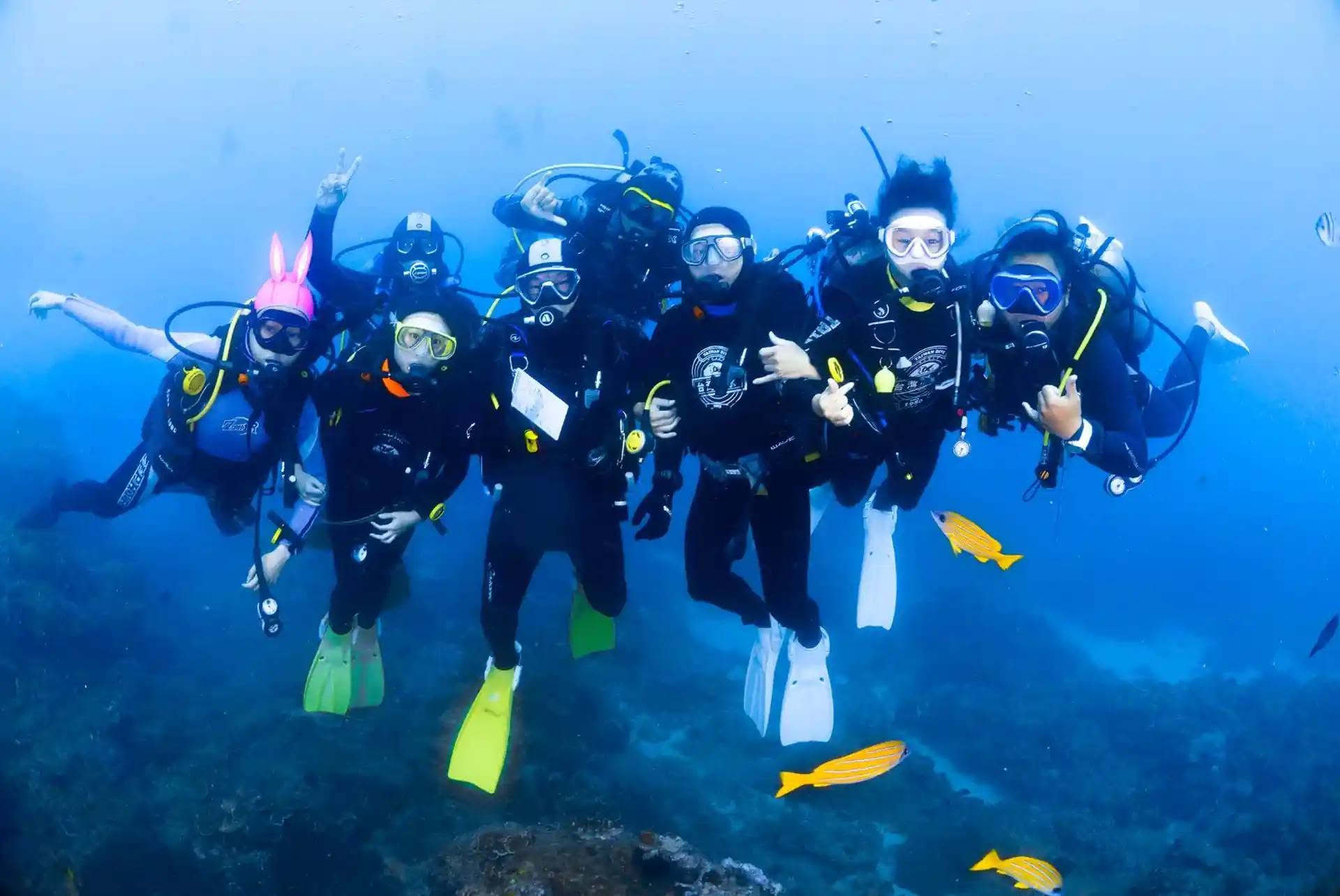
Quick Answer — Tabarka, in Tunisia’s forested northwest corner, is the country’s premier dive destination: home to the Mediterranean’s largest coral reef — including the precious red coral that named this the Coral Coast — and more than thirty documented sites minutes from the marina. The signatures are the Tunnels Reef, a 500-metre labyrinth of some twenty swim-throughs, and the resident dusky groupers, curious giants of 40 kilograms and more that follow divers around like dogs. Day trips run to the protected La Galite archipelago 50 kilometres offshore. The season is roughly March to November (water from a wintry 15°C to the mid-20s in late summer), single dives cost around 50–70 dinars, two-tank boat days 90–120, and the CMAS-style clubs at the marina handle everyone from first-timers to instructors. This is green-water Mediterranean diving — gorgonians and grouper, not parrotfish — and at its best it rivals anywhere on the sea’s southern shore.
Tabarka’s relationship with what lies under its water is older than tourism by five centuries. The Genoese families who held the offshore islet and its fortress from the 1540s were here for one thing: Corallium rubrum, the blood-red precious coral of the deep Mediterranean, harvested from these banks and carried into the jewellery of Europe. The trade named the coastline — the Coral Coast — built the town, and left the reef that today makes Tabarka the one place in Tunisia serious divers plan a trip around.
The full topside story — the Genoese fort, the jazz festival, the Aiguilles needles, the cork-oak mountains behind — is in our Tabarka guide; this is the underwater companion.
What Makes the Diving Special
Be honest with your expectations and Tabarka will exceed them: this is temperate Mediterranean diving, greener and moodier than the tropics, its palette drawn in gorgonian fans, sponges, and rock rather than technicolour coral gardens. Its glory is architecture and personality. The architecture is volcanic rock worked by millennia of swell into canyons, caverns, walls, and the region’s calling card — the Tunnels Reef, a reef complex stretching some 500 metres and riddled with roughly twenty swim-throughs, most single-diver narrow, the deepest around 24 metres: an unforgettable, torch-lit dive that experienced divers rank among the Mediterranean’s best.
The personality is the dusky grouper. Decades of protection around these reefs have produced a population of genuine giants — 40 kilograms and up at sites like Grouper Rock off Cap Tabarka, fifteen minutes from the harbour — that treat divers as entertainment, approaching close and sometimes escorting a group for the length of a dive. Around them: moray eels, octopus, barracuda, nudibranchs, lobster walls at Le Sec de Cernie, the deep advanced site of Cap Galena (40 metres, best life at 25), swallowtail sea perch clouding the rocks, and — in the deeper coralligenous zones — the red coral itself, strictly look-don’t-touch.
La Galite: The Expedition
Fifty kilometres offshore lies the trip that separates Tabarka from every other Tunisian dive town: La Galite, a seven-island volcanic archipelago protected as a full nature reserve under the Barcelona Convention — no fishing, minimal landing, maximal life.
The crossing takes around three hours each way, sea permitting, which makes it a full-day expedition run in season by the marina’s long-established nautical club; the reward is the wildest water in Tunisian diving — dense fish life, pristine coralligenous reef, the endangered giant fan mussel Pinna nobilis, dolphins on the crossing, and the archipelago’s most famous residents, a small colony of Mediterranean monk seals, among the rarest marine mammals on earth. Seeing one is a lottery ticket, not a promise — but divers have been buzzed by curious seals here, and the possibility alone electrifies the day. Weather cancels these trips regularly; build a spare day into any Tabarka itinerary that has La Galite at its heart.
The Practicalities
Season and conditions: diving runs essentially March to November, with summer and early autumn the sweet spot — water climbs from 15°C in winter (thick suits, hardy souls) to the mid-20s by late summer, visibility is honest Mediterranean (good more often than great, and the groupers compensate), and currents at the outer sites demand respect. September doubles the reason to come: the town’s Coralis underwater photography festival, one of the Mediterranean’s oldest, fills the marina with camera divers.
Money and logistics: expect roughly 50–70 dinars for a single dive, 90–120 for a two-tank boat day, weekly multi-dive packages at meaningful discounts, and equipment rental of 25–40 dinars a day — remarkable value against European Mediterranean pricing. The dive clubs cluster at the marina, most run on the CMAS/French federation model (bring your certification card and logbook; PADI equivalencies are handled routinely), and try-dives and courses are standard. Tabarka is about three hours’ drive from Tunis — the far-northwest logistics, and the case for a rental car to reach the coast’s hidden coves toward Bizerte, are in getting around Tunisia — and non-diving days want for nothing: the fort, the needles, the beaches ranked in our best beaches guide, and the cork-oak trails above Aïn Draham in the hiking guide.
Elsewhere in Tunisia, for completeness: Monastir and Port El Kantaoui run friendly resort diving with 20-plus registered sites; Mahdia’s dive school works genuine WWII wrecks in 38–45 metres; Hammamet has war wrecks still carrying their cargo; Cap Bon’s El Haouaria offers deep, clear, advanced water; and Djerba adds warm, easy seagrass diving in the south. All worthwhile — but the reef that built a coastline’s name is here, in the green northwest, where the mountains meet the sea and the groupers come to look at you.
From the Carthage Magazine Bookshelf
Surface intervals are for reading; the whole country above the waterline is in these three.
- All About Tunisia — the definitive English-language traveler’s guide. 572 pages, 27 chapters, all nine regions, every UNESCO inscription, five thematic trails — and the practical answers (visa, currency, transport, etiquette) most travelers wish they’d had on the plane. $24.99 · PDF & EPUB.
- Speak Like a Local — 200+ Tunisian Arabic phrases with native audio recorded in Tunis. The phrases for the taxi, the souk, the café, and the dinner table. $14.99 · PDF, EPUB, MP3.
- The Authentic Tunisian Cookbook — sixty traditional recipes from the heart of North Africa. For when you get home and find yourself missing the food. $9.99 · PDF & EPUB.
All three available as a bundle for $39.99 — guide, language, and food, delivered together.
