
Quick Answer — Tunisia has around ten golf courses, and they are one of the Mediterranean’s quiet bargains: green fees of roughly €25–€110 for 18 holes, an October-to-May season that solves the northern European winter, and week-long flight-hotel-and-fees packages from around €400–€900. The essentials: Citrus Golf in Hammamet (45 holes, the country’s flagship complex), Tabarka Golf (the beauty — cork oaks, sea, mountains), El Kantaoui near Sousse (36 holes, the Panorama’s views), Djerba Golf Club (27 holes and winter sun), plus courses at Monastir (two), Tunis (the historic Carthage club and the upscale Residence), and — improbably — a Sahara oasis course at Tozeur. Book tee times through your hotel for discounts, hire clubs for €20–35 a day, and avoid July–August unless you like dawn starts.
Tunisia never advertises itself as a golf destination, which is exactly why the golfers who know it keep going back: the courses are uncrowded, the fees are what northern Europe paid twenty years ago, and the flight from most of Europe is under three hours. The clientele is heavily British, German, and Scandinavian, chasing the same arithmetic — playable winters, honest conditioning, and caddies who still walk the round. Here is the full national card, honestly graded, from the mountains to the desert.
Hammamet: The Capital of Tunisian Golf
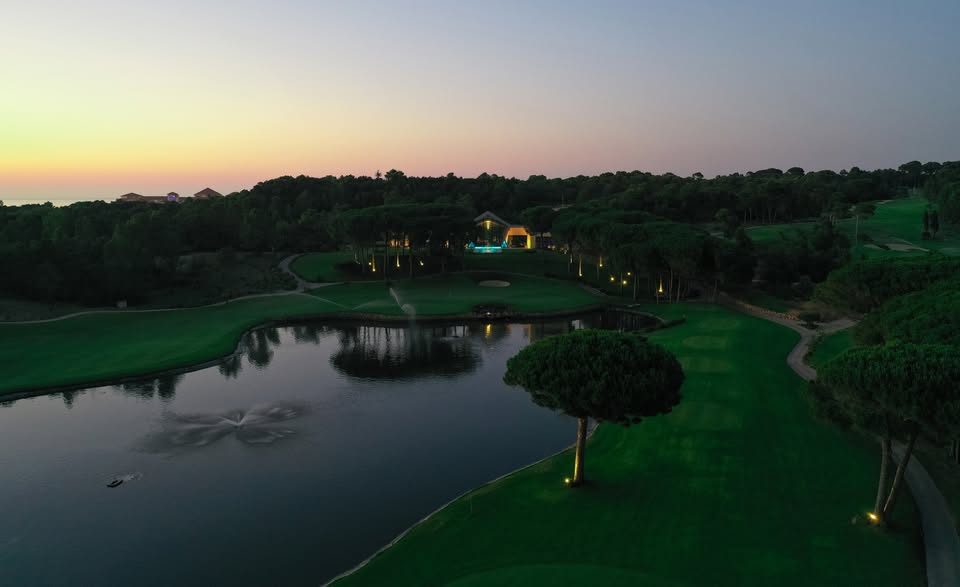
The Gulf of Hammamet holds the country’s densest cluster and its flagship. Golf Citrus, ten minutes from Hammamet, is Tunisia’s first 45-hole complex — 173 hectares of olive groves, forest, and seven lakes designed by the American architect Ronald Fream and open since 1992.
Its two championship courses split the field neatly: Les Oliviers is the generous, forgiving one, all wide fairways and gentle movement, while La Forêt is the examination — narrow, wooded, water-guarded, and the round most low handicappers rank first in the country. A 9-hole executive course rounds out the complex, conditioning is the best-run in Tunisia (regular visitors rate it above everything else at the moment), and public green fees run roughly €65–€112 for 18 depending on season, with hotel-partner discounts of up to 30 percent — the standard Tunisian trick of booking golf through your hotel matters most here. Across the road, Yasmine Golf Course offers a solid second championship track (fees around €55–€85) that keeps a two-course Hammamet week honest.
The North: Tabarka’s Masterpiece and the Tunis Clubs
If Citrus is the flagship, Tabarka Golf is the postcard — an 18-hole championship course (plus 9-hole links) laid out by the British architect Martin Hawtree in 1995 along the gulf where the Kroumirie mountains fall into the sea, threading cork oaks, eucalyptus, and pine with seven holes running the water’s edge. Regulars call it the most beautiful course in Tunisia, and some extend the claim to Africa; its remoteness — nearly three hours from Tunis in the green far northwest — keeps it empty, and pairs a golf trip naturally with the coast and forests in our Tabarka guide and the mountain village of Aïn Draham behind it.
Around the capital, two very different clubs: Carthage Golf at La Soukra, the country’s oldest — a short, tight, century-old parkland squeezed among ancient eucalypts, where accuracy is the whole game — and The Residence Golf Course at Gammarth, the upscale modern 18 by the sea north of Tunis (fees around €105, the country’s priciest) for anyone combining fairways with the capital’s culture via our Tunis guide.
The Sahel: El Kantaoui, Monastir, and Value Golf
The resort coast plays the volume game, cheerfully and cheaply. El Kantaoui Golf Course at Port El Kantaoui, north of Sousse, is the historic 36-holer: the hilly Panorama course earns its name with first-class views over the marina (take a buggy), while the Sea course ambles down toward the Mediterranean — fees around €46 make it the mid-market benchmark.
Twenty minutes south at Monastir, the Flamingo and Palm Links courses are the budget champions of Mediterranean golf — €23–€38 for 18 holes, honest resort tracks rather than championship tests, with Palm Links mixing links and parkland by the sea. Conditioning here is more variable than at Citrus or Tabarka; at these prices, regulars forgive it.
The South: Djerba and the Desert Curiosity
Djerba Golf Club at Midoun plays three 9-hole loops — 27 holes through palms and semi-desert with sea views — and owns the deep-winter market: when northern Europe and even Hammamet turn cold, Djerba’s December fairways sit in shirt-sleeve sunshine, fifteen minutes from the hotels.
Fees around €36–€44, though recent hikes have regulars grumbling that the island’s famous value edge has dulled. And then there is the conversation piece: Tozeur Oasis Golf, an 18-hole course on the edge of the Sahara beside the great palm grove of Tozeur — green ribbons against ochre desert, the strangest and most photogenic round in North Africa, and the perfect excuse to bolt two days of dunes and mountain oases onto a golf trip.
The Practicalities
Season: October to May is prime — winter days of 15–20°C on the coast are exactly what the northern European market flies in for (the broader case is in our Tunisia in winter guide); June and September are hot but workable with early tee times; July–August is dawn-patrol only.
Money: green fees as above, buggies and hire clubs €20–35 a day, caddies inexpensive and worth it; multi-round and weekly passes cut costs sharply, and the flight-hotel-fees packages sold heavily into the UK, Germany, and Scandinavia start around €400–€900 for a week with three to five rounds — against Algarve or Costa del Sol pricing, the value case makes itself.
Logistics: Hammamet golf flies into Enfidha, the Sahel courses into Monastir, Djerba and Tozeur have their own airports, and Tabarka is a scenic drive from Tunis — the routing options are in flights to Tunisia, and a rental car turns any two clusters into one trip. The honest closing note: Tunisia won’t out-glamour the Algarve, and conditioning outside the top three clubs can wobble — but nowhere else on the Mediterranean hands you a Hawtree course under cork oaks, a 45-hole complex, and a Sahara oasis round in the same inexpensive week.
From the Carthage Magazine Bookshelf
Nineteenth holes need reading material; the whole country is in these three.
- All About Tunisia — the definitive English-language traveler’s guide. 572 pages, 27 chapters, all nine regions, every UNESCO inscription, five thematic trails — and the practical answers (visa, currency, transport, etiquette) most travelers wish they’d had on the plane. $24.99 · PDF & EPUB.
- Speak Like a Local — 200+ Tunisian Arabic phrases with native audio recorded in Tunis. The phrases for the taxi, the souk, the café, and the dinner table. $14.99 · PDF, EPUB, MP3.
- The Authentic Tunisian Cookbook — sixty traditional recipes from the heart of North Africa. For when you get home and find yourself missing the food. $9.99 · PDF & EPUB.
All three available as a bundle for $39.99 — guide, language, and food, delivered together.
