
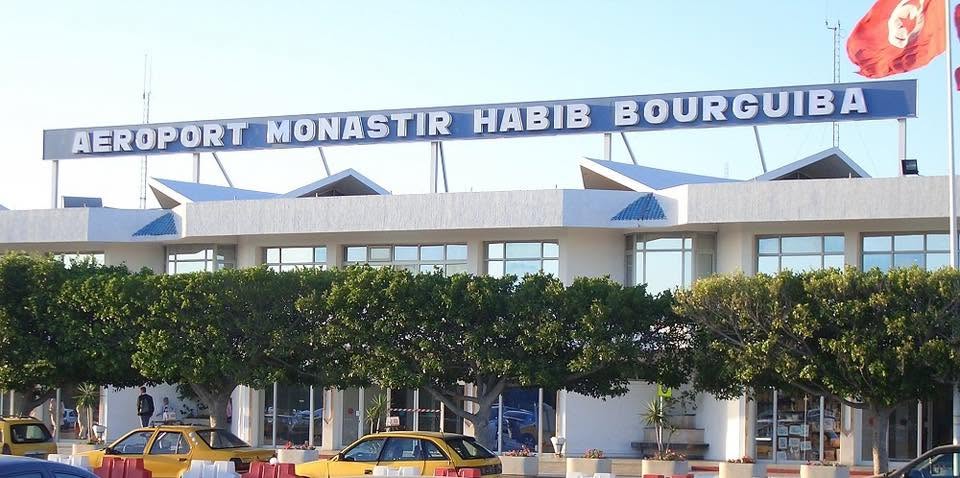
Quick Answer — Monastir-Habib Bourguiba International Airport (MIR) is the Sahel coast’s veteran gateway, just three kilometres west of Monastir and twenty from Sousse. It handles heavy European charter and low-cost traffic — Nouvelair, TUI fly, Ryanair, Eurowings, Smartwings and others, strongest from Germany, France, the UK, Poland, and the Czech Republic. Its quiet superpower: it is the only airport in Tunisia with a rail link, the Sahel Metro, whose station at the airport entrance reaches Sousse in about forty minutes and Mahdia in an hour for under five dinars. Taxis run 10–20 dinars to the Skanes hotel strip, 8–12 to central Monastir, 25–35 to Sousse, 50–70 to Mahdia. The terminal is small, efficient, and rarely chaotic. Arrive two and a half to three hours before departure in the charter season.
Here’s the fuller picture.
Monastir’s airport carries the name of the most important man ever born beside it. Habib Bourguiba, founder of modern Tunisia, came from this small Sahel city, showered it with presidential attention, and gave it — along with a marina, a rebuilt medina quarter, and the golden-domed mausoleum where he lies — an international airport wildly out of proportion to the town’s size. Opened in 1968, it spent decades as the workhorse of Tunisian beach tourism, funnelling millions of Europeans to the Sousse–Monastir hotel coast, and though the newer Enfidha airport up the road took a share of that traffic after 2009, MIR remains one of the country’s two principal package gateways and, for many returning visitors, the more likeable of the pair: older, smaller, quicker, and closer to the beds it serves. Both airports are run by the same Turkish operator, TAV, and the wider picture of who flies where is in our guide to flights to Tunisia.
Arrival: Small Airport, Short Walks
MIR’s compactness is its virtue. From aircraft door to kerb is a matter of minutes when a single flight arrives; even in the summer charter waves, when several European flights land in a cluster, immigration rarely takes the hour that bigger gateways manage. Fill in the arrival card the crew distributes before landing; most Western passports enter visa-free for up to ninety days on a passport valid six months beyond entry, with the country-by-country rules in our Tunisia visa guide. Baggage claim is small, customs is a walk-through for holidaymakers, and the arrivals hall holds the essentials: exchange desks and ATMs — remember the dinar is a closed currency you cannot buy at home, so change or withdraw a first day’s worth here and do the rest in town, per the strategy in our Tunisian dinar guide.
As for data before you land: the best arrival move is having your eSIM installed before boarding — Airalo’s Tunisia packages take five minutes to set up from a QR code and switch on the moment you hit Tunisian airspace, which means maps, taxi apps, and “just landed” messages all work before you’ve cleared passport control. Prefer a local SIM? The operator counters in arrivals sell tourist packages too — bring your passport, and see our full SIM & eSIM guide for the comparison.
Leaving the Airport: The Coast’s Best-Connected Terminal
The package majority walks straight onto tour-operator coaches — if a transfer came with your booking, your only job is finding the right rep. Independent travelers have the best menu of any Tunisian airport.
The Sahel Metro is the headline. A station sits at the airport entrance, and this light-rail line — unique among the country’s airports — runs north to Sousse in about forty minutes and south through Monastir to Mahdia in around an hour, every thirty to sixty minutes through the day, for under five dinars. With manageable luggage it is the calmest, cheapest arrival in Tunisian tourism: no negotiation, no traffic, sea glimpses included. Taxis wait outside around the clock and the distances keep fares friendly: 10–20 dinars to the Skanes resort strip immediately north, 8–12 to central Monastir and the marina, 25–35 to Sousse, 50–70 to Mahdia. Insist on the meter for the short hops; agree the figure clearly for the longer intercity runs; official night and luggage supplements are modest. Pre-booked transfers remove even that small friction for late arrivals. And if your trip is a driving one, the airport sits minutes from the coastal road with the A1 motorway close behind — the national logistics live in getting around Tunisia.
Which Sahel Airport Is Yours?
The coast’s perpetual booking question. Monastir (MIR) is closest to the Skanes strip, Monastir itself, Sousse’s southern hotels, and Mahdia — and its rail link rewards independent travelers. Enfidha (NBE), ninety kilometres north, better serves Hammamet and drew away much of the region’s charter traffic, though schedules shuffle between the two seasonally and operators sometimes fly you into one and home from the other, so read both boarding passes. Tunis-Carthage (TUN) carries the scheduled full-service traffic for anyone connecting from farther afield. If the airports are the question, the destinations are the real answer — weigh them in our guides to Sousse and Monastir itself, a city most passengers unjustly skip on their way to the beach despite holding the oldest Islamic fortress in North Africa and its founder-president’s extraordinary mausoleum, ten minutes from the runway.
Departing, and the Spare Afternoon
Going home, the charter-wave arithmetic applies: check-in for several flights opens together and security inherits the lot, so two and a half to three hours’ margin is the honest recommendation in season. Spend down your dinars — you cannot take them out of the country — or reconvert at the departures desk with your exchange receipts to hand. The duty-free is compact but covers the classics: dates, olive oil, harissa. And if the flight leaves late, MIR’s position makes the spare hours easy to spend well: the Ribat of Monastir and the Bourguiba Mausoleum fill a final afternoon within a ten-minute taxi of check-in, and the Sahel Metro can have you in Sousse’s UNESCO medina and back between breakfast and boarding. Where to spend the last night, from Skanes resort to medina guesthouse, is mapped in our hotels in Tunisia guide.
From the Carthage Magazine Bookshelf
The light rail handles the transfer; these three handle the rest of the trip.
- All About Tunisia — the definitive English-language traveler’s guide. 572 pages, 27 chapters, all nine regions, every UNESCO inscription, five thematic trails — and the practical answers (visa, currency, transport, etiquette) most travelers wish they’d had on the plane. $24.99 · PDF & EPUB.
- Speak Like a Local — 200+ Tunisian Arabic phrases with native audio recorded in Tunis. The phrases for the taxi, the souk, the café, and the dinner table. $14.99 · PDF, EPUB, MP3.
- The Authentic Tunisian Cookbook — sixty traditional recipes from the heart of North Africa. For when you get home and find yourself missing the food. $9.99 · PDF & EPUB.
All three available as a bundle for $39.99 — guide, language, and food, delivered together.
