
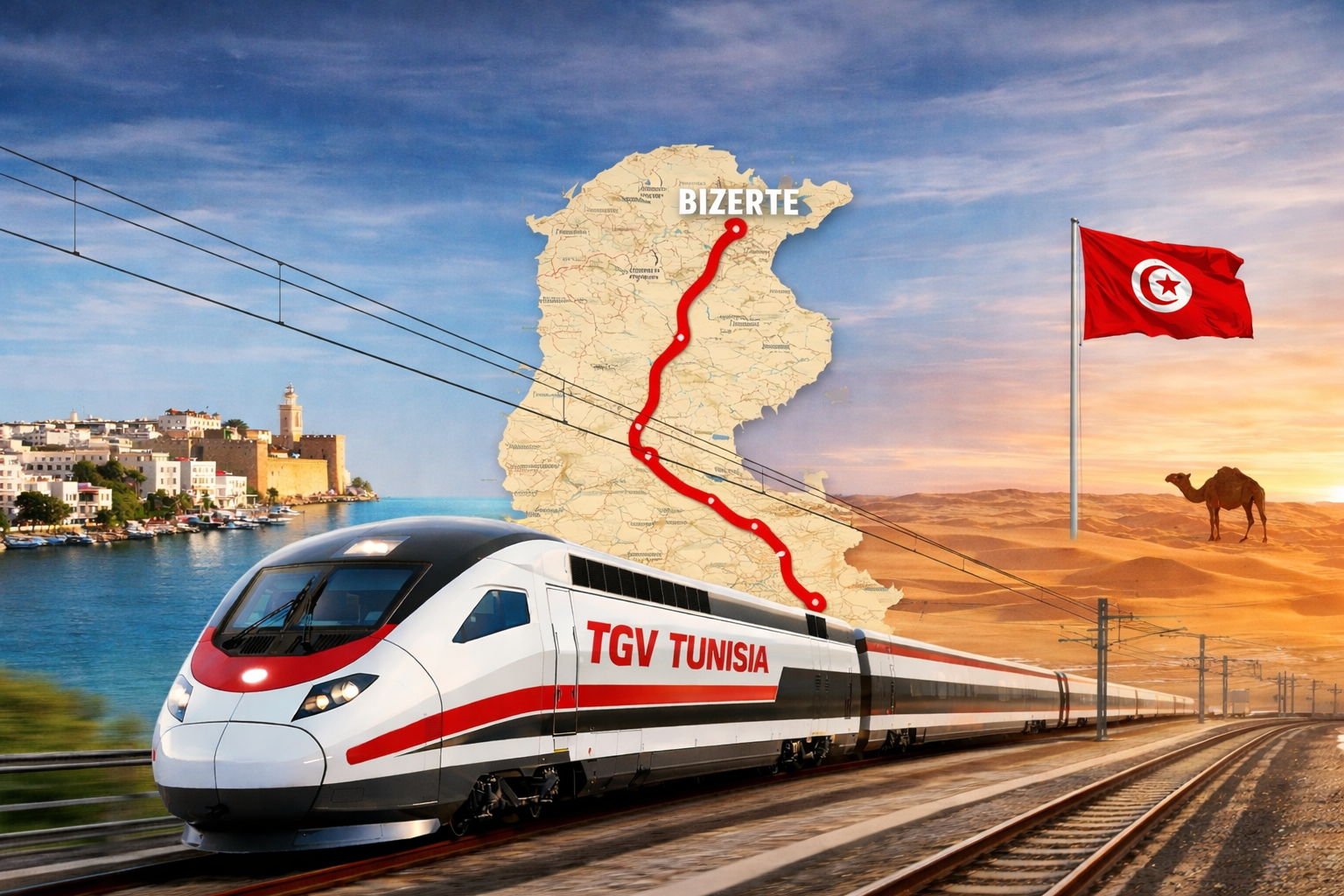
Tunis, Tunisia — In a major infrastructure push, the Tunisian government has unveiled plans for a new high‑speed train (TGV) corridor stretching from Bizerte in the north to Ben Guerdane in the southeast, as a flagship component of its 2026–2030 national development plan. Officials say the project could transform inter‑regional travel and bolster economic integration across the country.
The announcement was made in the context of a high‑level review of Tunisia’s forthcoming five‑year development strategy, which places infrastructure investment and regional connectivity at its core. The plan itself is being shaped through a novel bottom‑up process that actively incorporates input from local and regional authorities to better address regional disparities.
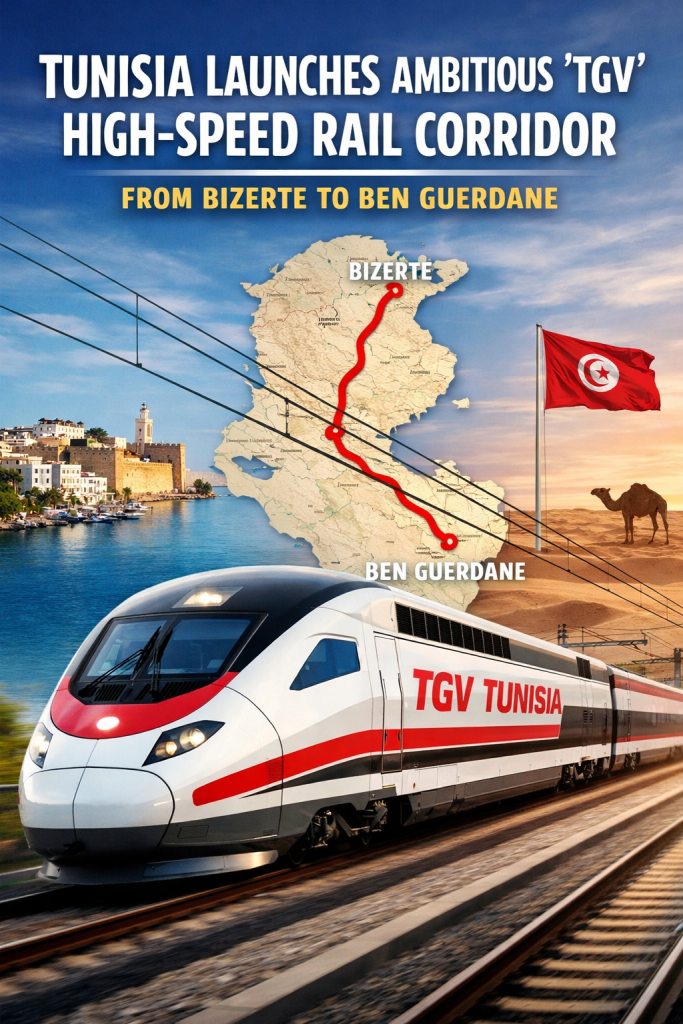
The proposed high‑speed rail line aims to:
- Seamlessly connect Tunisia’s northern and southern regions, closing a key mobility gap that has long constrained internal travel and logistics.
- Link strategic urban hubs, major ports, and logistical centers, promoting trade and easing movement for passengers and freight.
- Lay the groundwork for future cross‑border rail integration with Algeria via Annaba as well as expanded links toward Libya and the port of Zarzis in the southeast, reinforcing Tunisia’s role in regional connectivity.
While details on timelines and financing are still emerging, the corridor is expected to be one of the most ambitious rail projects in Tunisia’s history, potentially involving a mix of public funding and international partnerships.
Regional and International Significance
The high‑speed rail initiative dovetails with broader Maghreb rail integration concepts, which have long envisioned electrified and high‑speed links between North African capitals and economic centres. Previous studies have explored routes that might one day extend from Algeria’s Oran and Algiers through Tunisia and onward to Libya’s Tripoli and Benghazi, at speeds up to 300 km/h.
Tunisian transport officials are also advancing feasibility studies that include preliminary engineering and cost assessments, aiming to secure the necessary investment and technical partnerships. These efforts come alongside ongoing work to modernise existing rail infrastructure, including renovation of key freight lines crucial to export sectors.
Economic and Social Impact
Proponents of the project argue it could significantly reduce travel times, stimulate regional economies, and encourage tourism and commerce across underserved areas. The southeastern city of Ben Guerdane, historically known for informal cross‑border trade with Libya, is expected to benefit from increased formal economic activity and improved access to national markets.
As Tunisia continues to grapple with economic challenges and regional inequality, the railway project is being framed as a transformative investment — one that could not only enhance national mobility but also strengthen Tunisia’s position as a transport hub within the Maghreb.
