
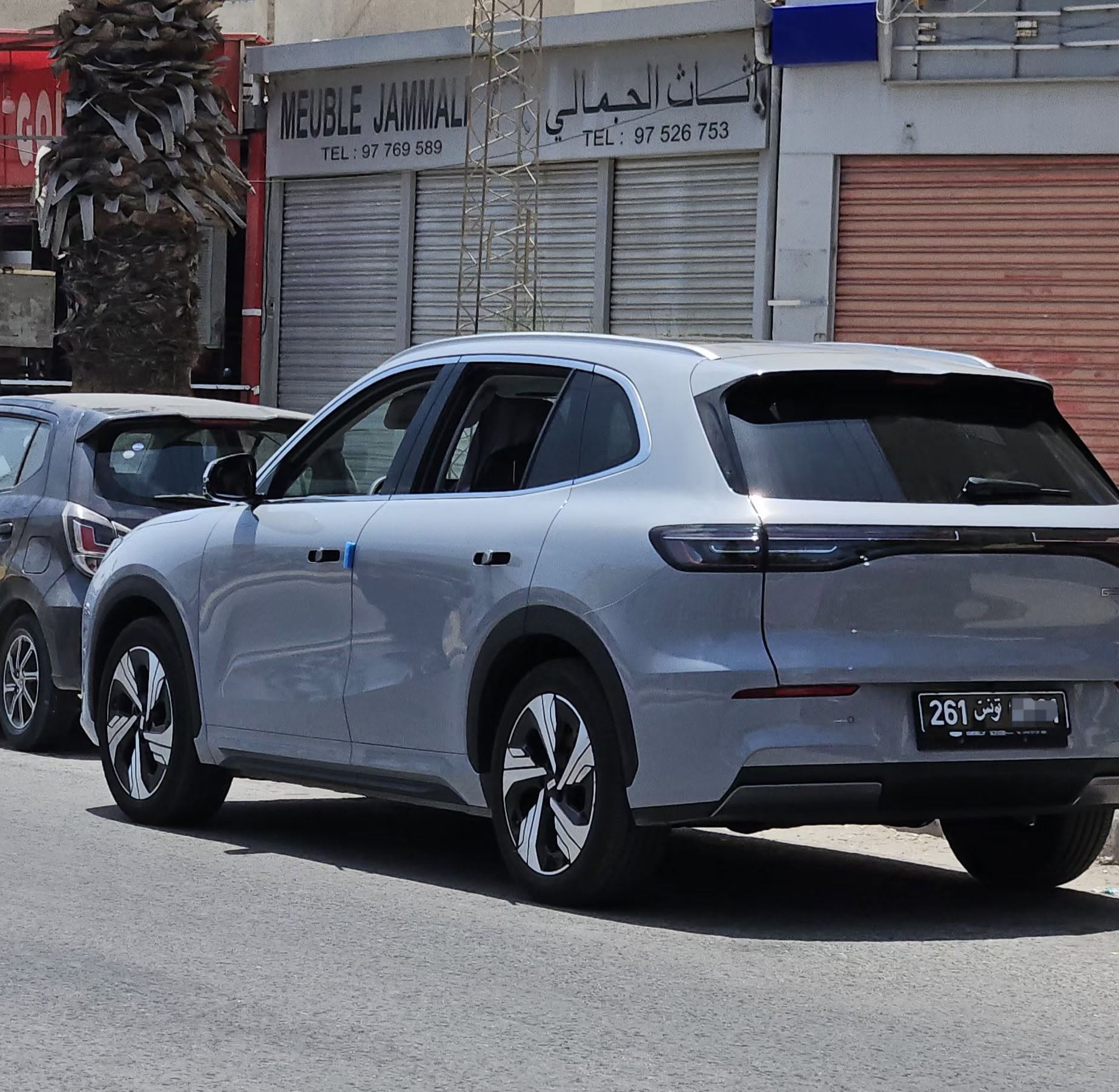
Tunis, July 20, 2026 — Something unusual is happening on Tunisian roads. In the first four months of 2026, Tunisians bought more than 1,100 electric cars — roughly double what the entire country purchased in all of 2025, when just 539 EVs found buyers, according to figures from the national dealers’ association (Chambre syndicale des concessionnaires et des constructeurs automobiles) reported by the TAP news agency.
For a market long written off as too small, too cash-strapped, and too poorly equipped for electric mobility, that is a remarkable turn. Ibrahim Dabbech, the association’s president, now expects around 2,000 EVs to be sold before the year is out — which would make 2026 the year electric driving in Tunisia went from curiosity to category.
So what changed? In a word: taxes. In several more: taxes, prices, and a wave of new arrivals in the showrooms.
The 2026 Finance Law rewrote the math
The single biggest driver of the boom is the 2026 Finance Law, which took effect on January 1 and overhauled the fiscal treatment of clean vehicles from top to bottom.
Fully electric cars and plug-in hybrids are now completely exempt from customs duties and the consumption tax — historically the two levies that made imported cars in Tunisia so painfully expensive. On top of that, VAT on these vehicles (and on charging equipment) dropped from 19 percent to 7 percent, a rate locked in until the end of December 2028. Buyers also get a 50 percent reduction on first-registration fees, and fully electric cars and motorcycles pay half the annual road tax (vignette).
The state went further still on financing. Through the Energy Transition Fund, the government now covers part of the interest on loans taken out to buy an electric vehicle — with a dedicated scheme, capped at three percentage points, for taxi operators and driving schools borrowing through the BTS bank.
The stated ambition behind all this, according to the national energy management agency ANME: 50,000 electric vehicles on Tunisian roads by 2030, supported by 5,000 charging points nationwide. The stakes go beyond air quality — transport eats up about 30 percent of Tunisia’s final energy consumption and produces more than a quarter of its greenhouse-gas emissions, most of it fueled by imported hydrocarbons that weigh on the trade balance.
The 51,000-dinar tipping point
Tax reform alone doesn’t sell cars; prices do. And the price floor has collapsed.
As recently as last year, the cheapest electric cars on the Tunisian market hovered between 80,000 and 90,000 dinars, with premium models sailing past 300,000 — numbers that kept EVs firmly in the toy-for-the-wealthy category. Then, in January, Helios Cars — the official BYD distributor, whose brand already topped Tunisia’s EV registrations in 2025 — launched the BYD Dolphin Surf, a compact city EV, from 51,000 dinars including tax.
At that price, an electric car suddenly competes with ordinary petrol hatchbacks — before you even count what it saves at the pump. And the Dolphin Surf isn’t alone. Kia’s EV3 arrived through City Cars with four trims starting at about 105,000 dinars, while newcomer Omoda & Jaecoo entered the market with a range of hybrid and electric SUVs from 83,900 dinars. Chinese brands, unsurprisingly, are setting the pace — but the significant shift is that Tunisian buyers now have genuine choice across several price brackets.
Can you actually charge the thing?
The eternal question — and the answer is better than most people assume. According to ANME director general Nafâa Baccari, Tunisia currently counts around 200 public charging points for roughly 1,000 electric vehicles in circulation, a ratio that actually beats the international benchmark of one charger per ten cars.
The bigger news is what’s coming. A new regulatory framework (cahier des charges) is being finalized that will let private companies and individuals invest in charging stations across the country, with simplified procedures, liberalized pricing, and a national digital platform to help drivers locate the nearest plug. Charging-station equipment now benefits from its own tax break — customs duties cut to 10 percent and VAT at 7 percent through 2028 — an incentive aimed at fuel stations, shopping centers, parking operators, and municipalities alike. Earlier this month, La Presse even reported on Chinese ultra-fast charging technology being pitched for Tunisia that promises a full charge in about seven minutes.
The elephant in the room: the grid
There is, of course, an irony that no Tunisian reader will miss. This EV surge is unfolding in the very summer that rolling blackouts returned to Tunisian neighborhoods, as record heat pushed the national grid to the edge and STEG resorted to load-shedding to keep it standing.
For now, the contradiction is more symbolic than practical: a thousand-odd EVs are a rounding error next to millions of air conditioners, and most owners charge overnight, when demand slumps. But the trajectory matters. If Tunisia genuinely reaches 50,000 electric cars by 2030, their charging load will land on a power system that already has virtually no spare capacity — making projects like new solar farms and the 600 MW ELMED interconnection with Italy less of a nice-to-have and more of a precondition for the whole electric-mobility bet.
The quiet boom, in other words, is real — 2026 will almost certainly be remembered as the year the electric car arrived in Tunisia. Whether the country’s grid, chargers, and wallets can keep up with it is the story of the next four years.
