
Quick Answer — Eating well in Tunis means moving between four worlds: the restored palace restaurants of the medina (Dar El Jeld, Dar Slah, Dar Belhadj, Fondouk El Attarine) for Tunisian cooking in extraordinary rooms; the old-guard tables of the Ville Nouvelle, led by the seafood institution Chez Slah; the fish restaurants of La Goulette on the port; and the street — lablabi bowls, fricassés, and market stalls where the city actually feeds itself for a few dinars. Budget 60–120 dinars a head for a palace dinner, 40–80 for grilled fish on the coast, 15–25 in a neighbourhood resto populaire, and under 10 on the street. Book ahead for the famous rooms; bring cash everywhere else; lunch runs late and dinner starts after eight.
The first thing to understand about eating in Tunis is that the city’s best food is not arranged for your convenience. There is no restaurant district. There is instead a set of overlapping worlds — a medina where eighteenth-century mansions serve couscous under painted ceilings, a French-built downtown where a handful of old houses have been feeding the same families for generations, a port suburb whose entire main avenue smells of grilled fish, and ten thousand counters where the real daily cuisine of the capital is ladled into bowls for the price of a postage stamp. A good eating trip to Tunis visits all four.
Here is how, register by register — with the standing caveat that restaurants are living things: chefs move, rooms close, and this guide, refreshed as it is, is no substitute for asking your hotel what’s good this month.
The Medina: Dinner in a Palace
The great set-piece meal of Tunis happens inside the medina, where several of the old city’s mansions and caravanserais have been restored into restaurants that would justify a visit even if they served nothing at all.
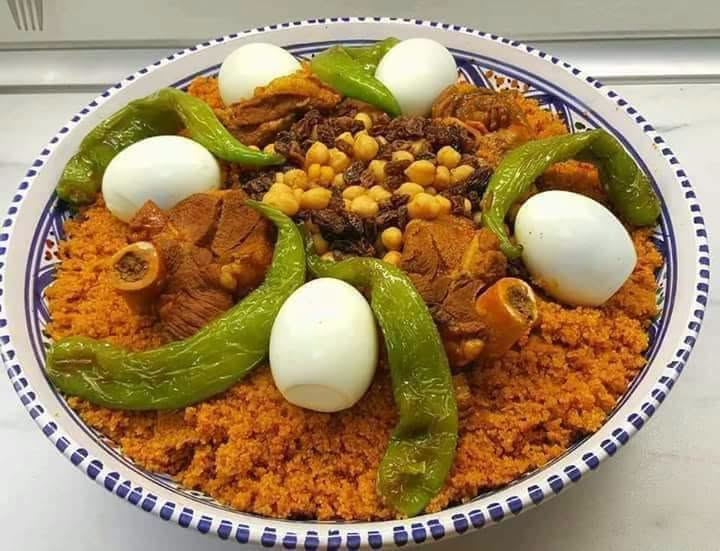
Dar El Jeld is the institution — a lavishly restored eighteenth-century house near the Kasbah end of the medina, all tiled walls and carved stucco, with live malouf music in the evenings and a menu that runs from refined couscous to old urban dishes you’ll struggle to find elsewhere: spinach tajine, couscous with kadid (salted, dried lamb), stuffed calamari. It is where Tunis takes visiting dignitaries, it is priced accordingly by local standards, and it is worth doing once.
Book ahead. Dar Slah, on Rue de la Kasbah, is the connoisseur’s alternative: the second restaurant of the Smooli family, lighter and more creative, market-driven — wild greens, day-boat fish, tripe couscous for the brave — with a set lunch menu that is one of the best-value serious meals in the country.
Dar Belhadj, tucked between the souks with views toward the Zitouna mosque, splits the difference: a beautiful old house, generous traditional cooking, a full set menu around 60 dinars. And Fondouk El Attarine, in a converted caravanserai courtyard in the perfume-makers’ souk, is the relaxed daytime option — briks, chorba, salads, couscous at fair prices in one of the loveliest lunch settings in North Africa.
For rooftop mint tea with the medina’s roofscape spread below, the café-restaurant El Ali has become the standard stop. (What all those dishes actually are is decoded in our guide to the top foods to eat in Tunisia, starting with brik, which you should order everywhere and judge each kitchen by.)
The Ville Nouvelle: The Old Guard
Downtown, in the French-built grid, the name that matters is Chez Slah — the Smooli patriarch’s original restaurant, a pillar of Tunis fine dining since the 1980s, hidden on a side street near Le Passage. The room is plain; the point is the fish. The printed menu is a rough sketch of intentions, and the real decision happens when they show you what came off the boats that morning — dorade, loup, whatever the day provided — grilled with a restraint that lets the Gulf of Tunis speak. It is the meal Tunisois of a certain generation consider the city’s benchmark.
Around it, downtown keeps a scattering of French-inflected survivors (L’Astragale for white-tablecloth occasions) and, more importantly, the everyday restos populaires where a two-course workman’s lunch costs 15–25 dinars and the kaftaji is better than anything in the hotel zones. Wine, by the way, flows in most licensed restaurants of this register — the how-and-where of drinking in a Muslim-majority country is covered in our alcohol in Tunisia guide, and the bottles worth ordering in our Tunisian wine guide.
La Goulette: The Fish Row
Twenty minutes from downtown by the TGM train, the port suburb of La Goulette is what Tunis means when it says “let’s go eat fish.” The tradition is Sicilian-Jewish-Tunisian in origin — this was the great mixed quarter of the old port, the world that produced Claudia Cardinale — and it survives as a strip of seafood restaurants along and around Avenue Franklin Roosevelt.
The ritual matters more than the specific door: you inspect the day’s catch on ice at the entrance, choose your fish, agree the weight, and it arrives grilled with slata mechouia and a squeeze of lemon while the evening promenade flows past outside. La Spigola is the polished long-runner with the Italian accent; the venerable Café Vert is the classic name on the avenue; newer glass-and-chrome rooms open every year and the locals sort them quickly. Count 40–80 dinars a head depending on appetite and fish. Friday and weekend evenings are the scene; go hungry.
The Street: Where Tunis Actually Eats
The city’s soul food costs less than the palace restaurants’ bread basket. Lablabi — chickpeas, garlicky broth, torn bread, harissa, a soft egg, tuna, olive oil, assembled in a clay bowl with theatrical speed — is the capital’s working breakfast and winter cure, best in the unmarked dens around the central market and the medina gates. The fricassé, a fried roll stuffed with tuna, harissa, potato, olives, and egg, is the national snack — 4–6 dinars with a soda at any decent bakery.
The Marché Central on Rue Charles de Gaulle is the theatre of it all — the fish hall alone explains half of Tunisian cooking — and the streets around it fry, grill, and press sandwiches from morning to night. What locals eat before nine a.m. gets its own field guide in what Tunisians eat for breakfast, and the espresso culture that punctuates all of it is in our coffee culture guide. Street level is cash-only and gloriously cheap — the full price landscape is in our cost of living guide — and it is the single best way to eat like the city.
The Coast, and the Practical Notes
For a splashier night out, the money has moved to the northern suburbs — La Marsa and Gammarth carry the contemporary scene, with cliff-view rooms trading Mediterranean panoramas for Tunis-serious prices (60–120 dinars a head and upward), and the cafés of Sidi Bou Said covering the sunset-tea end of the evening.
A few closing practicalities, wherever you sit down: reserve the famous medina rooms, especially at weekends; carry cash below the top tier; expect menus in French and Arabic with staff happy to translate; lunch peaks near two o’clock and dinner rarely starts before eight; and round up or leave five to ten percent when the service earns it — the finer points are in our tipping guide. Then order the brik, and be handed the city.
From the Carthage Magazine Bookshelf
If this guide sets the table, these three keep you fed long after the trip.
- All About Tunisia — the definitive English-language traveler’s guide. 572 pages, 27 chapters, all nine regions, every UNESCO inscription, five thematic trails — and the practical answers (visa, currency, transport, etiquette) most travelers wish they’d had on the plane. $24.99 · PDF & EPUB.
- Speak Like a Local — 200+ Tunisian Arabic phrases with native audio recorded in Tunis. The phrases for the taxi, the souk, the café, and the dinner table. $14.99 · PDF, EPUB, MP3.
- The Authentic Tunisian Cookbook — sixty traditional recipes from the heart of North Africa. For when you get home and find yourself missing the food. $9.99 · PDF & EPUB.
All three available as a bundle for $39.99 — guide, language, and food, delivered together.
