
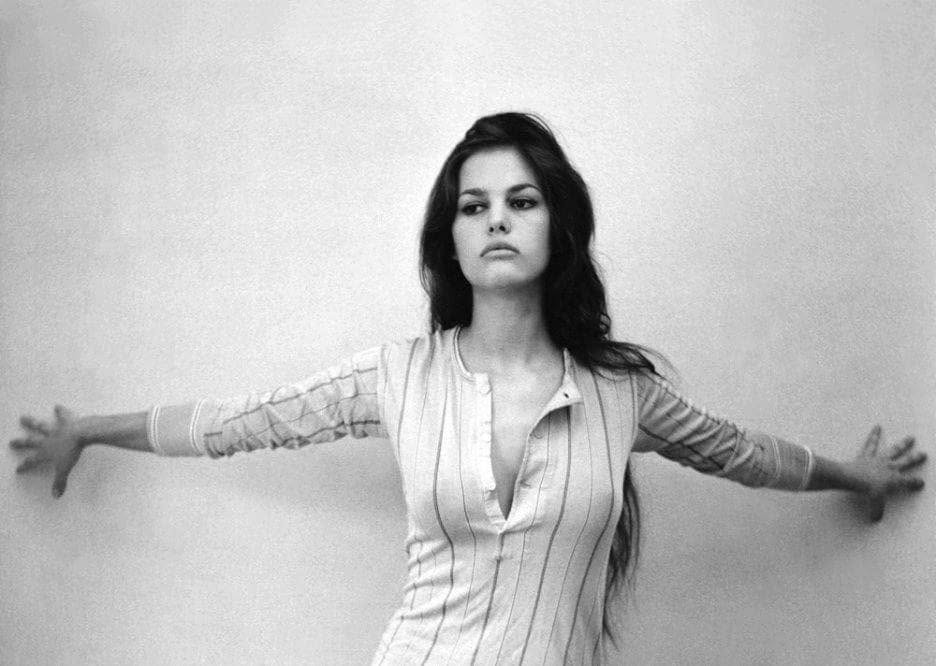
Quick Answer Claudia Cardinale (1938–2025) was one of the great icons of European cinema — and she was born and raised in La Goulette, the port suburb of Tunis. The daughter of Sicilian immigrants, she grew up speaking Tunisian Arabic and French before she ever spoke Italian. After winning a beauty contest in Tunis in 1957, she became a star of the golden age of Italian film, working with Fellini (8½), Visconti (The Leopard), Sergio Leone (Once Upon a Time in the West) and Werner Herzog (Fitzcarraldo). Over six decades she appeared in more than 150 films, championed women’s rights as a UNESCO goodwill ambassador, and kept a fierce attachment to her Tunisian birthplace. She died near Paris on 23 September 2025, aged 87.
When Luchino Visconti cast her in The Leopard, the film that would make her one of the most recognised faces on earth, Claudia Cardinale had a problem. She could not speak Italian.
She spoke Tunisian Arabic, the language of the streets she grew up on. She spoke French, the language of the schools. She spoke the Sicilian of her parents’ kitchen. But standard Italian — the language of the cinema that was about to crown her — was foreign to her, and so in her early films her voice was dubbed by someone else. The most Italian of all screen sirens began her career, quite literally, speaking with another woman’s voice.
It is the perfect detail to start with, because it tells you the thing the obituaries often buried beneath the glamour: before she belonged to Italy, to Hollywood, to the whole dreaming world, Claudia Cardinale belonged to La Goulette. She was a daughter of Tunis. This is her story, and it begins on the bay.
The girl from La Goulette
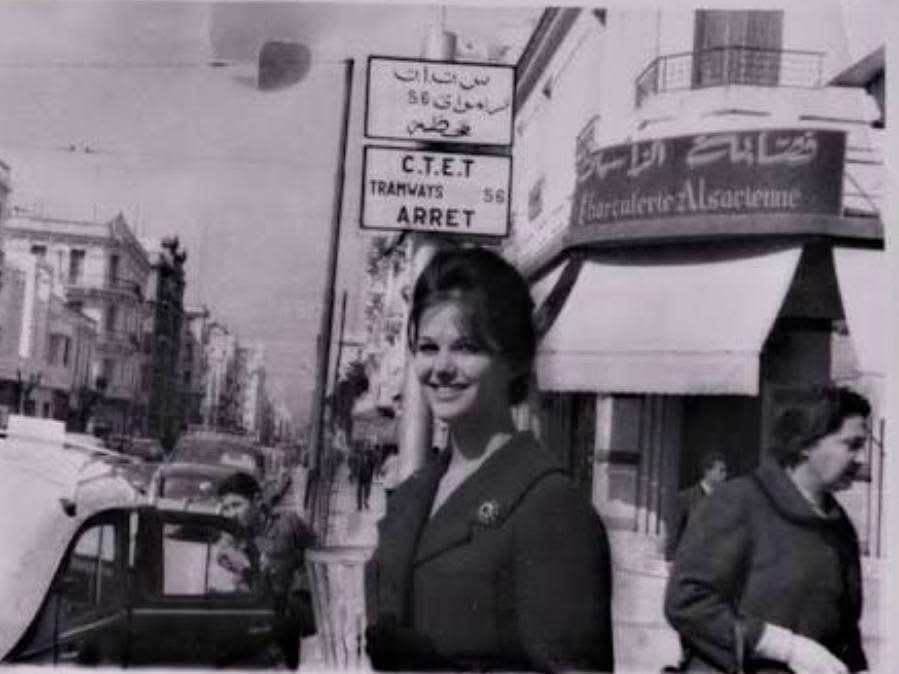
She was born Claude Joséphine Rose Cardinale on 15 April 1938, in La Goulette — Halq al-Wadi, the “gullet,” the channel where the Lake of Tunis meets the sea — the working port that has served the capital for centuries.
Her family were Italiani di Tunisia, part of the enormous Sicilian community that had crossed the narrow strait between the two coasts for generations. Her father, Francesco, was a railway worker born in Gela, in Sicily; her mother’s people came from Trapani. They settled, like tens of thousands of others, in the quarter of La Goulette that everyone called Piccola Sicilia — Little Sicily — where, until Tunisian independence, you could spend a whole day hearing Italian and Sicilian in the cafés and shops.
That world is one of the most extraordinary things about Cardinale’s origins, and it is worth pausing on. La Goulette was a place where Sicilian Catholics, Tunisian Muslims, Maltese, and a long-rooted Jewish community lived side by side, shared one another’s festivals, and built a genuinely cosmopolitan neighbourhood by the water. It belongs to the same deep tradition of coexistence that runs through Tunisia’s long history — the layered, plural country we trace from Carthage to independence, and the same mixed inheritance that produced Tunisia’s remarkable Jewish heritage. Cardinale was a child of that mixing. She carried it everywhere she went.
A beauty contest she never wanted to win
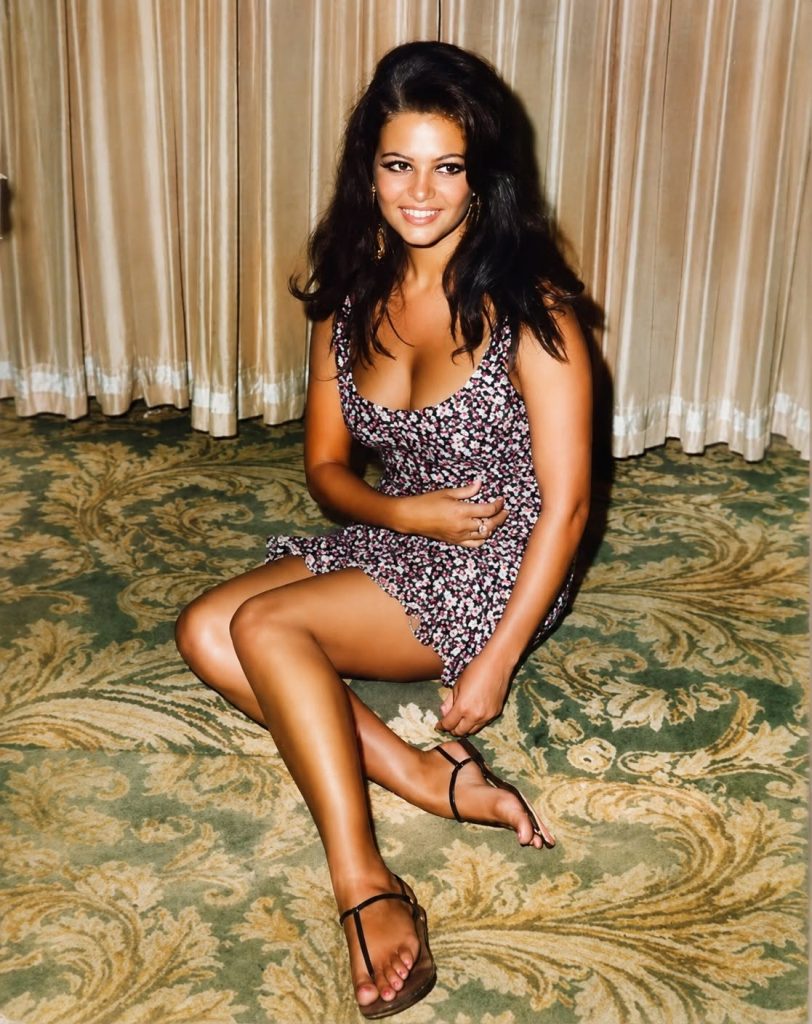
In 1957 the Italian embassy in Tunis held a contest to crown the “Most Beautiful Italian Girl in Tunisia.” Cardinale, still a teenager, was pushed forward — and won. The prize was a trip to the Venice Film Festival.
She did not want a film career. She wanted, by her own account, to become a teacher. But in Venice the directors and producers took one look and would not let her go. The Italian producer Franco Cristaldi became her mentor — and, years later, her husband — and steered her into the movies almost against her will. It was her father, in the end, who told her to give “this cinema thing” a try.
So she did, reluctantly, and the reluctance never entirely left her. There is a thread of refusal running through her whole career — a sense of a woman who was discovered rather than aspiring, and who spent decades insisting on being more than the beautiful object the camera first saw.
The face of a golden age
The films came fast, and they were not minor films. After a small debut opposite Omar Sharif in Goha (1958), she moved to the very centre of one of the richest periods in the history of cinema.
She was in Visconti’s Rocco and His Brothers (1960). She was in Fellini’s 8½ (1963), the dream-logic masterpiece, playing — fittingly — a vision of unattainable purity. That same year she was in Visconti’s The Leopard, sweeping through the ballrooms of a dying Sicilian aristocracy opposite Burt Lancaster and Alain Delon, and she was in The Pink Panther opposite Peter Sellers. Five years later she was Jill McBain, the toughened widow at the moral centre of Sergio Leone’s Once Upon a Time in the West (1968) — arguably the greatest role ever written for a woman in a Western. In 1982 she went into the Peruvian jungle for Werner Herzog’s Fitzcarraldo.
Fellini, Visconti, Leone, Herzog. Lancaster, Delon, Henry Fonda, Marcello Mastroianni, Klaus Kinski. By the 1960s she was being called the most beautiful woman in the world, and she was spoken of in the same breath as Sophia Loren and Gina Lollobrigida — the holy trinity of Italian screen stardom. She would appear in more than 150 films across six decades.
The most Italian star who couldn’t speak Italian
Return, now, to the dubbing — because it is the key to who she really was.
In a country obsessed with her as the embodiment of Italian beauty, Cardinale’s native tongue was Tunisian Arabic. Her second was French. Italian she learned later, as a kind of professional necessity, and for years the voice that audiences heard issuing from those famous lips was not hers at all. She was, in the most intimate sense, a Tunisian girl performing Italian-ness so convincingly that the world forgot she was performing.
She never forgot. Throughout her life she spoke of Tunisia as the place that made her, returning to it in interviews and in person, refusing to let the glamour erase the bay she came from. The husky, accented voice she eventually used on screen — once she was allowed to use it — was the voice of someone who had grown up between languages, between shores, belonging fully to neither Italy nor France and, in a way, only ever to La Goulette.
The secret she carried
There is a harder part of the story, and Cardinale herself chose, eventually, to tell it.
As a teenager she was the victim of a sexual assault, and became pregnant. To protect her in an unforgiving age, the family arranged for her to give birth quietly in London in 1958; her son, Patrick, was then raised for years as her younger brother. She lived with that arrangement publicly for the sake of her career and her reputation, and only later — on her own terms — revealed the truth and reclaimed him as her son.
She said, more than once, that cinema saved her life. Read against this history, the phrase stops being a movie-star platitude. The screen gave a young woman with very little power a way to become the author of her own story rather than its victim — to put on, as she once described it, the lives of every kind of woman and then, when the camera stopped, return to herself.
That hard-won autonomy shaped her values. Jaded with Hollywood, she refused the long studio contracts that would have made her a manufactured commodity, choosing instead the serious, varied roles of Italian and French cinema — work that won her multiple David di Donatello awards, an honorary Golden Lion at Venice and an honorary Golden Bear in Berlin. And from 2000 she served as a UNESCO goodwill ambassador for the Defence of Women’s Rights, an outspoken feminist in an industry that had spent decades trying to reduce her to a face. She belongs, in that sense, in the long line of women who shaped Tunisia and carried its daughters’ names into the world.
Coming home to La Goulette
She left Tunisia as a teenager, but Tunisia never left her, and Tunisia never gave her up.
In 2022, the municipality of La Goulette named a street in her honour. Cardinale, then 84, came back for the ceremony, and they scattered flower petals as she walked. She told the crowd, simply, that her origins were here — that this was where she was born and spent her childhood. A mural of her now watches over a side street in the old quarter, the spaghetti-western siren returned to the Little Sicily that raised her.
When she died near Paris on 23 September 2025, the tributes in Tunis were as heartfelt as those in Rome. Her agent said she left behind the legacy of a free and inspired woman. In La Goulette, they did not mourn a foreign film star. They mourned one of their own.
Where to find Claudia Cardinale in Tunisia
You can stand in her world, and it takes about twenty minutes from central Tunis.
La Goulette today is a faded, salt-aired, deeply atmospheric place — a working port and a beloved spot for Tunisois who come down to eat grilled fish by the water on a summer evening. Walk into the old quarter and you can still read the bones of Piccola Sicilia: the 1920s seaside architecture, the recently repainted Roman Catholic church straight out of Sicily, the lanes where Sicilian dialect once filled the air. Find the street that bears her name, and the mural of her face on its wall. Order the fish. Watch the ferries slide out toward Europe across the same water her parents crossed coming the other way.
And lift your eyes from the port to the hill above the bay, where ancient Carthage stands — the city the legendary queen Dido is said to have founded three thousand years ago. Cardinale grew up in her shadow. Tunisia has been sending remarkable women out into the world from this exact stretch of coast for a very, very long time.
Why she still matters
Claudia Cardinale was, arguably, the first Tunisian-born figure to become a genuine global icon — known on every continent, claimed by Italy and France, mourned worldwide. She is the proof, in one luminous life, that this small country on the North African coast has been quietly seeding world culture for far longer, and far more widely, than most people realise.
She also matters because she refused, in the end, to be only what the world wanted her to be. The girl who began her career speaking with a borrowed voice spent the rest of her life finding her own — and using it, for her son, for women’s rights, and for the truth about where she came from.
The world will remember the face. Tunisia will remember the daughter. Both are right, and the bay at La Goulette holds them together.
From the Carthage Magazine Bookshelf
If Cardinale’s Tunisia — the cosmopolitan coast, the layered old quarters, the country that has always belonged to more than one world at once — is the Tunisia you want to explore, three Carthage Magazine ebooks were built for the traveler who wants the real keys:
- All About Tunisia — the definitive English-language traveler’s guide. 572 pages, 27 chapters, all nine regions, every UNESCO inscription, five thematic trails — including the bay of Tunis, La Goulette, and the ruins of Carthage on the hill above it. $24.99 · PDF & EPUB
- Speak Like a Local — 200+ Tunisian Arabic phrases with native audio recorded in Tunis. The mother tongue Cardinale spoke long before she spoke Italian — for the taxi, the souk, the café, and the dinner table. $14.99 · PDF, EPUB, MP3
- The Authentic Tunisian Cookbook — sixty traditional recipes from the heart of North Africa, including the fish-by-the-sea cooking that La Goulette is famous for. $9.99 · PDF & EPUB
All three available as a bundle for $39.99 — guide, language, and food, delivered together.
