
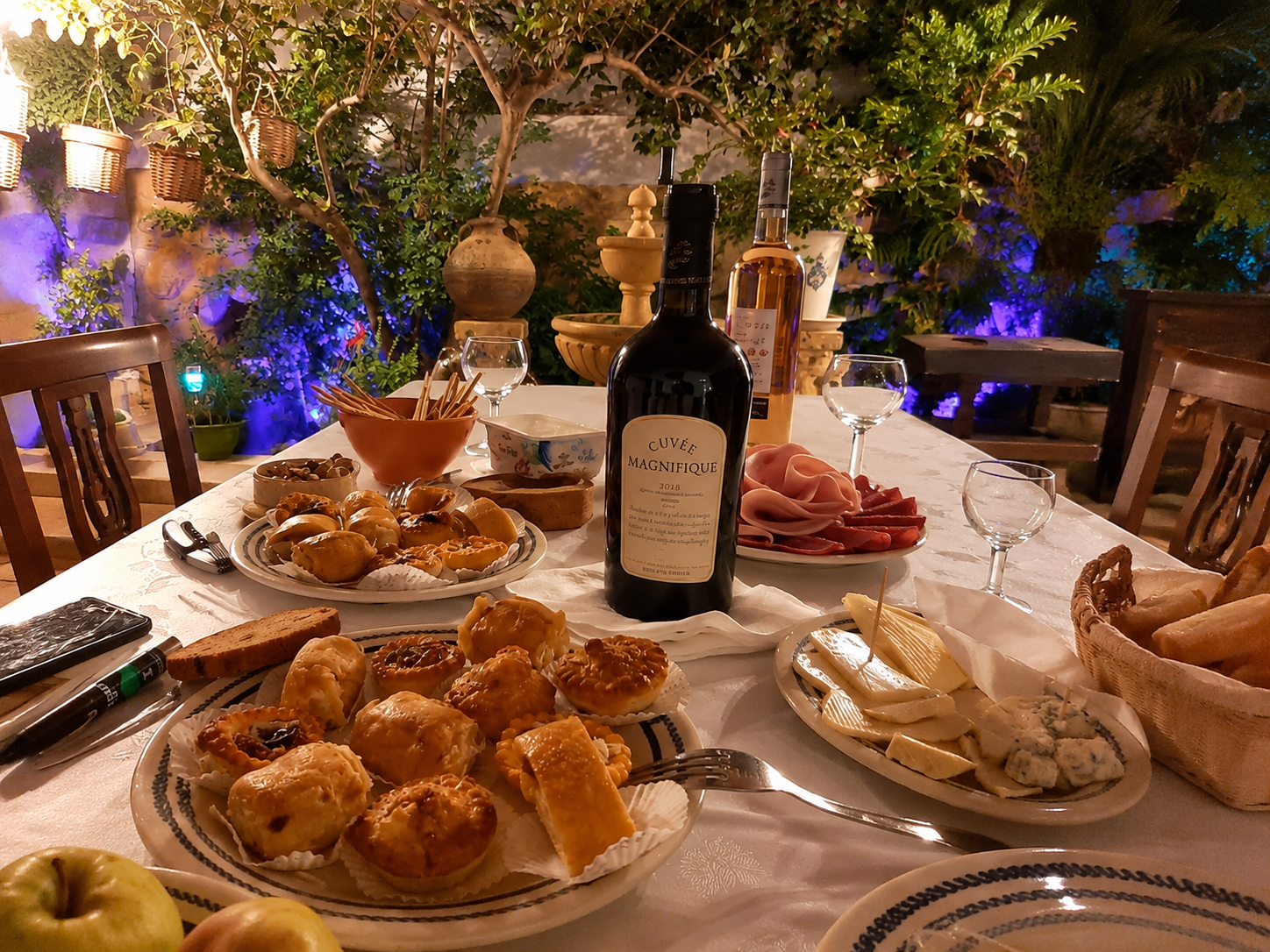
Quick Answer Tunisia is one of the oldest wine-producing countries on Earth — older than France, older than Spain, older than Italy by several centuries. It still makes around thirty million bottles a year across fourteen thousand hectares of vineyards, mostly on the Cap Bon peninsula, governed by seven appellations of origin. Sixty-five percent of the production is rosé. The flagship red is named after a Carthaginian who wrote the first known book on viticulture two thousand two hundred years ago. Almost no one outside Tunisia has tried any of it. They should.
Walk into the wine aisle of any Carrefour in Tunis and you will find, two shelves above the imported French Bordeaux and one shelf below the Italian Pinot Grigio, a bottle whose label says Magon. The wine inside is a Cap Bon red, fairly priced, full-bodied without being heavy, finished with a little oak. It pairs honestly with grilled lamb, with merguez, with the slow-baked koucha of Sfax. The label is named after Mago of Carthage, the Carthaginian agronomist whose lost treatise on agriculture and wine-making — written somewhere in the third or second century BCE, translated from Punic to Latin by order of the Roman Senate after Carthage’s fall, and quoted by Columella and Pliny as the foundational text of Mediterranean viticulture — was the first known book in any language about how to grow grapes and make them into wine.
There is something quietly extraordinary about that. The country that taught the ancient Mediterranean how to make wine is still, twenty-two centuries later, making wine. It has been doing so almost continuously, through the rise of Rome and the fall of Rome, through the arrival of Islam, through Ottoman rule, through French colonial occupation, through phylloxera and through independence and through every reasonable assumption that a Muslim-majority country with a fourteen-hundred-year-old religious objection to alcohol would have given up on the practice. And yet. The vineyards are still there. The bottles are still on the shelf. The wine, by 2026, is genuinely good.
This is the wine country almost no one outside Tunisia has been told about. Here is what to know.
The Country That Wrote the Book on Wine
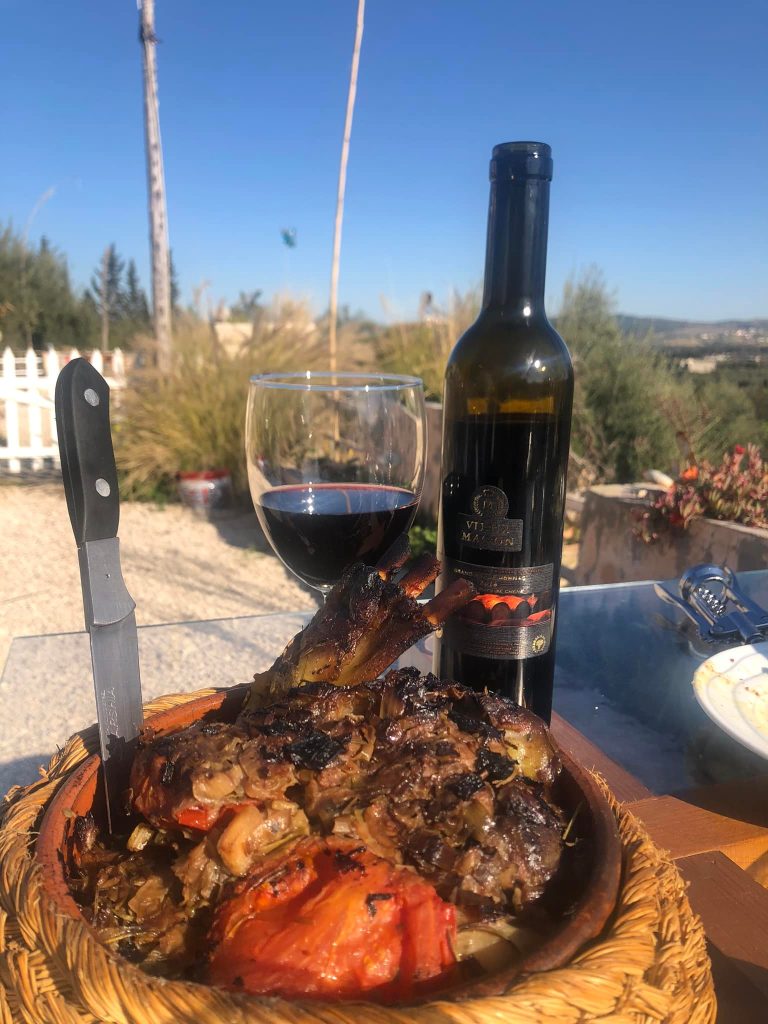
Tunisia is wine country because Carthage was.
The Phoenicians who founded Carthage around 814 BCE brought the vine with them from the Levant. By the time Carthage had grown into the trading empire that frightened Rome, it had also grown into one of the great agricultural powers of the ancient Mediterranean, with vineyards covering the plains around the city and the Cap Bon peninsula to its east — the same peninsula that grows most of Tunisia’s wine today.
The agronomist Mago lived sometime in the third or second century BCE. Almost nothing is known about him personally. What is known is that he produced an enormous agricultural treatise, in twenty-eight books, covering field crops, orchards, livestock — and viticulture. The work was famous in antiquity. When Carthage fell in 146 BCE, the Roman Senate ordered most of the city’s libraries burned but specifically exempted Mago’s treatise and commissioned a Latin translation. That translation, in turn, became the foundational reference for Roman writers on wine: Cato, Varro, Columella, and Pliny the Elder all quote him by name.
The original Punic text is lost. The Latin translation is lost. What survives are the fragments preserved as quotations inside other Roman authors — enough to tell us that Mago wrote about pruning, about graft selection, about the timing of harvest, about how to convert grape must into the long-keeping wine the Carthaginian navy used as ballast on its trans-Mediterranean voyages. The book Tunisia gave the world, in other words, is the book that taught the world to think about wine systematically. The bottle of Magon you buy at a Carrefour in 2026 is named for the man who made the rest of the wine world possible. You can read the longer history of Carthage and its civilisation elsewhere on this site. For now, what matters is the line of continuity. The grapes never quite stopped.
How Tunisia Lost Its Wine, Then Got It Back
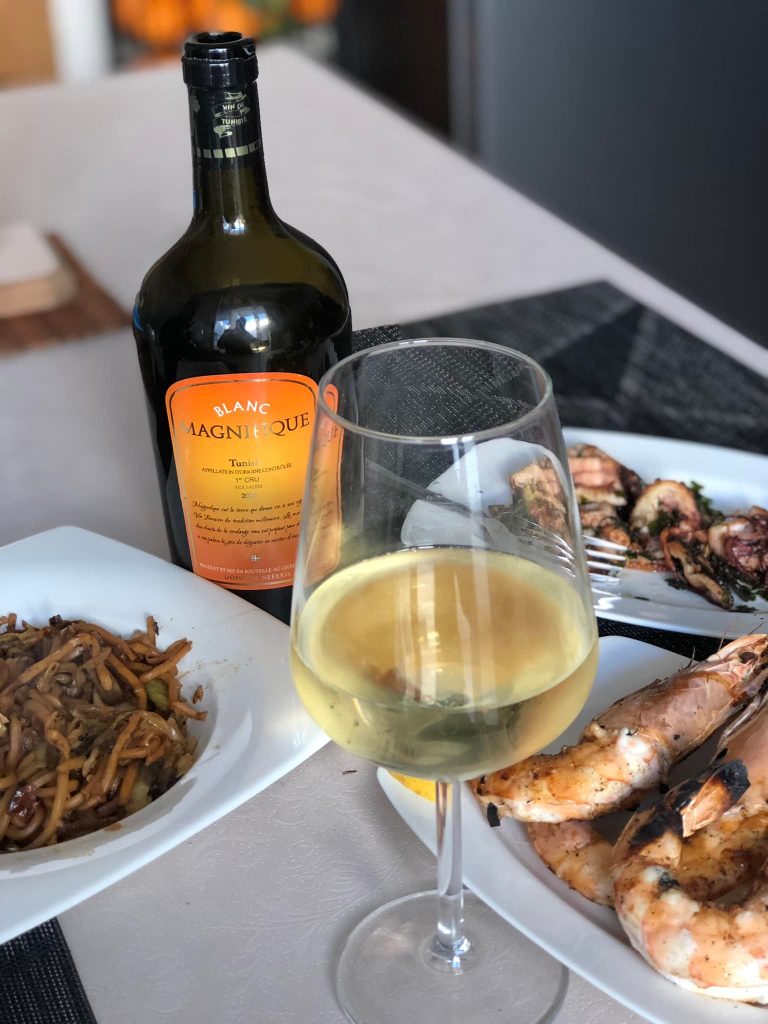
The line of continuity has been thin in places.
After the Arab conquest of Tunisia in the late seventh century, wine production contracted sharply. The Quran is explicit on the matter of alcohol, and most Tunisian vineyards were converted to table-grape and raisin cultivation. A small commercial wine industry survived in the coastal cities — there were always Christian communities, always Jewish communities, always foreign merchants and visiting sailors — but for the better part of a thousand years Tunisian wine was made quietly, in small volumes, for a small market.
The revival came in the late nineteenth century, with the French Protectorate. From 1881 onward, French and Italian settlers arrived in Tunisia and planted Mediterranean vines on the Cap Bon and around Tunis. By the 1920s the Tunisian wine industry was substantial — its output exported to the French ports of Marseille and Sète, where it was used by Languedoc merchants as a vin de coupage, blending material to bring the alcohol and colour of weaker French wines up to commercial standard.
Then, between 1936 and 1947, the phylloxera louse — the same insect that had devastated French vineyards in the 1870s — finally reached Cap Bon. Roughly four-fifths of Tunisian vines were lost. Growers responded by forming cooperatives, replanting on American rootstock, and setting the contours of what would eventually become the appellation system. The post-war union of cooperatives took the name Les Vignerons de Carthage — the Winemakers of Carthage — and it remains, eighty years later, the largest single force in Tunisian wine, responsible today for roughly two-thirds of the country’s production.
Independence in 1956 brought further upheaval. Colonial land was nationalised. Many of the French and Italian winemaking families left. Vineyards contracted. The industry survived but lost ground. The full quality revival is recent — really a phenomenon of the last twenty years, driven by a handful of private estates, a generation of Tunisian-trained oenologists, and a slow rediscovery of the country’s own deep viticultural history.
The Cap Bon — Tunisia’s Wine Heartland
Eighty percent of Tunisia’s vineyards are on a single peninsula.
Cap Bon juts out into the Mediterranean from northeastern Tunisia like a thumb pointed at Sicily, which is exactly a hundred and fifty kilometres across the Strait of Sicily from its northern tip. The peninsula is the country’s most fertile agricultural region — citrus orchards, olive groves, the chillies of Nabeul that go into Tunisian harissa — and its climate is almost laboratory-perfect for Mediterranean viticulture. Warm dry summers, mild wet winters, sea breezes from both coasts of the peninsula, calcareous and clay soils that hold water through the summer drought.
The same peninsula that anchors the country’s wine industry also anchors much of its tourism. Hammamet sits at the base of Cap Bon; Sidi Bou Said is forty kilometres up the coast. Most of the country’s serious wineries are within an hour’s drive of either. The geography that produces the wine, in other words, is geography most visitors are already passing through.
There is a single hot wind that does damage. The Sirocco — Tunisians call it chhili — blows north out of the Sahara in July and August, occasionally pushing daytime temperatures past forty-five degrees and dehydrating the grapes at the worst possible moment of the season. A mild Sirocco is a friend; it dries off humidity and concentrates sugars. A brutal Sirocco is a vintage’s enemy. The years Tunisian winemakers will talk about as great years are the ones in which the chhili held off until late August.
The Seven AOCs and What They Mean
Tunisia’s appellation system was formalised in the 1940s and refined in the 1980s and 2000s. There are now seven controlled appellations of origin, and a working knowledge of the four that matter most will get you a long way.
- Grand Cru Mornag — the top of the pyramid. About forty kilometres south of Tunis, on calcareous-clay hillsides facing the Gulf of Tunis. The reds here — Cabernet, Syrah, Mourvèdre, and blends — are full-bodied and structured, and most of the country’s flagship wines come from this zone.
- Mornag — the broader appellation around the Grand Cru. Larger, more variable, but reliable. Most of the Magon and Vieux Magon bottles are Mornag-designated.
- Sidi Salem — inland, around the dam of the same name, about thirty kilometres from the coast. The quietly fashionable AOC of the moment. Domaine Neferis, the country’s most internationally visible estate, is here.
- Coteaux d’Utique — north of Tunis, near the ancient Phoenician city of Utica. Limestone-rich soils. Particularly good rosés.
The other three — Coteaux de Tébourba, Kélibia, and Thibar — are smaller and more specialised. Kélibia, on the northern tip of Cap Bon, deserves a sentence of its own because it produces a single regional speciality (more on which in a moment) that is unlike anything made in commercial volume anywhere else in the Mediterranean.
What to Drink: Rosé, Reds, Whites, and the Muscat of Kelibia
A Tunisian wine list is unlike any other Mediterranean wine list in one respect: it is dominated by pink.
Rosé accounts for around sixty-five percent of national production — a much higher proportion than in France or Italy. Some of this is historical (the cooperative-era industry leaned into rosé because it was easier to make and easier to drink in the heat); much of it is climatic (the Cap Bon summer rewards crisp, cold, mineral pink wines); and some of it is genuinely excellent. The best Tunisian rosés are made in the Provençal style — pale salmon colour, dry, with citrus and red-fruit notes and a saline finish from the sea-influenced soils. Look for the rosés of Domaine Neferis, of Château Defleur, and the cooperative’s Sidi Saâd Rosé. Drink them very cold with grilled fish, with slata mechouia, with brik eaten standing up at a corner table.
Red is about a quarter of production. The serious reds are Mornag and Grand Cru Mornag — Syrah-dominant or Cabernet-led, full-bodied, generally aged in oak for a year or two before release. The benchmark is Magon and its older sibling Vieux Magon, from Les Vignerons de Carthage. The aspirational tier is Domaine Neferis Selian, Château Defleur, and the small-production reds of Domaine Atlas. These wines do not taste like French wines, despite the French grape varieties; the Tunisian sun gives them more weight, more spice, more leather. They pair with what Tunisian cooks pair them with — lamb tagine, kafteji, slow-cooked merguez stews, and the country’s harder cheeses.
White is the smallest category — under ten percent of production — and the most uneven. The Chardonnays are technically correct without being thrilling. The blends of Muscat of Alexandria with Chardonnay or Ugni Blanc can be genuinely interesting. The country’s white-wine reputation does not rest on these.
It rests on the Muscat sec de Kelibia.
This is Tunisia’s secret wine, the one you should make a small effort to find. Kelibia, on the northeastern tip of Cap Bon, produces a dry Muscat of Alexandria that combines the floral, perfumed aromatics of the grape with a bone-dry finish — most Muscats in the world are made sweet, and the Tunisian decision to ferment Muscat of Alexandria to complete dryness produces a wine almost no other country makes in commercial volume. It pairs with seafood the way Provençal rosé does, but with more nose and more interest. If you only drink one Tunisian wine in your life, drink a chilled bottle of Muscat sec de Kelibia at a seafront restaurant in Hammamet at sunset. The country is, on those evenings, one of the most underrated wine destinations on Earth.
The Wineries to Know
The Tunisian wine industry is dominated by one cooperative and animated by a handful of private estates.
Les Vignerons de Carthage — the cooperative — produces roughly two thirds of the national output across all categories. The flagship lines are Magon, Vieux Magon, Sidi Saâd, and the entry-level Chevaliers de Carthage. These are the wines you will find in every supermarket and on every restaurant list in Tunisia. They are not boutique. They are competent, consistent, and well-priced — the equivalent, in a French context, of the better cooperative cellars of the Languedoc.
The private estates are where the recent quality revolution is happening. The names to know:
- Domaine Neferis — Sidi Salem AOC. The most internationally visible Tunisian producer. Biodynamic-leaning, low-intervention vinification, exports to the United States and several European markets. The flagship Selian red and the Magnifique rosé and white are the easiest serious Tunisian wines to find abroad.
- Château Defleur — Mornag AOC. Estate-bottled, modern, sleek. Particularly good rosés.
- Domaine Atlas — small-production, ambitious reds.
- Château Mornag — solid mid-range range, widely available domestically.
- Ceptunes — family-owned, Mornag AOC. Their Didona (Cabernet-Syrah) and Jour et Nuit (Muscat of Alexandria) are exported in modest quantities.
If you have time for exactly one winery visit on a trip, make it Neferis. The setting is beautiful, the wines are the best argument for the modern industry, and the people who run it are unusually generous with their time.
Tasting Tunisian Wine — In Tunisia and Abroad
In Tunisia. Tunisian wine is sold widely in supermarkets, in licensed restaurants, in the duty-free shop at Tunis-Carthage Airport, and at every hotel that holds a liquor licence. A bottle of Magon costs around 11 to 14 dinars in a Carrefour or Monoprix, three to four times that in a restaurant. A bottle of Domaine Neferis Selian runs 35 to 50 dinars at retail. The full price context, including the small set of things you should know about alcohol regulations and where they apply, is in our guide to alcohol in Tunisia.
The country runs an annual Tunisian Wine Festival in Cap Bon in late spring or early summer — typically May or June, with vineyard visits, tastings, and dinners hosted by the major producers. Dates are usually announced in March or April; if your trip lands in that window, plan around it.
Cellar-door visits are increasingly available. Domaine Neferis runs by-appointment tastings at its Sidi Salem estate. Les Vignerons de Carthage offers tours of its main cooperative cellar north of Tunis. Several boutique estates around Mornag will receive small groups on request. A licensed guide who knows the wineries — most of the better Tunis-based travel operators have one — will save you the cold-call work, and arrange the tasting flights that wineries reserve for booked visits rather than walk-ins.
Abroad. This is the harder part. Tunisian wine exports are small, and most of the production stays in Tunisia. The countries with the most reliable Tunisian wine availability are France (especially Marseille, Paris, and the South), Germany, and Belgium, where small specialist North African importers stock a rotating selection of Magon, Neferis, and Ceptunes. The United States has had limited but improving distribution since the mid-2010s, mostly through Travis Wine Imports and a handful of specialty retailers in California, New York, and Washington DC. In the UK, distribution is sparse but expanding through North African food specialists in London.
If you want a single bottle to seek out, make it Domaine Neferis Selian — a Syrah-Carignan blend from the Sidi Salem AOC. It is the easiest serious Tunisian wine to find abroad, the most representative of the modern industry’s ambitions, and the most likely to convince a sceptical wine drinker that Tunisia deserves a place on the list.
Why You Should Bother
There is a way of writing about Tunisian wine that pitches it as a curiosity — the surprise that this country makes wine at all, the novelty of drinking pink at the foot of a minaret, the conversation piece on a dinner table. That framing is patronising, and it sells the wine short.
The honest case for Tunisian wine is harder and more interesting. This is one of the four or five oldest continuous wine cultures on Earth. The grapes have been growing on the Cap Bon since before Rome existed. The book that taught the Mediterranean to think about wine was written here. The phylloxera louse that destroyed the European industry was beaten back here through the same cooperative model that saved southern France. And the wines, by 2026, are genuinely good — not “good for an unknown country” but good in the sense that an unbiased palate, given a glass blind, would place them somewhere in the Languedoc or the Roussillon and be surprised, at the reveal, to learn they were African.
What Tunisia is doing with its wine, finally, is part of a larger project the country is doing with all of its inherited identities — its Carthaginian heritage, its Roman ruins, its Punic religion, its bilingual language, its long sequence of foreign protectorates. The country has spent the last seventy years figuring out what it wants to keep and what it wants to refuse, and the answer is increasingly: keep the deep things, refuse the colonial frame around them. The wine is one of the deep things. It was already here when the Phoenicians arrived. It will still be here when the next century is being written.
A bottle of Magon on a table in Sidi Bou Said, with the sea behind it and a plate of grilled fish in front of it, is a small participation in a very old conversation. Order one. Pay attention. Let Tunisia tell you what it has been doing all this time.
From the Carthage Magazine Bookshelf
For the wider trip and the recipes that match the wine:
- All About Tunisia — the definitive English-language traveler’s guide. 572 pages, all nine regions, every UNESCO inscription, and a full chapter on Cap Bon including the wine route. $24.99 · PDF & EPUB
- The Authentic Tunisian Cookbook — sixty recipes for what the wine pairs with: the koucha, the kabkabou, the slow-baked lamb tagines and the seafood dishes of the coast. $9.99 · PDF & EPUB
- Speak Like a Local — 200+ Tunisian Arabic phrases with native audio recorded in Tunis, including the formulas you’ll want at a winery gate or a restaurant wine list. $14.99 · PDF, EPUB, MP3
All three available as a bundle for $39.99 — guide, language, and food, delivered together.
