
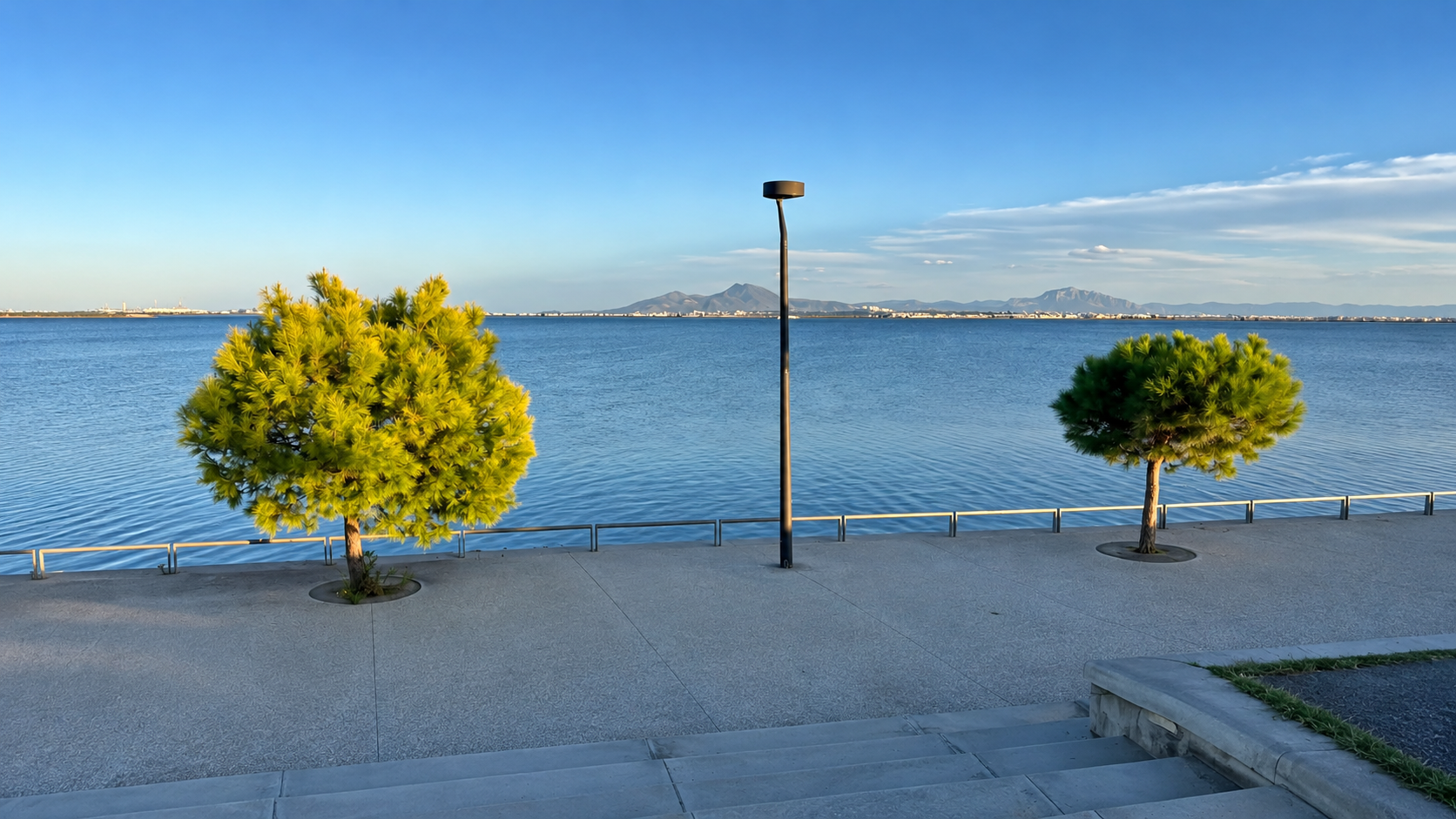
November changes the shape of a Tunisian holiday. A morning among Roman ruins can give way to a bowl of lablabi, bread soaking up the hot chickpea broth. On the coast, the question is no longer simply which beach to choose, but whether the afternoon calls for a swim or a sweater.
That is the attraction, provided you arrive with the right expectations. Tunisia in November suits sightseeing, food, and a carefully planned Sahara trip better than a holiday that depends on daily swimming. Beach time remains possible, especially early in the month, but it should be a welcome addition rather than the whole plan. Discover Tunisia
What is Tunisia’s weather like in November?
Early and late November are different propositions. WeatherSpark’s historical estimates show average daytime highs in Tunis falling from roughly 24°C at the beginning of the month to 18°C at the end. On Djerba, the corresponding figures are about 25°C and 19°C; in Tozeur, about 26°C and 19°C. These are rounded long-term averages, not a forecast or a guarantee for your particular week. Weather Spark
Rain belongs in the plan, too. Published climate normals for Tunis-Carthage put November rainfall at approximately 54 millimeters. That does not tell you which days will be wet, but it is a good reason not to schedule every outdoor visit rigidly before arriving. JMA Data
Think in terms of mild afternoons and cooler evenings, rather than uninterrupted warmth. Keep a museum day movable, check the local forecast before longer excursions, and take a layer when leaving the hotel even if the morning looks promising.
Travelers still choosing their dates can compare November with neighboring months in our Tunisia weather guide. Once dates are fixed, local forecasts matter more than a national monthly average.
Can you swim in Tunisia in November?
Yes, on suitable days, although comfort is personal. Long-term sea-temperature estimates near Tunis fall from around 22°C early in November to 19°C at month’s end. Around Djerba, they fall from approximately 24°C to 20°C. These broad coastal estimates are not measurements at your hotel’s beach. Weather Spark
For someone accustomed to cooler seas, that may sound inviting. For someone expecting a long, bath-warm swim, it may not. Wind, cloud, and the conditions when you get out matter as much to the experience as the number on a weather page. Follow local beach warnings rather than treating a warm afternoon as permission to swim.
For a family holiday built around the water, a confirmed heated pool is a more useful booking criterion than a photograph of a large outdoor pool. Ask whether it will be heated and operating on your dates, whether children can use it, and whether access costs extra. An indoor pool is not necessarily a heated one.
Where to stay: Tunis, Hammamet, or Djerba?
Choose Tunis when the city is the point of the trip. The medina, Carthage, and nearby Sidi Bou Said make a varied cultural stay, with the Bardo National Museum offering an indoor alternative when the weather turns. Its Roman mosaics deserve time in their own right, not merely a hurried visit between showers. Check opening days before assigning it the rainy-day slot. Discover Tunisia
Hammamet makes sense for travelers who want a coastal base without giving up access to northern Tunisia. Spend time in the medina and treat the beach as part of the setting, not the only attraction. Choose accommodation for its location and facilities in November, rather than its summer entertainment photographs.
Djerba suits a more island-focused holiday: Houmt Souk, Guellala’s pottery traditions, and time away from the resort itself. It offers somewhat milder conditions than the northern coast, but not a promise of summer. Our Djerba-versus-Hammamet comparison explains the different experiences behind the hotel brochures. Carthage Magazine
The deciding question is simple: which place would you still enjoy on a cloudy day?
Why November works for the Sahara
Autumn is a strong season for exploring Tunisia’s desert landscapes. The appeal is not that the Sahara guarantees tropical warmth; it is that outdoor exploration becomes more manageable than in the summer heat. Discover Tunisia
Give Tozeur time beyond an overnight stop. Its patterned brickwork, old quarter, and palm groves make it a destination, not just somewhere to meet a driver. Douz, meanwhile, is a base for excursions toward the dunes. A short camel ride, a longer trek, and a camp reached by vehicle are different experiences: book the one you actually want. Carthage Magazine
Our guide to Sahara tours and camel trekking helps distinguish them. Before paying for an overnight, ask about transfers, bedding, toilets, meals, and the actual time spent in the desert. Pack warm evening and sleeping layers; a pleasant afternoon does not tell you how a camp will feel after dark.
Check your government’s current travel advice before committing to a route. Some border areas and military zones are subject to restrictions or travel warnings, so the precise itinerary matters more than the broad label “Sahara tour.” GOV.UK
Dates, olives, and a bowl of lablabi
November brings another reason to look beyond the beach: the harvest. Around Tozeur, it is date-harvest season, and the palm groves are working agricultural landscapes. Arrange visits through a host or guide, ask before entering private plots, and leave room in your luggage for dates bought locally. Discover Tunisia
The olive harvest in Tunisia also gives the cooler months their own rhythm. Timing varies by region and year, so a harvest visit should be arranged rather than assumed. Ask whether a local producer welcomes visitors to the grove or mill; do not turn up at a working press expecting a ready-made tour. Carthage Magazine
Then there is lablabi: chickpeas and hot broth poured over torn bread, with cumin, harissa, and olive oil bringing the bowl together. It is a particularly satisfying answer to a cool evening. November’s pleasures are not all panoramic. Some arrive with a spoon. Carthage Magazine
How to plan a November week
For a first visit, resist the temptation to fit the capital, an island, and a desert camp into the same short holiday. A workable northern plan is three nights in Tunis followed by three in Hammamet, with outdoor visits arranged around the forecast rather than fixed to an inflexible timetable.
For a southern trip, build around Tozeur and a guided excursion from Douz, then choose flights and transfers that fit that route. Do not add the Sahara to a northern beach booking simply because Tunisia looks compact on a map. Allow proper travel time, especially before the flight home.
Start sightseeing early. Tunis has roughly ten hours of daylight in November, with sunset moving toward 5 p.m. late in the month. Those are daylight hours, not guaranteed sunshine. Save indoor visits and leisurely meals for the parts of the day when outdoor light is less useful. Weather Spark
What to pack and check before booking
Pack for changes within the day: light tops, long trousers, a sweater or fleece, a rain-resistant jacket, and comfortable closed shoes. Add swimwear without making it the foundation of the suitcase. For a desert overnight, bring warmer sleeping layers and confirm what bedding is provided. Our Tunisia packing guide covers clothing and local expectations in more detail.
Ask the hotel about room heating as well as pool heating. Confirm which restaurants and facilities will operate during your stay, and consider how easily you can reach places outside the property. A good November hotel should support the holiday you are actually taking, not the one its August photographs suggest.
Do not assume November automatically means the cheapest trip, either. Compare the complete cost of flights, baggage, transfers, and accommodation for your dates. A lower room rate is not the same thing as a lower holiday bill.
Is November a good time to visit Tunisia?
For travelers who enjoy walking, history, food, and a flexible itinerary, November is a compelling choice. For those whose holiday depends on reliable beach weather and daily sea swimming, it is a less convincing one.
Come for the country rather than a promise of summer. Let a swim be a pleasure when conditions allow, leave time for the museum or the market, and give the south more than a hurried excursion. That is where a November trip finds its own character.
From the Carthage Magazine Bookshelf
For a November trip built around medinas, the date harvest, and time beside the dunes, these three ebooks bring the planning, language, and food together.
- All About Tunisia — the definitive English-language traveler’s guide. 572 pages, 27 chapters, all nine regions, every UNESCO inscription, five thematic trails — and the practical answers (visa, currency, transport, etiquette) most travelers wish they’d had on the plane. $24.99 · PDF & EPUB.
- Speak Like a Local — 200+ Tunisian Arabic phrases with native audio recorded in Tunis. The phrases for the taxi, the souk, the café, and the dinner table. $14.99 · PDF, EPUB, MP3.
- The Authentic Tunisian Cookbook — sixty traditional recipes from the heart of North Africa. For when you get home and find yourself missing the food. $9.99 · PDF & EPUB.
All three available as a bundle for $39.99 — guide, language, and food, delivered together.
