
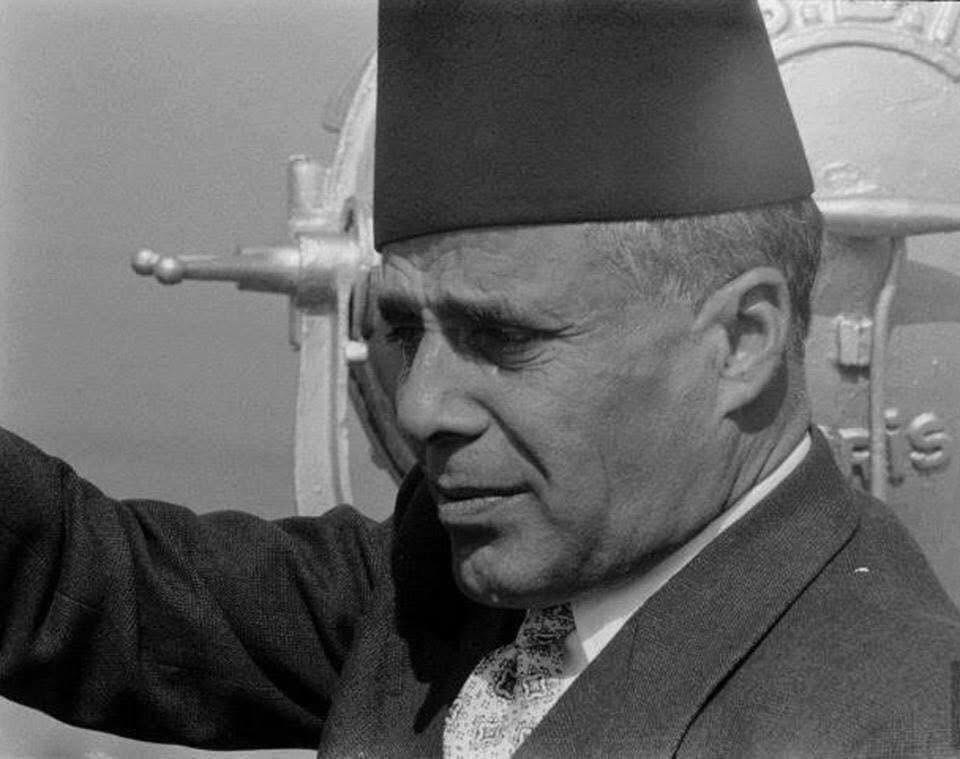
Quick Answer Habib Bourguiba (1903–2000) was the founder of modern Tunisia and its first president. Born in Monastir, trained as a lawyer in Paris, he built the Neo-Destour party in 1934, spent years in French prisons, and negotiated Tunisia’s independence in 1956. As president from 1957, he abolished the monarchy, gave Tunisian women some of the most advanced legal rights in the Arab world through the Code of Personal Status, and poured the national budget into schools. He also built a one-party state, made himself president for life, and ruled for thirty years until his prime minister, Zine El Abidine Ben Ali, removed him in a bloodless “medical coup” in 1987. He died in Monastir in 2000. Tunisians still argue about him — which is its own kind of monument.
One evening during Ramadan, the president of Tunisia went on live television, lifted a glass of orange juice to his lips, and drank.
It was a deliberate provocation, and the whole country understood it as one. Bourguiba’s argument was that Tunisia was engaged in a jihad against poverty and underdevelopment, that productive workers were the soldiers of that struggle, and that soldiers in a holy war are permitted to break the fast. Half the country was scandalised. Half was thrilled. All of it was paying attention — which was exactly the point.
That single glass of juice holds the whole man: the modernizer who would dare anything, the showman who governed by spectacle, and the autocrat increasingly convinced that he was Tunisia, and Tunisia him. He built the country almost from nothing. He also could not imagine it without him at the centre. This is the story of both.
The boy from Monastir
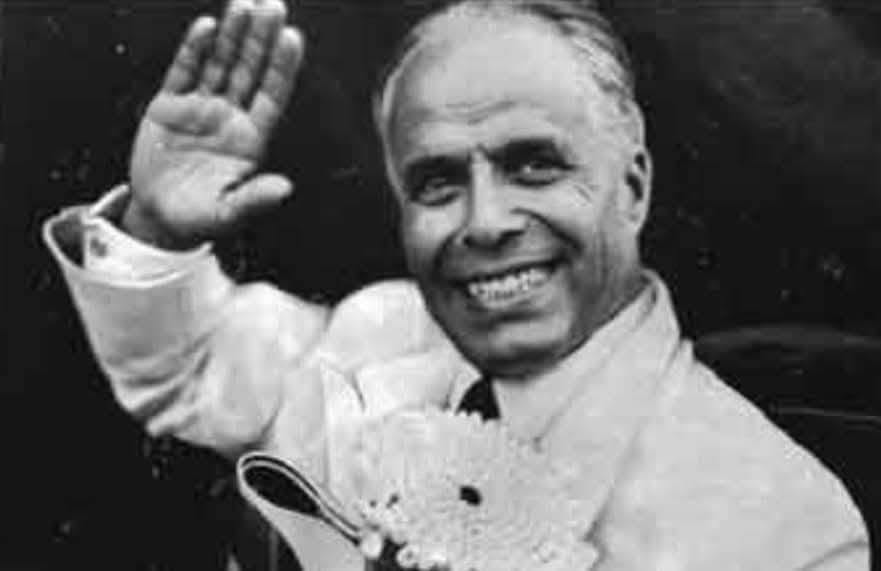
He was born — officially — on August 3, 1903, in Monastir, the fishing town on Tunisia’s Sahel coast, the youngest of eight children of a former officer in the bey’s army. He himself was never sure of the year; he sometimes said he might have been born a little earlier. The family was modest, of the Sahel’s respectable middle, and his father made a decision that shaped everything: rather than let his last son drift into the army, he spent what little he had on the boy’s education.
So Habib was sent up to Tunis as a small child to live with an older brother, and educated at the famous Sadiki College and then the Lycée Carnot — institutions where a clever Tunisian boy absorbed Arabic and Islamic learning on one side and French language and Western political thought on the other. He grew up bilingual in more than language. He grew up bilingual in worldviews, and he would spend his life trying to fuse the two.
Paris, law, and a nation in his head
In 1924 he sailed for Paris to study law and political science at the Sorbonne. He later said, with characteristic bluntness, that he went “to study law in order to fight the French protectorate.”
Paris gave him three things. It gave him the legal and rhetorical training that made him formidable. It gave him a French wife, Mathilde Lorrain. And it gave him a circle of young North African nationalists — Algerians, Moroccans, Tunisians — all turning the same question over: how does a colonised people take back its country from a power that holds every lever?
He came home in 1927 a lawyer, and within a few years he had his answer, or the beginnings of one. It was not romantic. It was patient, tactical, and ruthless.
Neo-Destour and the long road to independence
The existing nationalist party, the Destour, struck the young Bourguiba as too cautious, too rooted in the old elite of Tunis, too disconnected from ordinary Tunisians in the towns and countryside. In 1934 he and a group of allies broke away and founded the Neo-Destour — a new, disciplined, mass party built to reach the whole country.
What followed was a quarter-century of pressure, negotiation, exile, and prison. Bourguiba spent something close to nine years in French custody across his career. He was the kind of opponent who could be jailed but not erased; the more France locked him away, the more he became the living symbol of the cause. The doctrine he built — later simply called Bourguibism — had a method to it: decolonisation by stages, persuasion first and force only when necessary, a secular and modernising nationalism, and a deep wariness of letting any rival build a power base. He negotiated when he could and fought when he had to, and he never confused patience with weakness.
By the mid-1950s, France was exhausted and Bourguiba was unavoidable. Internal autonomy came in 1955. When a rival within his own movement, Salah Ben Youssef, denounced the deal as a sell-out, Bourguiba out-manoeuvred him and had him expelled — a preview of how he would treat dissent for the next thirty years. Then, on March 20, 1956, the protocol that amounted to a treaty of independence was signed. After centuries of Ottoman beys and decades of French control, Tunisia was its own country again. If you want the full arc that led here, we traced it in Tunisia’s history from Carthage to independence; Bourguiba is where that long story arrives in the modern world.
The republic and the revolution from above
Independence made him prime minister. He was not content to stop there.
In 1957 he abolished the monarchy, sent the last bey into retirement, declared Tunisia a republic, and became its first president. But the most consequential thing he did had already happened, months earlier, and it had nothing to do with palaces.
On August 13, 1956, Tunisia promulgated the Code of Personal Status (Majallat al-Ahwal al-Shakhsiyya). At a stroke it abolished polygamy, required a woman’s consent to marriage, set a minimum marriage age, replaced unilateral male repudiation with judicial divorce available to both spouses, and moved family law out of religious courts and into the state’s. Women would soon get the vote. Nearly seventy years later it remains one of the most progressive family codes in the Arab and Muslim world — the legal foundation beneath every later chapter in the long story of the women who built Tunisia.
It did not arrive from nowhere. The reformist thinker Tahar Haddad had argued for exactly this kind of emancipation back in the 1930s and been hounded for it. Bourguiba had the power Haddad never did, and he used it. He went further into daily life than any leader around him dared: he discouraged the veil, called it a “rag,” pushed girls into schools, and treated education as the central project of the state, devoting an enormous share of the budget to it year after year. The institutions of independent Tunisia took shape in these years — even the country’s great museum, renamed the Bardo National Museum after independence, belongs to this moment of a nation rewriting itself.
This was modernisation imposed from the top down, by a man certain he knew better than tradition. Much of it was genuinely liberating. All of it was decreed.
“I am the system”
Here is the harder half of the ledger, and it matters.
The same conviction that let Bourguiba override centuries of custom also let him override anyone who disagreed with him. Tunisia became a one-party state built around the Neo-Destour and around one man. Rivals were sidelined, exiled, or jailed. The press answered to the palace. A genuine cult of personality grew up around the Mujahid al-Akbar, the “Supreme Combatant” — his portrait everywhere, his birthday a holiday, his life taught as the nation’s life. In 1975 the constitution was amended to make him president for life.
Asked once to describe the Tunisian political system, he is said to have replied: “What system? I am the system.” It was a joke, and it was not a joke.
The economic record wandered. In the 1960s, under the planner Ahmed Ben Salah, Tunisia tried a sweeping experiment in state socialism and agricultural collectivisation; when it faltered and the rural backlash grew dangerous, Bourguiba abandoned it and let Ben Salah take the fall, swinging the country back toward a market economy. It was a pattern: bold direction, course correction, and someone else left holding the blame.
A pragmatist abroad
In foreign policy he was, by the standards of his era, almost heretically pragmatic. He kept the army deliberately small and Tunisia deliberately non-threatening. He stayed close to France and the United States even while sparring with them — most sharply in the 1961 Bizerte crisis, a bloody confrontation over France’s continued hold on the naval base there, which France finally evacuated in 1963.
His boldest stroke was rhetorical. In a 1965 speech delivered in Jericho, Bourguiba broke ranks with the Arab consensus and suggested that the Palestinians and the Arab states should pursue a negotiated, staged settlement with Israel rather than hold out for total victory. The Arab world erupted. It was, in hindsight, the same Bourguibist instinct he had used against France — take what you can get now, build from there — applied to the most explosive issue in the region. It made him enemies for years. It also made him look, decades later, like a man who had simply said the unsayable early.
The long unraveling
The tragedy of Bourguiba is that he lived too long in power, and knew it least of anyone.
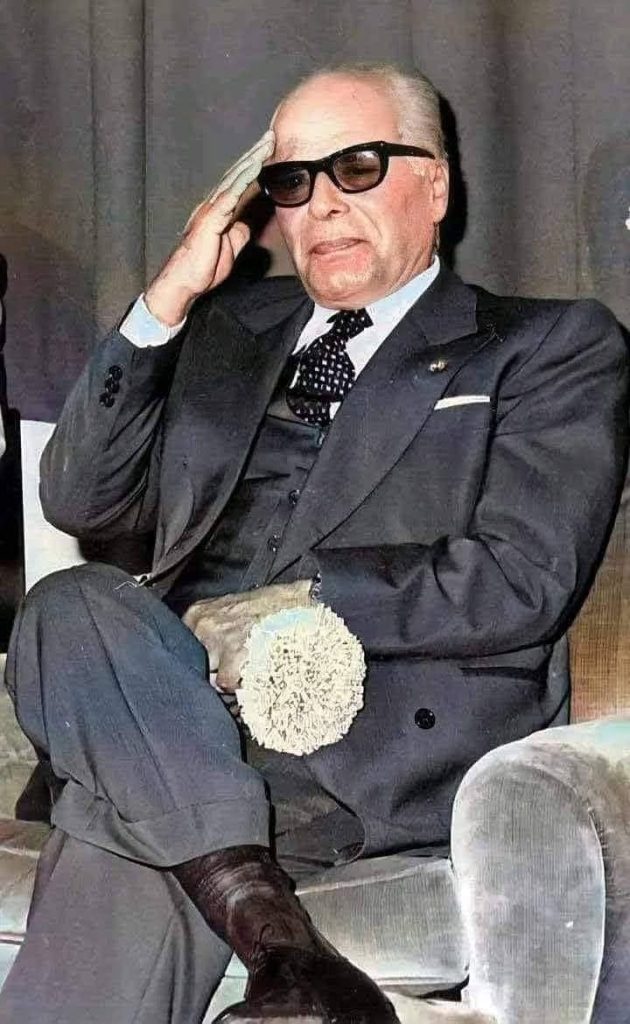
By the 1980s the builder had become an old man — sharp one day, confused the next, surrounded by a court of relatives and advisers manoeuvring for the succession he refused to plan. Decisions grew erratic. A confrontation with the rising Islamist movement turned harsh, with mass arrests and death sentences that alarmed even his allies and threatened to destabilise the country. The man who had governed by reading his people now seemed dangerously out of touch with them.
On November 7, 1987, his prime minister, Zine El Abidine Ben Ali, invoked the article of the constitution covering presidential incapacity, produced medical declarations that Bourguiba was unfit to govern, and removed him from office. It was bloodless — a “medical coup.” There were no tanks in the streets, only a radio announcement. After thirty years, the founder of the republic was simply… retired. Many Tunisians, weary of the chaos of his final years, felt relief. Few yet understood that the man who had so smoothly removed him would cling to power for another twenty-three years, far more corruptly, until a revolution swept him away in turn.
House arrest and the slow death of a giant
Bourguiba spent his last thirteen years as a recluse in Monastir, in a guarded residence in the town where he was born, permitted to see family and the occasional old friend. The avenues still bore his name. The schools still taught his life. But the man himself was offstage, fading, a living monument the new regime preferred to keep quiet.
He died on April 6, 2000, at ninety-six or thereabouts, and was buried in the grand mausoleum he had commissioned for himself decades earlier — a golden dome flanked by two slender minarets, rising over the Sidi El Mézri cemetery by the sea. The inscription on its door calls him the supreme combatant, the builder of modern Tunisia, the liberator of women. He chose those words for himself. The remarkable thing is how many Tunisians, in the end, agreed with them.
How Tunisia remembers him
For two decades after 1987, the Ben Ali regime kept Bourguiba in a deliberate half-light — acknowledged but diminished, lest the founder outshine the usurper. Then came the 2011 revolution, and the irony folded back on itself: the uprising that ended Ben Ali’s rule reached its climax on Avenue Habib Bourguiba, the grand palm-lined boulevard at the heart of Tunis that carries the old man’s name.
In the years since, Tunisia has reassessed him with something like affection. A statue of Bourguiba on horseback was restored to its place on the avenue. Documentaries, biographies, and arguments have multiplied. The reassessment is not blind — Tunisians remember the prisons and the personality cult as clearly as the schools and the Code of Personal Status. But across the political spectrum, including among people whose parents he jailed, there is a widespread sense that he built the house they all still live in.
That is the strange achievement of a founder: even those who resent him are arguing inside his architecture.
Where to find Bourguiba in Tunisia

You can stand inside his story.
In Monastir, his mausoleum is open to visitors, its little museum holding his desk, his glasses, his passports, his Western suits and his traditional jebba side by side — the two worlds he spent his life braiding, laid out in a glass case. The town that produced him wears its history densely: the Ribat of Monastir, one of the oldest Islamic fortresses in North Africa, and the Great Mosque stand within walking distance of the dome where he lies.
In Tunis, walk the length of Avenue Habib Bourguiba — the cafés, the cathedral, the clock tower, the ministries — and you are walking the stage of both his republic and the revolution that outlived it. And everywhere in the country, in the classrooms full of girls, in the family courts, in the simple ordinariness of secular public life, you are seeing the Tunisia he insisted into being.
Why he still matters
Bourguiba belongs to a small club of twentieth-century founders who genuinely remade their societies — and to the smaller, sadder subset who could not find the door marked exit. He gave Tunisia independence, a modern state, mass education, and a charter of women’s rights that still has no real equal in the region. He also gave it one-party rule, a personality cult, and the bad habit, which his successor would perfect, of a president who treats the country as his own.
Hold both at once, the way the honest reader should. The man who drank the orange juice on live television really did believe he could argue a nation into the modern age single-handed — and for a startling number of years, on a startling number of fronts, he did. His failure was the oldest one in the book: he mistook himself for the thing he had built.
The thing he built is still standing. That is the verdict that matters, and Tunisia delivers it every day, mostly without noticing.
From the Carthage Magazine Bookshelf
If Bourguiba’s Tunisia is the country you want to actually walk through, three Carthage Magazine ebooks were built for the days between arrival and departure:
- All About Tunisia — the definitive English-language traveler’s guide. 572 pages, 27 chapters, all nine regions, every UNESCO inscription, five thematic trails — including the Sahel coast and Monastir, where the founder’s story begins and ends. $24.99 · PDF & EPUB
- Speak Like a Local — 200+ Tunisian Arabic phrases with native audio recorded in Tunis. The phrases for the taxi, the souk, the café, and the dinner table. $14.99 · PDF, EPUB, MP3
- The Authentic Tunisian Cookbook — sixty traditional recipes from the heart of North Africa. For when you get home and find yourself missing the food. $9.99 · PDF & EPUB
All three available as a bundle for $39.99 — guide, language, and food, delivered together.
