
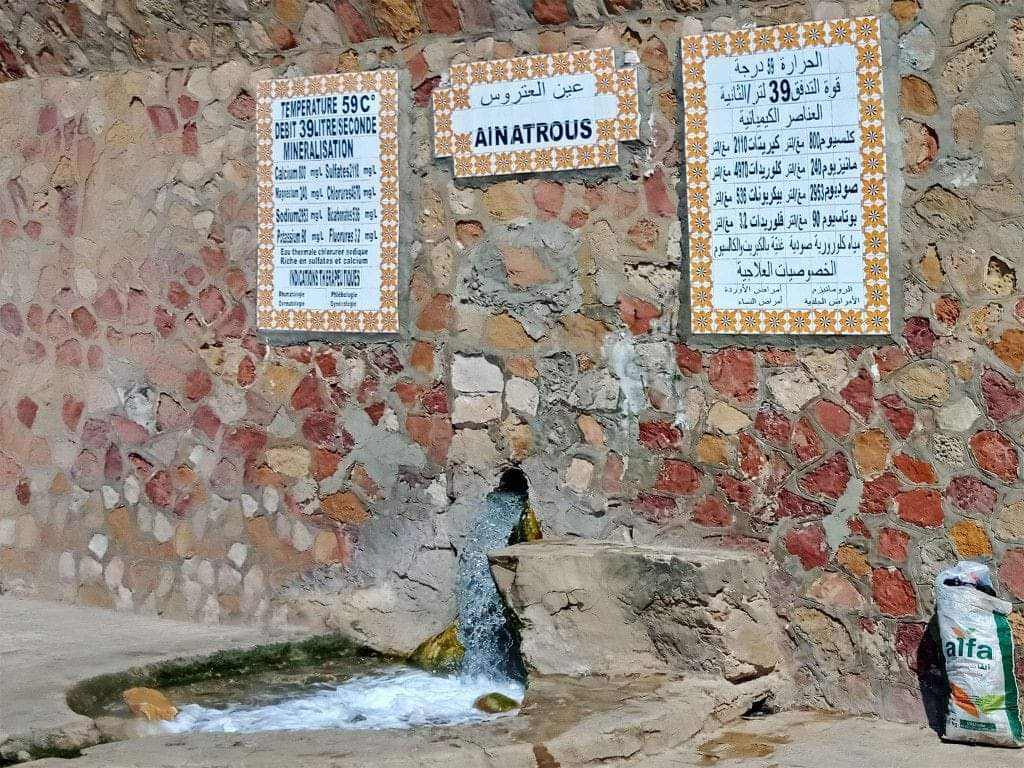
Quick Answer Korbous is a small thermal-spring town on the west coast of the Cap Bon peninsula, about an hour’s drive from Tunis. Built on a single street between cliff and sea, it has been a spa since Roman times, when it was known as Aquae Calidae Carpitanae. Seven sulphurous springs emerge here at temperatures between 50 and 70°C, the most famous of them — Aïn Atrous — pouring straight off the rocks into the Mediterranean, where bathers sit in the bay and mix scalding spring water with cool sea. It is free, it is spectacular, it is genuinely off the tourist track, and it makes one of the best half-day trips from the capital.
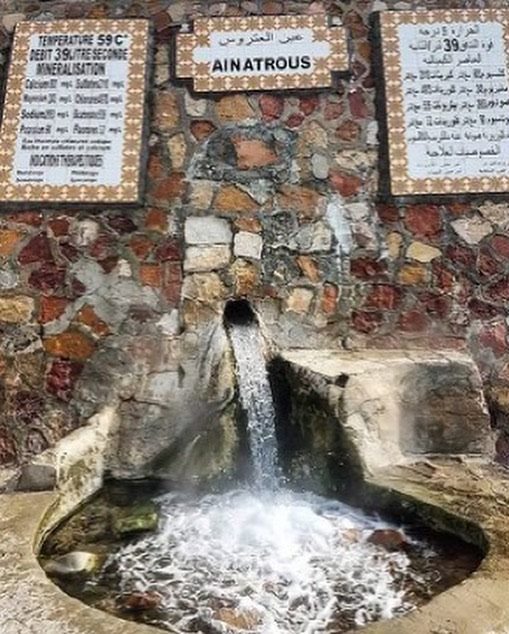
A few metres from the sea, under a low rock on the Cap Bon coast, water comes out of the ground hot enough to scald you. It runs down the rock in a steaming sheet and falls into a shallow bay, and in that bay — where the spring water meets the cold Mediterranean and the two find a bearable middle — people have been sitting, for two thousand years, to take the cure.
This is Aïn Atrous, the Goat Spring, the most famous of the seven thermal springs at Korbous, and it is one of the most remarkable sights in northern Tunisia precisely because almost no foreign visitor knows it is there. Korbous is barely an hour from Tunis. It is not in most itineraries. It is where Tunisians go — at weekends, in winter, for the water and the view — and it is one of the most rewarding short trips you can make from the capital.
Here is what to know.
A Spa Since the Romans
Korbous did not become a spa town. It has always been one.
The Romans of Carthage came here by boat across the Gulf of Tunis and called the place Aquae Calidae Carpitanae — the hot waters of Carpis — and built bathing establishments around the springs, the remains of which still mark the site. After the Arab conquest the baths fell into centuries of quiet, used by the local population but no longer a destination. Then, at the start of the nineteenth century, the bey Ahmed I revived Korbous as a fashionable spa, building a pavilion over the waters that still anchors the town today. For a long stretch of the nineteenth and twentieth centuries Korbous was where the Tunisian elite came to take the waters and, eventually, to build elegant houses on the cliffside; the bey’s thermal establishment on the shore has operated as a spa clinic since 1901. President Bourguiba, a great believer in spa treatment, kept a residence here.
What you see today is the long result of all that: a small, slightly faded, genuinely historic spa town, built up a single street between the mountain and the sea, with bathing in its bones.
The Seven Springs
Korbous is famous for its seven springs, each traditionally credited with healing a different set of ailments, and each with its own name and character.
The waters emerge sulphurous and highly mineralised, at temperatures running from around 50°C up to roughly 70°C at the hottest. Between them they have been used for generations to treat rheumatism, arthritis, skin conditions, respiratory complaints, and digestive and other disorders — the standard repertoire of European-style thermal medicine, practised here continuously for far longer than at most European spas. Several of the springs are channelled into the town’s thermal establishment and the hotels, where they feed treatment pools, baths, and the full apparatus of modern thalassotherapy and balneotherapy.
The one everybody comes to see, though, is not in a clinic at all.
Aïn Atrous: The Spring That Meets the Sea
Aïn Atrous lies a kilometre or two outside town, along the coast road, and it is the free, wild, open-air heart of the Korbous experience.
Here the thermal water simply emerges from under the rocks at the edge of the sea — very hot, too hot to sit in directly at the source — and runs down into the Mediterranean. Bathers gather in the shallow bay where the hot freshwater and the cool seawater mix, moving toward or away from the cascade to find the temperature they want. On a winter weekend it is busy and convivial, full of Tunisian families who have driven out from Tunis specifically for this; on a quiet weekday morning you may have the rocks nearly to yourself, with steam rising off the water and the Gulf of Tunis spread out in front of you.
It costs nothing. There are no gates and no tickets. Bring a swimsuit, footwear that copes with wet rock, and water to drink, and treat the source itself with respect — the water at the point it emerges is hot enough to burn.
The View
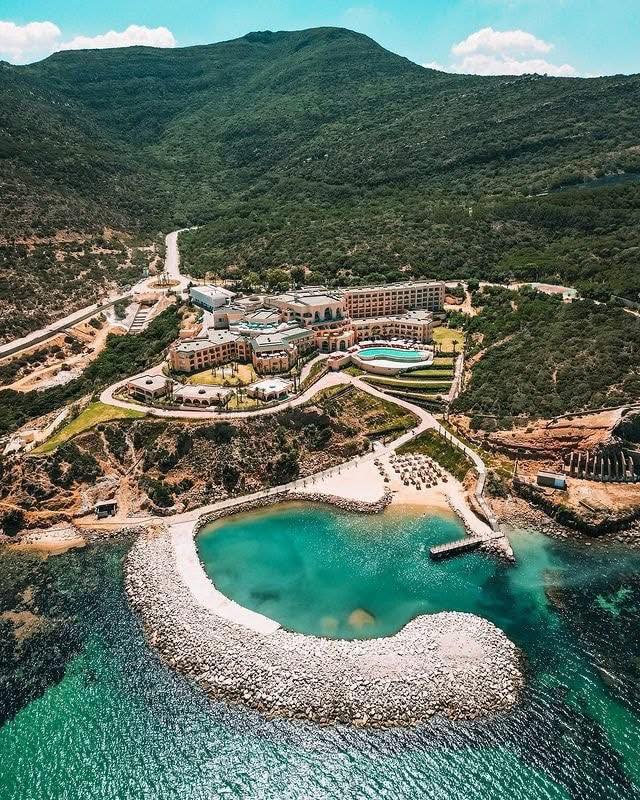
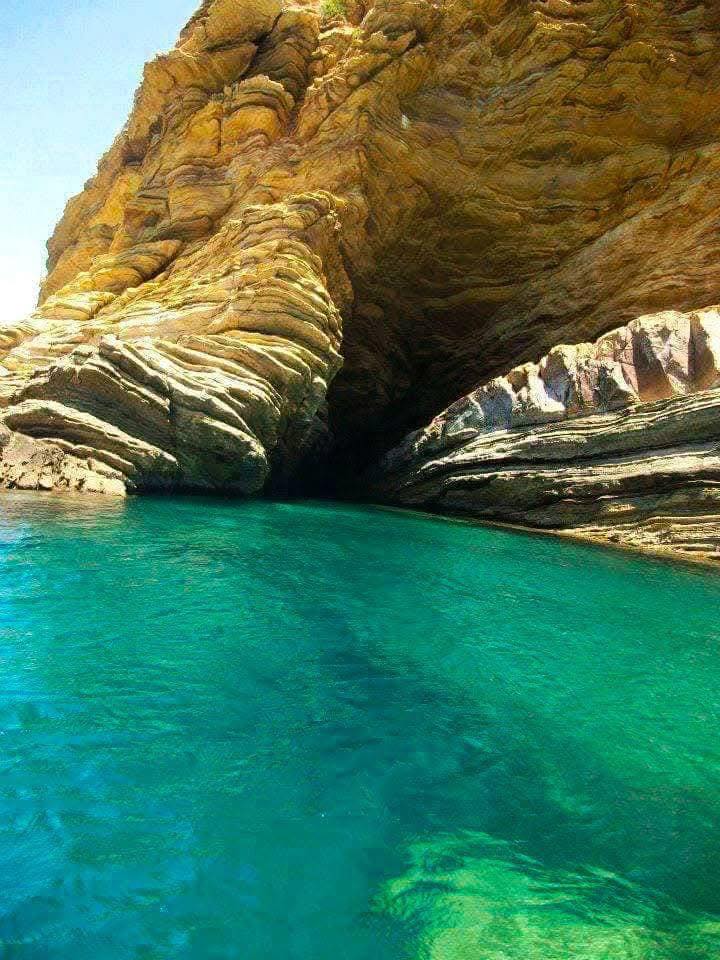
The setting may be the best part. Korbous sits on a stretch of coast where the cliffs drop steeply to the sea and the rock runs red and ochre, and the drive in along the corniche — a winding ledge cut into the mountainside above the water — is an experience in itself.
From the shore at Korbous you look out across the Gulf of Tunis, and on a clear day the view reaches all the way across to Tunis, Carthage, and Sidi Bou Said on the far shore, perhaps twenty kilometres away. There is a particular pleasure in sitting in a thermal bay on the wild side of the gulf and seeing, across the water, the blue-and-white village and the ancient city that most visitors never leave. Above the town, a rock formation known as the Bec de l’Aigle — the Eagle’s Beak — gives an even wider panorama for those willing to climb to it.
Around Korbous
A few kilometres on lies Aïn Oktor, Korbous’s smaller twin, a tiny hydromineral station reduced now to a hotel and a bottling plant; its mineral water, recommended for urinary complaints, is sold across Tunisia. The drive between the two, and onward around the western shoulder of Cap Bon, is one of the loveliest coastal roads in the north.
Korbous also makes natural sense as part of a wider Cap Bon trip — the garden peninsula whose vineyards, citrus groves, and Nabeul pottery lie just over the hills, and whose chillies go into Tunisian harissa. And the thermal tradition it belongs to is part of a much older Tunisian relationship with the bath, which we explore in our piece on the traditional Tunisian hammam.
When to Go
Counterintuitively, the best season for Korbous is the cooler half of the year — autumn through early spring. The whole point of a hot spring is the contrast between hot water and cool air, and on a crisp winter day, with the steam rising and the sea cold, Korbous is at its best; this is also when Tunisians come for the rheumatism-and-respiratory season, so it is at its liveliest. Summer works for the swimming and the coast, but bathing in 60°C water in the August heat is a harder sell, and the wild springs can be crowded. Weekends are busy and sociable; weekday mornings are quiet. Whenever you come, the springs run year-round — they always have.
Getting There
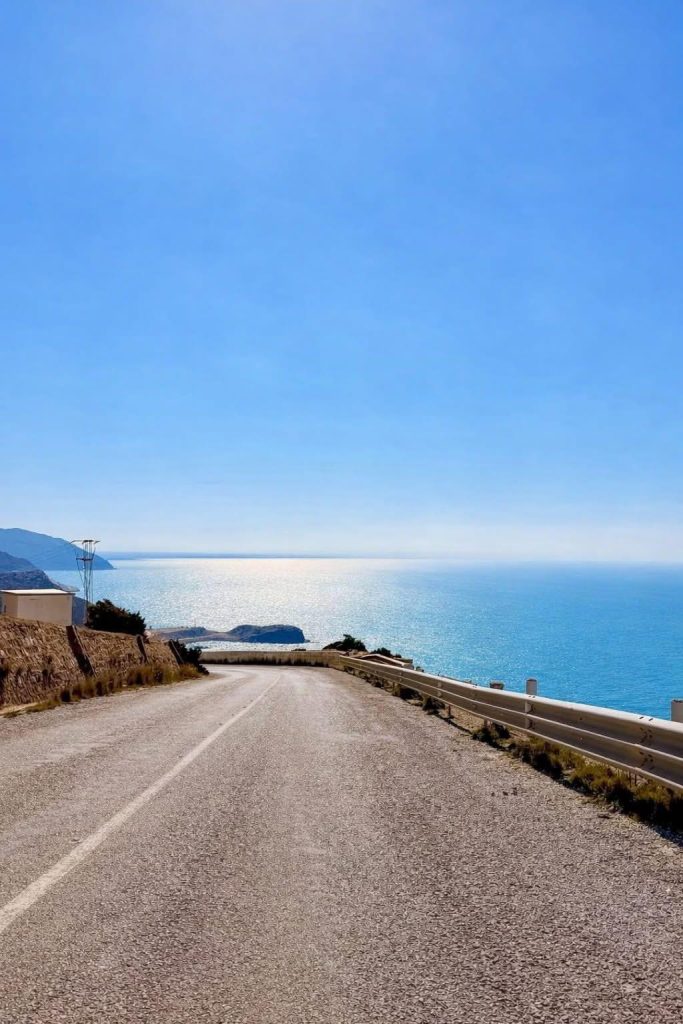
Korbous is on the west coast of Cap Bon, about an hour from Tunis by car, and a car is by far the easiest way to do it — the approach along the cliffside corniche is part of the experience, and there is no convenient public transport that does it justice. Many Tunis-based travel operators and drivers will run a half-day or day trip out, often combined with a stop elsewhere on Cap Bon. Louages reach the area from Tunis via Soliman, but connections into Korbous itself are sparse, so a hired car or driver is the sensible choice. For the wider practicalities, see our Tunisia travel guide and our guide to getting around.
Why Bother
Korbous is the kind of place that makes you wonder how it stayed secret. It is an hour from the capital. It has been a spa for two thousand years. It has thermal water pouring off a rock into the Mediterranean, a cliff road with a view across the gulf to Carthage, and not a tour bus in sight. It asks almost nothing of you — no ticket, no booking, just a swimsuit and a willingness to drive a beautiful road — and it gives back an afternoon you will remember longer than most of the things you queued for.
Go on a cool, bright day. Sit in the bay at Aïn Atrous where the hot water meets the cold. Look across the water at the city everyone else is standing in. That is Tunisia rewarding the traveller who went one valley further than the rest.
From the Carthage Magazine Bookshelf
Korbous is the kind of off-the-map stop the big guidebooks skip — which is where having the whole country, and the language, in your pocket pays off:
- All About Tunisia — the definitive English-language traveler’s guide. 572 pages, 27 chapters, all nine regions, every UNESCO inscription, five thematic trails, and the practical answers (visa, currency, transport, etiquette) most travelers wish they’d had on the plane. $24.99 · PDF & EPUB
- Speak Like a Local — 200+ Tunisian Arabic phrases with native audio recorded in Tunis. The phrases for the louage, the spa, and the seafront restaurant. $14.99 · PDF, EPUB, MP3
- The Authentic Tunisian Cookbook — sixty traditional recipes from the heart of North Africa. For the fresh fish you’ll eat on the shore, recreated at home. $9.99 · PDF & EPUB
All three available as a bundle for $39.99 — guide, language, and food, delivered together.
